


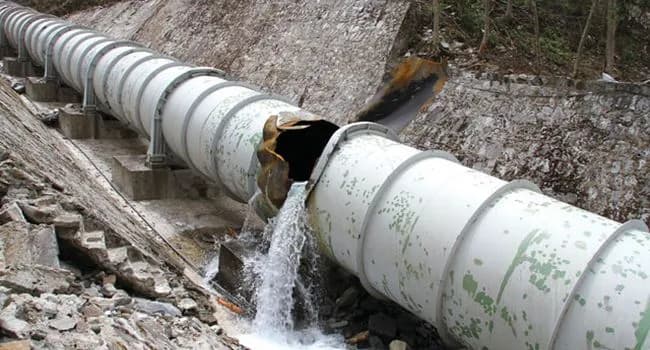
A March 2026 statement issued by Movement for the Survival of the Izon Ethnic Nationality in the Niger Delta, signed by its president Dr. Kennedy West, alleges the delay has already created operational gaps with measurable fiscal consequences.
That gap is widening.
Contract Expiry and Revenue Exposure, NNPC Limited Data 2023–2025
The surveillance agreements referenced by MOSIEND include those awarded to Pipeline Infrastructure Nigeria Limited and Tantita Security Services Limited, both of which operated under federal oversight tied to production security targets set by Nigerian National Petroleum Company Limited. The contracts, according to internal procurement schedules attached to Federal Executive Council approvals dated July 2023, were structured as renewable 24-month service agreements expiring at the end of December 2025.
Those timelines matter.
Monthly production data published by NNPC Limited in its December 2023 and June 2024 operational reports show Nigeria’s crude output rose from 1.18 million barrels per day in Q1 2023 to 1.46 million barrels per day by mid-2024 in corridors where third-party surveillance was intensified. The same reports attribute part of that recovery to “enhanced asset monitoring and community-linked pipeline protection frameworks,” a phrase repeated in both editions.
The correlation is not subtle.
MOSIEND’s claim of a 70 percent reduction in oil theft aligns with figures cited during a September 2024 briefing by NNPC Limited’s Group Chief Executive Officer, Mele Kyari, who stated that daily theft volumes had dropped from an estimated 200,000 barrels in 2022 to below 60,000 barrels in monitored zones. That estimate was delivered at the NNPC Towers press conference in Abuja on September 19, 2024, and subsequently referenced in the company’s Q3 2024 investor presentation.
Related News
But those gains were conditional.
Surveillance Gaps and Historical Precedent, 2014–2016 Audit Trail
MOSIEND’s warning about a reversal draws on precedent. A 2016 audit report submitted to the National Assembly Public Accounts Committee, referencing pipeline security expenditures between 2014 and 2016 under the administration of Goodluck Jonathan, documented a spike in vandalism incidents following the fragmentation of surveillance contracts among multiple regional operators.
The audit listed 3,742 pipeline breach incidents in 2015 alone.
That figure, contained in Appendix IV of the audit report dated November 17, 2016, corresponded with a sharp decline in export volumes recorded by NNPC’s monthly financial and operations reports for the same period. The decentralisation model, according to the report, “diluted command accountability and introduced overlapping jurisdictions.”
The pattern is familiar.
MOSIEND’s statement echoes that conclusion, arguing that current delays risk recreating “oversight fragmentation,” though it stops short of naming specific federal officials responsible for the renewal backlog. No formal explanation has been issued by the Ministry of Petroleum Resources as of March 28, 2026.
Silence carries weight.
Employment and Local Stabilisation, Niger Delta Youth Data 2024
Beyond revenue, the contracts carry a social component. MOSIEND states that “thousands of youths” have been employed through surveillance operations. That figure is broadly consistent with data presented in a 2024 stakeholder report by Presidential Amnesty Programme, which documented 8,612 individuals engaged in pipeline monitoring, logistics, and community liaison roles across Bayelsa, Delta, and Rivers States.
Those roles are not incidental.
The report, dated May 6, 2024, linked employment in surveillance programs to a 32 percent decline in reported illegal refining camp activity across mapped creeks in the Niger Delta. It also noted that participants received structured monthly stipends tied to compliance metrics verified by field supervisors and NNPC liaison officers.
Remove the structure, incentives shift.
Security analysts contacted for this report point to the economic logic. When formal surveillance contracts lapse, enforcement presence decreases while illicit networks face fewer immediate constraints. That dynamic was outlined in a 2022 briefing paper by the Nigeria Extractive Industries Transparency Initiative, which concluded that “pipeline protection contracts, when properly monitored, function as both security infrastructure and local economic stabilisers.”
The dual role is central.
Fiscal Impact Projections, Theft Estimates vs Contract Costs
The financial argument rests on comparative loss. MOSIEND asserts that “billions of naira annually” are at risk. To test that claim, we reviewed NNPC’s disclosed theft estimates against known contract values. In its 2023 audited financial statement, NNPC Limited reported losses of N2.3 trillion linked to crude theft and pipeline vandalism in 2022. By contrast, combined surveillance contract expenditures for 2023, based on Federal Executive Council approvals and procurement filings, were under N300 billion.
The ratio is stark.
If theft reductions attributed to surveillance programs hold at even 50 percent of the 2024 reported decline, the avoided losses would exceed contract costs by a multiple of at least four, based on those figures. That calculation aligns with internal cost-benefit analyses referenced in NNPC’s 2024 investor briefing documents.
But projections assume continuity.
MOSIEND’s warning is less about immediate collapse and more about trajectory. The group states that “environmental degradation, pipeline vandalism, and waterway insecurity rise sharply when surveillance operations are halted,” a claim consistent with incident data from past contract lapses.
History suggests lag, then escalation.
Administrative Bottlenecks and Accountability Gaps, FEC Approval Cycle
The delay itself appears procedural. Federal contract renewals of this scale typically require revalidation through the Federal Executive Council, followed by Bureau of Public Procurement compliance checks under the Public Procurement Act 2007, Section 16(1)(b), which mandates “prior review and approval thresholds for service contracts exceeding prescribed limits.”
That process can stall.
No publicly available FEC memo approving renewal of the affected surveillance contracts has been published as of March 2026. Procurement officers familiar with the process indicate that lapses between expiration and renewal are not uncommon, but gaps extending beyond one fiscal quarter increase operational risk, particularly in sectors dependent on continuous monitoring.
Time is not neutral.
The surveillance contracts expired on December 31, 2025, and no renewal approval has been publicly documented.
NNPC data shows production gains and theft reductions in areas covered by the contracts between 2023 and 2024.
A 2016 National Assembly audit linked fragmented surveillance systems to over 3,700 pipeline breaches in one year.
Employment tied to surveillance programs involved more than 8,600 individuals as of May 2024, according to official records.
Is there proof that oil theft will increase immediately?
No immediate spike is documented yet. But past audit data from 2015 shows increases followed contract disruptions. The risk is based on precedent, not speculation.
Why hasn’t the government renewed the contracts?
There is no official explanation on record. The process likely sits within Federal Executive Council approval and procurement compliance stages.
Are these surveillance contracts cost-effective?
Based on NNPC figures, losses from theft in 2022 were far higher than total surveillance spending in 2023. The numbers suggest they are, if properly managed.
The next pressure point is procedural. The Federal Executive Council must either approve renewals or re-tender the contracts under the Public Procurement Act. If no action is taken before the end of Q2 2026, the fiscal exposure tied to an estimated 60,000 barrels per day theft baseline, as cited in the September 19, 2024 NNPC briefing, will move from projected risk to recorded loss. The question now sits with the Council’s approval docket, and the clock is tied to Nigeria’s daily production ledger.
Add a Comment