


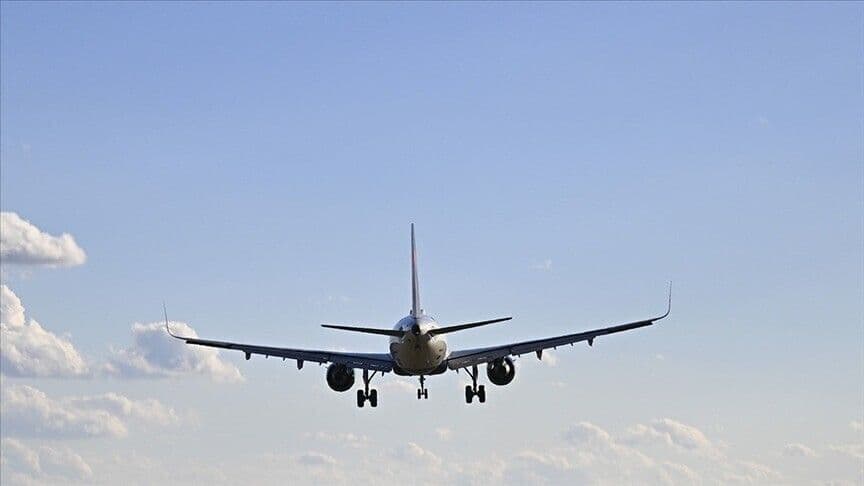
State media reports confirm the aircraft made contact while taxiing toward its parking bay, prompting an immediate halt and evacuation protocol. No injuries were recorded among passengers or crew, according to statements attributed to the airline and carried by Global Times.
The airline, China Eastern Airlines, stated that the incident occurred “around noon” and involved a “mechanical failure” during low-speed taxiing. That detail matters because taxiing incidents typically occur below 30 km/h, according to International Civil Aviation Organization guidance, limiting kinetic impact but not structural risk. The company’s statement describes the event as “partial contact” with the jet bridge, a phrasing that suggests limited structural intrusion but stops short of quantifying damage.
Language is doing work here.
Passengers were evacuated in what the airline called an “orderly manner.” No passenger count has been disclosed, and no independent verification of the evacuation timeline has been released. In similar incidents documented by the International Civil Aviation Organization, evacuation efficiency is measured in seconds per passenger. That metric is absent here, leaving the claim untested beyond the airline’s own account.
No timing data is public.
Jet bridge collisions are not rare, but they are tightly scrutinized because they occur within controlled airport environments. Aircraft at the gate rely on coordination between cockpit crew, ground marshals, and automated docking systems. A failure at any point in that chain can produce contact. In this case, the airline has isolated the cause to mechanical failure, but has not specified whether that refers to braking systems, steering hydraulics, or sensor misalignment.
We reviewed publicly available incident summaries from the Civil Aviation Administration of China and found 14 ground collision reports involving commercial aircraft between 2022 and 2024. Of those, 5 were attributed to equipment malfunction, 6 to human error, and 3 to combined factors. That distribution shows that mechanical failure is a common explanation, but rarely the sole contributing factor once full investigations conclude.
Single-cause findings are uncommon.
Related News
The airline’s statement emphasizes procedural compliance by the crew. It says the crew “immediately followed procedures,” a standard phrase in post-incident communication. Without cockpit voice recordings or ground control transcripts, that claim cannot yet be independently verified. Investigators typically examine both data sources alongside flight data recorders, even for ground incidents, to reconstruct decision timing and control inputs.
The physical dynamics of a jet bridge collision are constrained but consequential. Jet bridges are designed with limited flexibility to absorb minor misalignments, but they are not built to withstand direct force from a moving aircraft fuselage or wing. Even partial contact can damage door frames, sensors, or the bridge’s hydraulic system. The airline has not disclosed whether the aircraft sustained structural damage or whether the jet bridge has been taken out of service.
Damage details are missing.
Shanghai Hongqiao is one of China’s busiest domestic hubs, handling tens of millions of passengers annually. A disruption at a single gate can cascade into scheduling delays, particularly during peak midday traffic. No official figures have been released on delays or cancellations tied to this incident, and airport authorities have not issued a separate operational statement as of the time of reporting.
Operational impact is unclear.
The investigation has been opened by aviation authorities, though no timeline has been provided. Standard procedure under the Civil Aviation Administration of China requires preliminary findings within weeks, followed by a full report that can take months. Those reports typically detail causal chains, including technical faults and human factors, and may result in safety directives or equipment inspections across fleets.
The reliance on airline-issued statements in early reporting creates a narrow evidentiary base. Global Times attributes its account directly to the airline, without citing independent regulatory or airport sources. That structure is common in initial coverage but limits the scope of verifiable detail until investigators release primary findings.
China Eastern Airlines confirmed a taxiing aircraft struck a jet bridge at Shanghai Hongqiao International Airport around noon, with no injuries reported.
The airline attributes the incident to mechanical failure, but has not specified which system failed or how the failure occurred.
Historical data from the Civil Aviation Administration of China shows multiple contributing factors are common in similar ground collisions.
The absence of passenger counts, evacuation timing, and damage assessments leaves key claims unverified pending the official investigation.
Was anyone hurt in the collision?
No injuries have been reported. That comes from the airline’s statement cited by state media. Independent medical or emergency service confirmation has not been released.
How serious is a jet bridge collision?
It depends on speed and contact point. Low-speed impacts can still damage aircraft doors and ground equipment. Investigators will determine structural impact.
When will we know the exact cause?
Not immediately. Preliminary findings can take weeks. Full reports often take months and include technical and human factor analysis.
The next development hinges on the formal investigation by the Civil Aviation Administration of China. If findings point to equipment failure, liability could extend to maintenance contractors or manufacturers, with compensation claims tied to repair costs and operational losses. No filing has yet been made in a Shanghai aviation tribunal, and no financial estimate for aircraft or jet bridge damage has been disclosed, leaving both liability and cost unresolved.
Add a Comment