


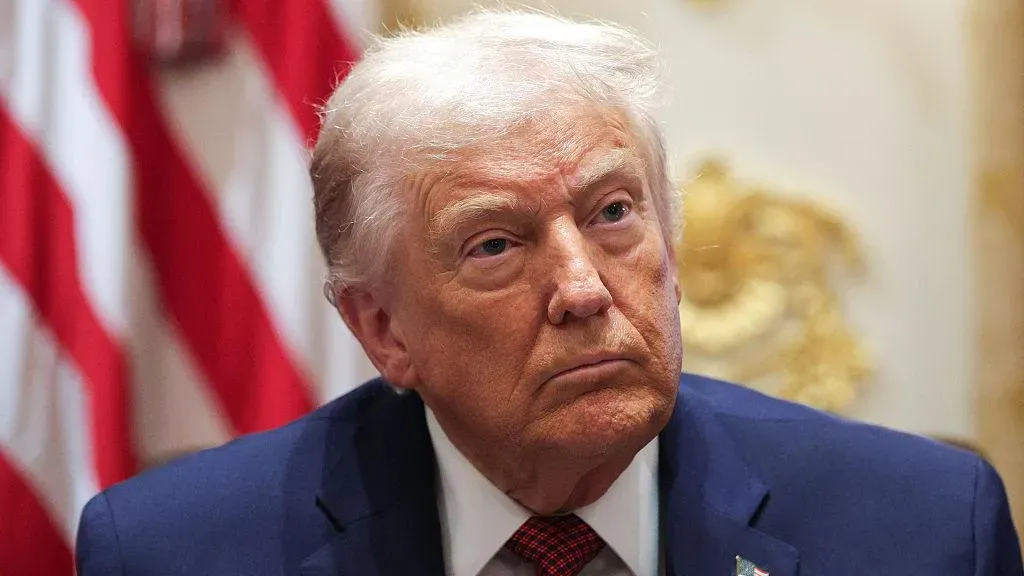
At 7:44 p.m. Eastern Time on Saturday, the President of the United States threatened to destroy civilian electrical infrastructure serving tens of millions of people. In a Truth Social post timestamped and preserved in full, Donald Trump wrote that if Iran did not "FULLY OPEN, WITHOUT THREAT, the Strait of Hormuz, within 48 HOURS," the United States would "hit and obliterate their various POWER PLANTS, STARTING WITH THE BIGGEST ONE FIRST." The deadline expires Monday, March 23, at 7:44 p.m. Eastern (3:14 a.m. Tuesday in Tehran).
The threat did not arrive quietly.
What the Ultimatum Actually Targets
Iran's largest power plant is the Damavand facility, located approximately 50 kilometers southeast of Tehran. It carries a nameplate capacity of 2,868 megawatts, making it the most likely candidate for Trump's "biggest one first" designation. The Kerman plant in southeastern Iran follows at 1,910 MW, and the Ramin steam power plant in Khuzestan province registers at 1,890 MW. Trump's post did not name any specific facility.
Damavand spans roughly 200 hectares, approximately 30 times the size of Tehran's Azadi Square, and its complete destruction would remove only 3.7 percent of Iran's total installed electricity generation capacity. The country's thermal network extends across approximately 130 plants with a combined capacity of 78,000 megawatts.
The math matters here.
Iran's electricity transmission and sub-transmission network runs approximately 133,000 kilometers, and the total network including urban and rural distribution exceeds 1.3 million kilometers. A targeted strike on even the largest facilities would not collapse the grid. It would, however, cut power to hospitals, water treatment systems, and communications infrastructure serving civilians who have no role in the closure of the Strait of Hormuz.
The Reversal No One Has Fully Explained
Less than 30 hours before the ultimatum, Trump told reporters he was considering "winding down" the military effort in the Middle East without resolving the Hormuz closure. When asked about plans to restore shipping on Friday, Trump said the strait would eventually "open itself." He told reporters Friday that reopening it was "a simple military maneuver" requiring "ships" and "volume," and complained that NATO lacked the "courage" to assist.
That is not the posture of a commander preparing a 48-hour countdown.
Related News
- The UN's migration agency says trafficking networks have forced people from more than 80 countries into online scam compounds across Asia.
- More than 12,000 people have been arrested by US immigration authorities after tips from the Office of Refugee Resettlement.
- China's trade with Africa hit 1.41 trillion yuan in the first half of 2026.
The pivot from drawdown to countdown represents the sharpest single rhetorical reversal of the four-week conflict, and signals that the Strait of Hormuz has become the issue Trump cannot walk away from, particularly as the November congressional elections approach. Brent crude settled above $112 a barrel on Friday, and U.S. crude rose to $98.32 per barrel. Goldman Sachs has projected that triple-digit oil prices could persist through 2027.
The U.S. national average for a gallon of gasoline reached $3.94 on Sunday morning, according to AAA, up more than a dollar from a month earlier.
That is the political context behind the post.
The Legal Exposure
Both sides of this confrontation are operating in legally contested territory. A joint statement issued March 19, 2026 and signed by leaders of 22 countries including the United Kingdom, France, Germany, Japan, Canada, and the UAE called on Iran to "cease immediately its threats, laying of mines, drone and missile attacks and other attempts to block the Strait to commercial shipping, and to comply with UN Security Council Resolution 2817."
Iran's closure faces its own legal challenge. Under the UN Convention on the Law of the Sea, all ships and aircraft enjoy the right of transit passage that "shall not be impeded," and states bordering straits "shall not hamper transit passage." Iran is not a party to UNCLOS, but these obligations are considered part of customary international law and therefore binding regardless.
But the proposed U.S. response carries legal exposure of a different kind.
Attacks intended to target civilians or civilian infrastructure constitute war crimes under international law regardless of the broader nature of the military engagement. Attacks framed as "retaliation" are specifically not permitted under the laws of armed conflict. Power plants that serve hospitals, water treatment, and civilian communications are, by settled doctrine in Additional Protocol I of the 1977 Geneva Conventions, protected objects when they are not making an effective contribution to military action.
Trump did not address that doctrine in his post.
FAQ
Has Iran actually closed the Strait of Hormuz? Not in the formal legal sense. Iranian Foreign Minister Abbas Araghchi said Friday that Iran "has not closed the strait" but has imposed restrictions on vessels belonging to countries involved in attacks against Iran, while offering passage to others, including Japan, pending coordination with Tehran. The practical result is that commercial traffic has effectively stopped.
What is the U.S. military's actual position on reopening the strait? U.S. forces struck Iran's anti-ship missile sites near the Strait of Hormuz earlier this week using 5,000-pound bunker-buster bombs, according to U.S. Central Command. But no tanker escort mission has been launched as of this writing, and the gap between military action already taken and the president's public ultimatum remains publicly unexplained.
Would striking Iran's power plants actually reopen the strait? There is no public military or analytical assessment saying it would. Treasury Secretary Scott Bessent, asked Sunday on NBC's "Meet the Press," said Trump is "leaving all options on the table" and referenced the prior bombing of Kharg Island, Iran's main oil export hub, without connecting infrastructure strikes to any specific mechanism for reopening the waterway.
The question sitting at the center of this crisis is not rhetorical: it is whether the United States will, before Monday evening Eastern Time, launch strikes on civilian power infrastructure in a country of 87 million people, in the absence of any publicly stated legal basis under the Geneva Conventions, and without any demonstrated causal theory connecting those strikes to the restoration of commercial shipping through the Strait of Hormuz. Iran's armed forces have stated, through the official military headquarters communiqué issued Sunday, that such strikes would trigger indefinite closure of the strait plus attacks on regional energy infrastructure belonging to U.S. partner states. No UN Security Council session has been announced. No ceasefire framework is on the table. The clock is running.
Add a Comment