


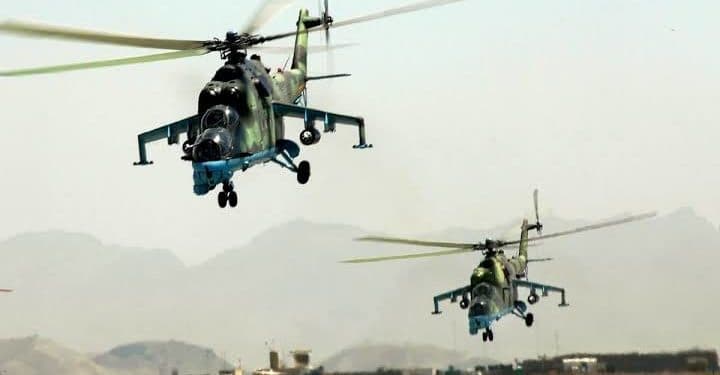
At least 27 suspected terrorists were killed on 10 June 2026 during two separate air interdiction missions conducted by the Air Component of Joint Task Force Operation Hadin Kai in Borno State, according to an operational report released by the Nigerian Air Force.
The strikes targeted Dawoshe in the Southern Tumbus area and Metele in Guzamala Local Government Area, both locations situated within the Lake Chad basin corridor long used by insurgent factions for mobility, logistics storage, and temporary encampments.
According to the report made available to the News Agency of Nigeria, Intelligence, Surveillance and Reconnaissance missions detected vehicle movement and suspected militant activity before air assets were deployed. The military said Dragon platforms and ISR aircraft participated in the operation, though the report did not specify the number of aircraft used or the type of munitions deployed.
Military briefings frequently omit those details.
The Nigerian Air Force said 27 suspected terrorists were killed during two operations conducted on 10 June in Borno State.
One strike targeted Dawoshe in Southern Tumbus after surveillance aircraft reportedly detected vehicle movement.
The second operation focused on Metele in Guzamala Local Government Area, an area repeatedly linked to insurgent logistics routes.
The military has not released independent casualty verification, civilian impact assessments, or footage from the operations.
Related News
- At least six states were cited Tuesday by former Kano State governor Rabiu Musa Kwankwaso as evidence that Nigeria’s security crisis continues to spread despite years of expanded defence spending and repeated federal operations against armed groups.
- The attack began with gunfire near the hillside homes of a rural Federal Capital Territory settlement, according to residents who said armed men shot one man dead and abducted his younger brother before local vigilantes could stop them
- Ten Years After Buhari Flagged Off Ogoni Clean-Up, Key Targets Remain Incomplete
The first strike occurred at approximately 12:40 a.m. in Dawoshe, described by the military as a “known terrorist enclave” within the Southern Tumbus area. According to the operational account, surveillance platforms identified vehicles believed to be connected to insurgent activity before combat aircraft engaged the targets.
Battle Damage Assessment conducted after the strike reportedly confirmed the destruction of the vehicles and the deaths of 12 suspected terrorists. The military did not disclose whether secondary explosions, weapons caches, or fuel depots were observed during the assessment, details analysts often use to evaluate the operational significance of an air strike.
Independent verification inside the Tumbus corridor remains extremely difficult because large sections of the Lake Chad fringes remain inaccessible to journalists, humanitarian monitors, and civilian oversight groups due to persistent insecurity. Most public reporting on air operations in the area therefore originates from military communiqués, local vigilante accounts, or humanitarian displacement tracking.
The second operation targeted Metele in Guzamala Local Government Area later the same day. According to the report, post strike assessments supported by Human Intelligence sources indicated that 15 additional suspected terrorists were killed.
Metele carries military significance.
The town became nationally known after the November 2018 attack on the 157 Task Force Battalion, where dozens of Nigerian soldiers were killed during an assault claimed by the Islamic State West Africa Province (ISWAP). Since then, military planners have treated the wider northern corridor around Guzamala as a recurring insurgent movement route linking Lake Chad islands with inland support networks.
Our analysis of Nigerian Air Force operational statements between January 2025 and June 2026 identified at least 19 publicly announced air interdiction missions referencing the Tumbus region, Marte axis, or Guzamala corridor. Most statements described “neutralisation” figures ranging between 10 and 35 suspected militants. Very few included follow up prosecution records, detainee transfers, or independently verified casualty documentation.
The military continues using the same operational language.
The term “neutralised,” which appears throughout Nigerian military communications, generally refers to suspected militants killed during combat operations. But casualty accounting in insurgency zones remains contested. Human rights groups, including Amnesty International and local conflict monitors, have repeatedly called for clearer civilian casualty assessment procedures following previous aerial bombardments in the North East.
Those concerns did not begin recently.
In 2017, an air strike by the Nigerian Air Force mistakenly hit a displaced persons camp in Rann, Borno State, killing civilians and humanitarian workers. A military investigation later acknowledged the error. Since then, military authorities have repeatedly emphasized precision targeting, ISR support, and post strike assessments when announcing aerial operations.
The latest report follows that pattern closely.
The Air Component of Operation Hadin Kai stated that the operations were designed to “degrade terrorist capabilities, disrupt logistics networks and deny insurgents freedom of action.” Security analysts familiar with the Lake Chad conflict say those objectives reflect a broader military strategy focused less on permanent territorial occupation and more on restricting insurgent mobility across remote marshland routes.
Terrain complicates everything.
The Tumbus areas consist largely of marshes, islands, and densely vegetated corridors surrounding the Lake Chad basin. Insurgent groups have historically used those conditions to conceal fuel supplies, transport routes, and temporary camps beyond the reach of conventional ground patrols. Air power offers speed and surveillance advantages there, but holding territory after strikes often requires coordinated ground operations that are difficult to sustain.
Yet casualty figures alone reveal little about long term operational impact.
We reviewed conflict monitoring data published by the Armed Conflict Location and Event Data Project (ACLED) covering Borno State between 2023 and early 2026. The data showed repeated cycles where reported militant deaths during security operations coincided with later insurgent attacks on villages, military positions, or transport routes within the same operational sectors.
The military report released Sunday did not mention whether ground troops conducted follow up exploitation raids after the air strikes. It also did not disclose whether any suspects were captured alive, whether weapons recovery teams entered the strike sites, or whether civilian movement patterns had been assessed before engagement authorizations were granted.
Those questions remain central.
Air campaigns can disrupt insurgent logistics temporarily, particularly when surveillance identifies vehicle concentrations or supply movement. But military historians studying the North East conflict have repeatedly observed that insurgent groups operating around Lake Chad often disperse rapidly after strikes, regroup through smaller mobile cells, and rebuild supply channels through informal cross border networks.
For civilians living in Borno’s northern corridor, the operational announcements offer limited clarity about actual security conditions on the ground. Humanitarian agencies continue documenting restricted farming access, population displacement, and intermittent attacks along several northern local government areas despite years of sustained aerial operations by Nigerian and regional forces.
The military says operations will continue.
What remains unresolved is whether the latest casualty claims from Dawoshe and Metele will be independently verified through satellite imagery, local administrative records, or humanitarian reporting. The next critical test may emerge during upcoming National Assembly defence oversight hearings in Abuja, where lawmakers are expected to review 2026 operational expenditures tied to counter insurgency air missions, including procurement allocations and post strike accountability mechanisms that remain largely shielded from public scrutiny.
Add a Comment