


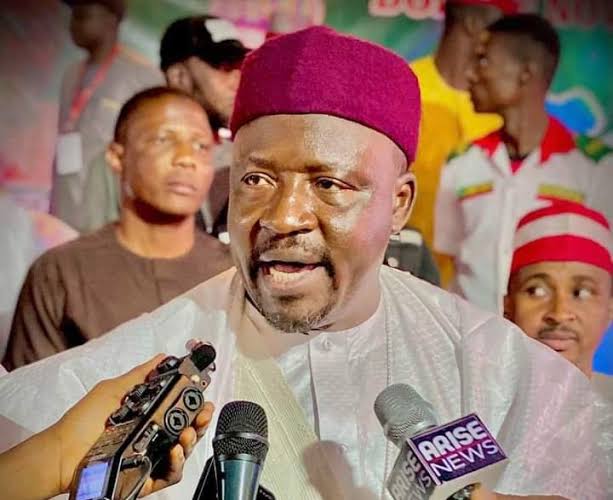
Senator Suleiman Abdurrahman Kawu Sumaila accused U.S. Senator Ted Cruz of promoting a narrative that could inflame religious tensions in Nigeria. The statement was issued yesterday.
The dispute centers on Nigeria's status as a "Country of Particular Concern," a designation the Trump administration removed after what Sumaila described as verified progress. Cruz has pushed to have Nigeria relisted, and the outcome could shape how Washington frames its Nigeria policy at a moment when the country is already contending with terrorism, banditry and kidnapping across multiple regions.
Sumaila, who represents Kano South in the Nigerian Senate, said Cruz's campaign misrepresents Nigeria's security realities. His statement argues that the country's instability cannot be reduced to a religious conflict. Terrorism, banditry, kidnapping and insurgency, he said, have claimed victims "across all faiths and ethnic groups."
The senator's central claim is specific: churches, mosques, markets, schools and rural communities have all been attacked. He did not cite casualty figures or named incidents to support the claim, and no independent data accompanying the statement was provided to verify the proportional breakdown of attacks by target type.
Sumaila's statement draws a direct line to U.S. policy history. He noted that the Trump administration had previously removed Nigeria from the CPC list following what he called "sustained diplomatic engagement." He did not specify the date of that removal, nor did he cite the State Department documentation underpinning it.
Cruz's continued advocacy for relisting, according to Sumaila, appears "driven by a narrow narrative rather than an objective assessment." That is Sumaila's characterization. The statement does not quote Cruz directly, nor does it cite a specific bill, floor speech, or letter in which Cruz made his case for redesignation. Without that document, the accusation rests on the senator's own framing of Cruz's public position rather than on a verifiable text.
A Call to Christians, and a Tribute to Security Forces
Sumaila directed part of his statement at a specific audience: Christians in Nigeria and abroad. He urged them to "carefully examine the facts before accepting narratives capable of promoting religious division." The phrasing positions the senator, a Muslim lawmaker from northern Nigeria, as speaking across a religious line on a question that is, at its core, about how religious persecution is defined and measured.
Related News
He paired that appeal with tribute to Nigeria's security personnel, saying Christians and Muslims "continue to serve side by side" against terrorists, bandits and kidnappers. He said security forces have made "enormous sacrifices" protecting lives regardless of the religion or ethnicity of those under attack. No casualty or deployment figures for Nigerian security forces were included in the statement to substantiate the scale of those sacrifices.
The senator's broader argument is that ignoring the cross-sectarian nature of Nigeria's insecurity, in favor of a religion-first narrative, diminishes the sacrifices of victims and responders alike. That is a normative claim about how the story should be told, not a factual dispute over what happened in any specific attack.
Sovereignty, and a Warning to "Foreign Political Actors"
Sumaila reaffirmed what he called Nigeria's sovereignty, arguing that foreign political actors should not exploit the country's internal challenges "for ideological or political objectives." He framed Nigeria's diversity as its "greatest strength," a rhetorical move common in Nigerian political statements addressing external criticism of the country's human rights record.
He called on the international community, diplomatic partners, media organizations and Nigerians of all religious and ethnic backgrounds to reject divisive rhetoric. He asked instead for support of "initiatives that promote peace, national unity, security and sustainable development." He did not name which initiatives, agencies or funding mechanisms he had in mind.
The senator's closing argument is that resolving Nigeria's security crisis requires "cooperation, balanced engagement and an appreciation" of the country's complexity, rather than narratives that heighten religious polarization. It is a statement of principle. It does not include a policy proposal, a legislative response, or a request for Senate action against Cruz's campaign.
## What the Statement Does Not Address
Sumaila's statement does not address the specific evidentiary basis for Cruz's CPC relisting push. Cruz's campaign, as described secondhand in Sumaila's statement, is tied to allegations of religious persecution against Christians in Nigeria, a claim that has circulated in U.S. congressional circles for several years and has drawn scrutiny from Nigerian officials across administrations. Sumaila's statement characterizes that campaign as misleading but does not engage with the specific incidents, data sets, or organizations Cruz has cited in making it.
The statement also does not disclose whether Sumaila has communicated directly with Cruz's office, testified before any U.S. congressional committee, or coordinated his response with Nigeria's Ministry of Foreign Affairs or the National Assembly's foreign relations committees. No indication was given of Abuja's official diplomatic posture toward Cruz's ongoing campaign, separate from Sumaila's individual statement.
What remains unresolved is whether Cruz's push for CPC redesignation advances through any formal U.S. legislative or executive channel in the coming months, and whether the State Department, which holds authority over the CPC list, responds to the renewed pressure. Nigeria's Ministry of Foreign Affairs has not issued its own statement addressing Cruz's campaign as of this writing. The State Department's next CPC determination cycle, and whether Nigeria's name reappears on it, is the next concrete marker in a dispute that, for now, remains a matter of dueling statements rather than settled policy.
Add a Comment