


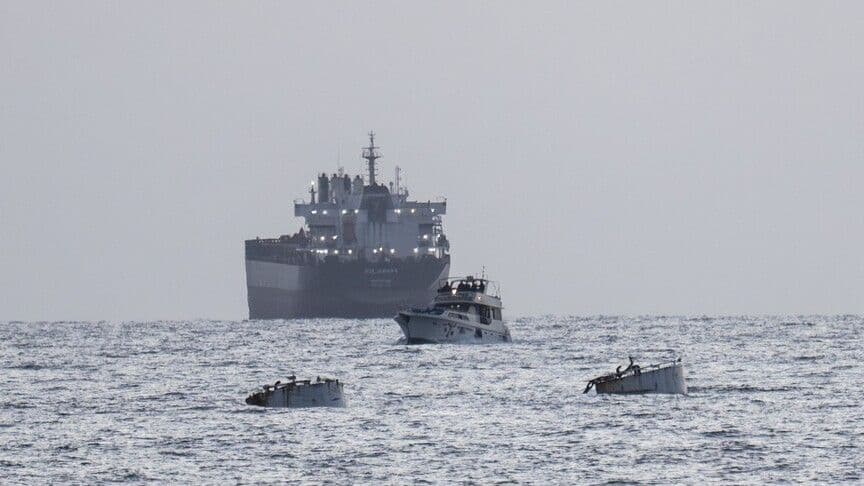
Activists aboard a Gaza-bound flotilla were transferred to Ashdod Wednesday. The transfer followed the interception of the vessel by Israeli forces in international waters, according to the legal rights organization Adalah.
In a public statement, Adalah said the activists included “international solidarity activists, human rights defenders, and medical volunteers” participating in the Global Sumud Flotilla. The group accused Israel of carrying out an “unlawful military interception” before bringing the detainees into Israeli territory against their will.
Adalah said information concerning the activists’ precise whereabouts, legal access, detention status, and physical condition had been “severely restricted” following their transfer to Ashdod Port. Israeli authorities had not publicly released a full detainee list or detailed legal justification at the time of the statement.
The dispute now centers on jurisdiction.
Adalah says Israeli forces intercepted the Global Sumud Flotilla in international waters before transferring activists to Ashdod Port.
The detainees reportedly include medical volunteers and human rights activists from multiple countries.
Israeli authorities had not publicly disclosed detailed information about the activists’ legal status or condition as of Wednesday.
The confrontation revives long-running disputes over Gaza’s blockade and maritime enforcement powers.
Related News
- Nigerian Lives Lost Abroad: A Growing List of Deaths Leaves Families Seeking Answers Across Three Continents
- UN Records 9,788 Verified Cases of Conflict Sexual Violence in 2025 as Abuse Expands Across 21 Countries
- Israel Claims Killing of Hamas Commander Mohammed Awda Deepens Questions Over Gaza Escalation
Adalah Framed the Interception as a Violation of International Law
Adalah’s statement used unusually direct legal language. The organization described the activists as having been “forcefully abducted” after setting sail to challenge the blockade imposed on Gaza.
Under international maritime law, the legality of intercepting civilian vessels outside territorial waters depends heavily on whether a blockade is recognized as lawful under armed conflict rules. Israel has consistently argued that its naval blockade of Gaza is a security measure aimed at preventing weapons transfers to Hamas and affiliated armed groups.
Human rights organizations, including several United Nations experts in past flotilla incidents, have argued that humanitarian missions in international waters cannot automatically be treated as military threats without individualized evidence. Adalah’s statement appears designed to establish that legal argument early, before formal court proceedings or deportation hearings begin.
Ashdod Port has previously served as the intake point for activists detained during attempts to breach the Gaza blockade. Israeli authorities have historically processed flotilla participants through immigration detention systems before deportation, administrative hearings, or criminal review.
The Global Sumud Flotilla reportedly carried humanitarian aid intended for Gaza. Adalah did not publicly specify the cargo inventory, tonnage, or countries represented aboard the vessel. Israeli authorities likewise had not released inspection records or seizure details as of Wednesday.
Our analysis of Adalah’s public statement found no disclosure of the exact coordinates where the interception occurred, despite repeated references to “international waters.” That distinction could become central if legal challenges emerge in Israeli courts or before international bodies reviewing maritime enforcement actions.
Gaza’s Blockade Remains the Central Legal Dispute
The interception cannot be separated from the broader blockade regime surrounding Gaza. Israel and Egypt have maintained varying levels of restrictions on the territory since Hamas took control of Gaza in 2007.
Israeli officials have repeatedly stated that maritime restrictions are intended to prevent arms smuggling and militant reinforcement. Humanitarian organizations, including international relief agencies and legal advocacy groups, have countered that the blockade severely restricts civilian movement, medical access, reconstruction materials, and food distribution.
Yet, the operational reality has intensified since the current Gaza war expanded regional scrutiny of aid access routes. Maritime aid missions have increased partly because overland delivery systems remain unstable and politically contested.
Information Restrictions Around Detainees Raise Immediate Legal Questions
Adalah’s most concrete allegation concerned restricted access to detainee information. The organization said legal representatives had limited knowledge of where activists were being held and what conditions they faced after transfer to Israeli territory.
That creates procedural concerns.
Under Israeli law, detainees generally retain rights to legal representation and judicial review. But flotilla detentions have historically involved rapid transfers between military custody, immigration authorities, and civilian detention facilities. Delays in access often become part of later legal disputes.
We reviewed prior flotilla detention procedures publicly documented by Israeli rights groups and found that access disputes frequently emerged within the first 24 to 48 hours after interception. Those disputes typically centered on lawyer access, deportation paperwork, and communication restrictions involving foreign nationals.
Israeli authorities had not publicly responded in detail to Adalah’s characterization of the operation at the time of reporting. Without official operational records, it remains unclear whether force was used during boarding, whether injuries were reported, or whether the vessel’s crew resisted interception.
The Diplomatic Fallout May Depend on Nationalities Involved
The composition of the flotilla participants could shape the next phase of the dispute more than the interception itself. Previous flotilla incidents have escalated into diplomatic confrontations when detained activists included lawmakers, doctors, journalists, or citizens of allied governments.
Nationality changes the pressure.
Adalah did not publish a complete manifest identifying the activists or medical personnel onboard. If foreign embassies intervene on behalf of detained citizens, the matter could move beyond Israeli domestic legal procedures into formal diplomatic negotiations.
Several past flotilla confrontations produced deportation orders rather than extended criminal prosecutions. Israeli authorities have often preferred removal procedures over lengthy courtroom battles that could expose military operational details or international scrutiny.
Who intercepted the flotilla?
Adalah said Israeli forces intercepted the vessel in international waters before transferring the activists to Ashdod Port. Israeli authorities had not publicly released a detailed operational account.
What was the flotilla carrying?
Adalah described it as a humanitarian aid mission headed for Gaza. Specific cargo details had not been publicly disclosed by either side.
Are the activists under arrest?
That remains unclear. Adalah said information about their legal status and whereabouts was being restricted as of Wednesday.
The next unresolved question is procedural. Israeli authorities have not disclosed whether the detainees will face deportation proceedings, immigration detention hearings, or criminal allegations before an Israeli court, nor have they identified the legal basis for continued custody following the vessel’s interception in international waters.
Add a Comment