


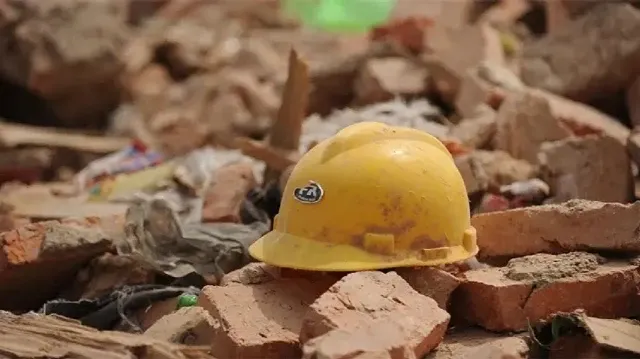
By Saturday morning after a gas explosion tore through the Liushenyu coal mine in Qinyuan county, located in China’s coal-heavy Shanxi province. State media reported that 247 workers were underground when the blast occurred Friday evening, forcing emergency crews into one of the country’s deadliest industrial rescue operations in recent years.
Chinese authorities said rescue teams, medical personnel, and mining specialists remained underground searching for survivors while engineers worked to stabilize ventilation systems and prevent secondary explosions. Officials have not publicly disclosed how many miners remain unaccounted for.
Qinyuan Explosion Exposed Persistent Risks Inside Shanxi’s Coal Network
The explosion occurred at the Liushenyu mine in Qinyuan County, a region deeply tied to China’s coal production system. Shanxi province supplies a significant share of the country’s thermal coal output and has long occupied a central role in Beijing’s energy security strategy.
Chinese state media confirmed that the blast was linked to underground gas accumulation, a recurring hazard in coal mining operations where methane concentrations can ignite under confined conditions. Authorities have not yet released technical findings identifying the ignition source or the exact tunnel section where the explosion began.
Mining disasters in China declined sharply over the past two decades after regulators imposed stricter licensing rules, production caps, and mandatory safety inspections. Data from China’s National Mine Safety Administration previously showed fatalities dropping substantially compared with the early 2000s, when major coal accidents regularly killed hundreds of workers annually.
But fatal incidents never disappeared.
Our analysis of publicly reported Chinese mining disasters since 2022 identified at least six major coal-related accidents involving explosions, collapses, or flooding across Inner Mongolia, Shaanxi, Xinjiang, and Shanxi provinces. Several resulted in official disciplinary actions against mine operators and local regulators accused of ignoring safety violations.
Related News
- Nigerian Lives Lost Abroad: A Growing List of Deaths Leaves Families Seeking Answers Across Three Continents
- UN Records 9,788 Verified Cases of Conflict Sexual Violence in 2025 as Abuse Expands Across 21 Countries
- Israel Claims Killing of Hamas Commander Mohammed Awda Deepens Questions Over Gaza Escalation
The pattern remains consistent. Production pressure collides with enforcement limits, especially in regions where local economies remain heavily dependent on coal extraction revenue and employment.
Xi Jinping Ordered Nationwide Inspections After 247 Workers Were Underground
Xi Jinping ordered what state media described as “full-scale rescue efforts” following the explosion and instructed authorities to strengthen safety enforcement nationwide. He also demanded accountability investigations into the cause of the disaster and directed regional officials to eliminate hidden industrial risks.
The language followed a familiar script used after major industrial accidents in China. Central authorities typically issue immediate directives emphasizing accountability, rapid rescue coordination, and nationwide inspections. The challenge historically has been implementation at provincial and municipal levels where economic incentives often favor uninterrupted industrial output.
Chinese Premier Li Qiang ordered enhanced coordination among emergency agencies, while Vice Premier Zhang Guoqing traveled directly to Shanxi province to supervise rescue operations.
The deployment of a senior State Council official signals political sensitivity around the scale of the disaster. Beijing generally reserves direct vice premier oversight for incidents likely to trigger national scrutiny or expose regulatory failures with broader implications for industrial policy.
Authorities have not confirmed whether the Liushenyu mine had previously received safety citations or operational penalties. Chinese regulators also have not disclosed inspection records, methane monitoring reports, or production targets tied to the facility before the explosion occurred.
Those omissions are significant because prior mining investigations in China have repeatedly uncovered falsified ventilation data, disabled gas sensors, and pressure on local managers to maintain production quotas during periods of high energy demand.
Shanxi’s Coal Dependence Continues Despite Years of Safety Campaigns
Shanxi Province occupies a difficult position inside China’s industrial economy. The province remains one of the country’s largest coal producers while simultaneously serving as a test case for Beijing’s promises on industrial modernization and workplace safety.
The central government has spent years attempting to consolidate smaller mines, eliminate illegal operations, and impose stricter compliance standards. Yet coal demand surged repeatedly after electricity shortages and industrial slowdowns disrupted energy markets during recent years.
We reviewed official Chinese policy announcements issued after previous coal accidents between 2021 and 2025 and found repeated directives ordering mines to increase both production capacity and safety inspections simultaneously. Those objectives often compete directly inside older mining systems where ventilation upgrades, evacuation routes, and methane control require expensive operational shutdowns.
State media has not disclosed ownership details for the Liushenyu mine or whether it operates under provincial, municipal, or mixed commercial oversight. That distinction may determine how aggressively accountability investigations proceed. Previous Chinese industrial probes have occasionally resulted in arrests of mine executives, local officials, or regulators accused of negligence and falsified reporting.
Yet investigations inside China’s mining sector rarely unfold transparently in real time. Casualty figures, inspection findings, and disciplinary measures are often released incrementally through state media summaries rather than independent public hearings.
Rescue Operations Now Depend on Ventilation, Mapping, and Time
Emergency response teams continue operating underground as officials attempt to determine how many workers remain trapped inside damaged tunnel systems. Gas explosions create unusually difficult rescue environments because methane concentrations, collapsed shafts, and disrupted oxygen flow can trigger secondary blasts or suffocation risks for both miners and responders.
Chinese authorities have not released detailed mine maps or explained whether communication systems remained functional after the explosion. They also have not clarified how quickly ventilation controls were restored following the initial blast.
Those technical details will shape survival chances.
Mining rescue operations in deep coal systems often extend for days because crews must continuously monitor methane levels before entering compromised tunnels. Investigators also need to determine whether underground fires continue burning after the explosion itself.
Families gathered near the site Saturday awaiting updates from rescue officials and hospital staff. State media footage showed ambulances, excavators, and emergency convoys moving through the mining area under heavy security presence.
Public anger is building carefully.
At least 82 miners died after a gas explosion struck the Liushenyu coal mine in Shanxi province while 247 workers were underground.
Chinese authorities launched a nationwide industrial safety review, but regulators have not released inspection records tied to the mine itself.
The disaster has renewed scrutiny of whether production targets inside China’s coal sector continue undermining enforcement of methane and ventilation rules.
Senior officials including Xi Jinping, Li Qiang, and Zhang Guoqing intervened quickly, signaling concern that the accident could expose broader regulatory failures.
What caused the explosion?
Authorities say gas accumulation triggered the blast. Investigators have not yet identified the ignition source or released technical findings.
How many miners are still missing?
Officials confirmed 247 workers were underground but have not publicly clarified how many remain trapped or unaccounted for.
Why does Shanxi keep appearing in mining accident reports?
Because Shanxi is one of China’s largest coal-producing provinces. High production volumes, aging infrastructure, and economic dependence on mining create persistent safety pressures.
The next unresolved question now sits with China’s State Council investigators and provincial regulators in Shanxi. Authorities have not disclosed when the Liushenyu mine’s inspection records will be released, whether executives or local officials face criminal liability, or how compensation claims for the families of the 82 dead miners will be calculated under Chinese workplace fatality law.
Add a Comment