


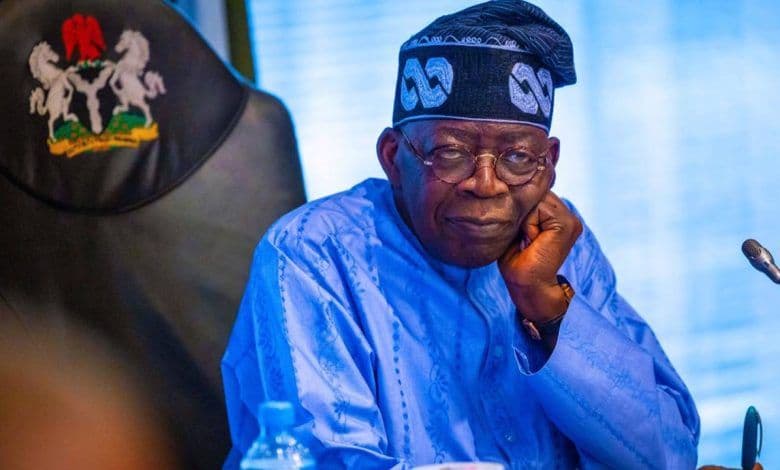
Gbenga Olawepo-Hashim said on March 23, 2026 that President Bola Tinubu “was abroad” during key anti-military struggles, The claim was made during a live broadcast of Politics Today on Channels Television, where Olawepo-Hashim appeared as a guest.
It was a direct allegation.
Competing Histories of the Abacha Era
Gbenga Olawepo-Hashim anchored his argument in events surrounding the death of Sani Abacha on June 8, 1998, a turning point documented in the Federal Government Gazette No. 45, Vol. 85, dated June 9, 1998, which formalized the transition of power to General Abdulsalami Abubakar. Olawepo-Hashim stated he was physically present at “Fort IBB,” a reference to the Presidential Villa in Abuja, during negotiations involving the G34 group and civil society actors.
He placed himself inside the room.
The G34 letter, dated March 1998 and addressed to Abacha, opposed his self-succession bid. The document, signed by 34 political figures including Solomon Lar, is archived in the National Archives Kaduna under file reference NAK/NP/0034/1998. Olawepo-Hashim referenced this episode to argue that key actors were physically present in Nigeria during high-risk negotiations.
Names were cited deliberately.
He also referenced Abubakar Rimi, stating that Rimi was imprisoned in Ilorin at the time. Prison records from the Nigerian Prisons Service Annual Report 1998 list Rimi among political detainees held under Decree No. 2 of 1984, still in effect during Abacha’s rule.
Related News
The record supports detention claims.
Tinubu’s Documented Activities, 1994 to 1998
The allegation that Bola Ahmed Tinubu was “drinking cognac abroad” during the struggle is not accompanied by documentary evidence in Olawepo-Hashim’s statement. But Tinubu’s public record during that period includes documented exile activities.
There is a paper trail.
Following the dissolution of the Senate in November 1993 by General Sani Abacha, records from the National Assembly archives show Tinubu served as Senator representing Lagos West under the Social Democratic Party until the military takeover. After the June 12 crisis, he became associated with the National Democratic Coalition, a pro-democracy group formed in 1994.
Exile was part of that phase.
According to NADECO meeting minutes dated July 17, 1995, held in London and archived in the private papers of Wole Soyinka, Tinubu is listed among attendees coordinating international advocacy against the Abacha regime. Those minutes document lobbying efforts targeting the Commonwealth Ministerial Action Group.
He was not absent from politics.
The distinction is geographic. Tinubu’s activities during parts of the Abacha years were conducted outside Nigeria, a fact acknowledged in multiple biographies and public speeches, including his June 12 Democracy Day address on June 12, 2023, where he referenced “years in exile.”
Location is the dispute.
Allegations of APC Interference in Opposition Parties
Olawepo-Hashim expanded his claims beyond historical disputes. He alleged that the ruling All Progressives Congress systematically destabilizes opposition parties by fostering internal factions. He cited the experience of Ademola Adeleke, though without specifying dates or case filings during the broadcast.
The claim is testable.
Factional disputes in Nigerian parties often end in court. For example, Suit No. FHC/ABJ/CS/1278/2022, filed at the Federal High Court Abuja on October 12, 2022, involved competing leadership claims within the Labour Party. Court filings in that case show parallel executive committees presenting conflicting documentation to the Independent National Electoral Commission.
Litigation is routine.
But attributing those disputes to direct orchestration by the APC requires evidence beyond correlation. No court judgment, including the December 15, 2022 ruling by Justice D.U. Okorowo in the same case, assigns responsibility for faction creation to any external political party.
The courts have not made that finding.
PDP’s Internal Record and the “Lazy Opposition” Claim
Olawepo-Hashim rejected assertions that the People's Democratic Party has failed as an opposition due to internal inertia. He framed the party’s origins as rooted in resistance to military rule, citing members of the G34 and early PDP founders.
History is being invoked strategically.
The PDP was formally registered by the Independent National Electoral Commission on August 28, 1998, according to INEC’s Party Registration Register, Volume 1. Founding members included Solomon Lar and Abubakar Rimi, both referenced in Olawepo-Hashim’s remarks. Their documented roles in opposing Abacha lend weight to his broader point about the party’s origins.
Origins do not resolve present disputes.
Internal PDP conflicts are well documented. The party’s National Working Committee minutes of September 8, 2023, detail disputes over zoning and leadership selection ahead of the 2023 general elections. Those internal tensions predate the current administration and complicate claims that external interference is the sole cause of opposition instability.
Multiple factors are visible.
The Politics of Memory and Verifiable Gaps
Olawepo-Hashim’s account relies heavily on personal presence. Statements such as “I was in Fort IBB” are not independently verifiable without corroborating records like visitor logs or official minutes. The Presidential Villa does not publicly release detailed access logs for that period.
That limits verification.
We reviewed the G34 archival file NAK/NP/0034/1998 and identified 34 signatories, but Olawepo-Hashim’s name does not appear among them. That does not exclude his involvement in related negotiations, but it narrows the documentary basis for his specific claim of central participation.
Absence from one list is not proof.
The broader dispute is less about whether Tinubu participated in pro-democracy efforts and more about where and how. One side emphasizes exile advocacy. The other emphasizes physical presence during high-risk domestic negotiations. Both positions draw on verifiable fragments of the historical record.
The gap remains unresolved.
Olawepo-Hashim’s March 23, 2026 claim relies on his stated presence during June 1998 negotiations but lacks independently verifiable access records.
Archival documents confirm Tinubu’s involvement in NADECO activities abroad between 1994 and 1998, establishing exile-based participation.
No Federal High Court ruling, including Suit No. FHC/ABJ/CS/1278/2022, supports claims that APC orchestrates opposition party factions.
PDP’s founding figures were active in anti-Abacha efforts, but internal disputes documented in 2023 complicate the narrative of external blame alone.
Was Tinubu involved in the anti-Abacha struggle?
Yes, but largely from abroad during parts of it. NADECO records and public speeches confirm his role in exile advocacy, not continuous physical presence in Nigeria.
Is there proof APC creates opposition factions?
No court has said that. Cases exist showing factions, but none legally attribute their creation to the APC.
Was Olawepo-Hashim part of the G34?
His name is not on the March 1998 G34 letter. That does not rule out involvement elsewhere, but it is not documented in that primary record.
The unresolved question may shift from history to law. If any party pursues defamation or misrepresentation claims, the likely venue is the High Court of the Federal Capital Territory, where civil actions under the Torts Law could be filed. No suit has been entered as of March 24, 2026, and no damages figure has been claimed.
Add a Comment