


Venezuela has begun freeing a significant number of political prisoners, including foreign nationals, in a move welcomed by US President Donald Trump as a sign of cooperation following the removal of former leader Nicolas Maduro.
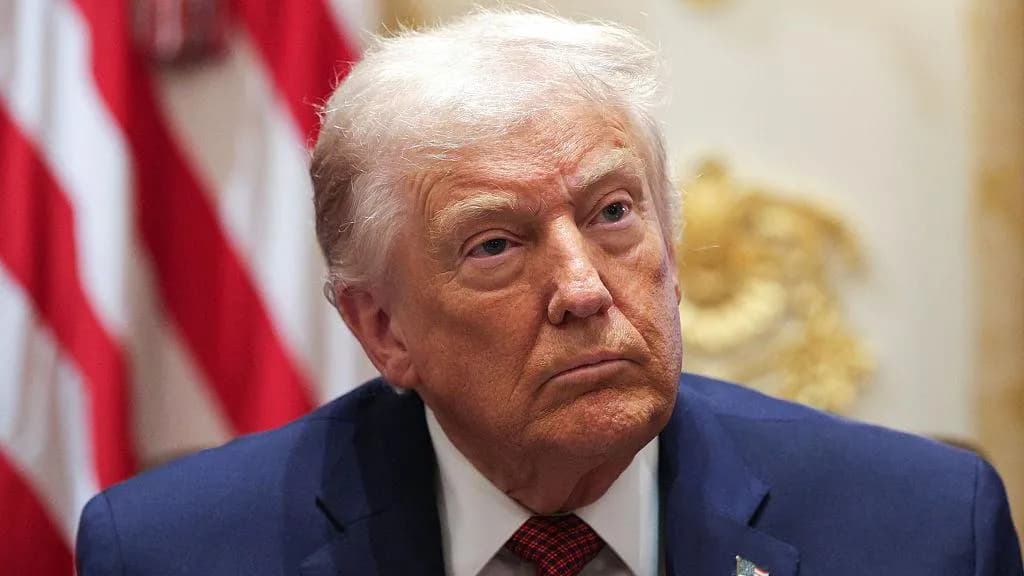
The releases, which started Thursday, mark the first major step under the interim leadership of Delcy Rodriguez, who assumed power with support from Washington. Trump praised the action on Friday in a social media post, calling it “a very important and smart gesture” and describing it as an indication that the countries are “working well together.”
He further noted that the United States had called off a planned second wave of military strikes against Venezuela as a result of the ongoing collaboration.
Opposition Figures Among Released
Among those freed was Enrique Marquez, a former opposition candidate who ran against Maduro in the contested 2024 presidential election. Video footage captured by a local journalist showed Marquez with his wife and fellow released opposition member Biagio Pilieri, who described the moment as “It’s all over now.”
The White House credited Trump’s pressure for securing the prisoners’ release. “This is one example of how the president is using maximum leverage to do right by the American and Venezuelan people,” Deputy Press Secretary Anna Kelly told AFP.
Trump also broadened his threats against drug trafficking organizations during an interview with Fox News on Thursday night. He announced plans to strike land-based cartel operations, complementing prior US naval operations in the Eastern Pacific and Caribbean, which destroyed at least 31 vessels and killed 107 individuals. “We are going to start now, hitting land with regard to the cartels. The cartels are running Mexico,” he told broadcaster Sean Hannity.
Meanwhile, Interim leader Delcy Rodriguez’s brother, Jorge Rodriguez, who serves as parliament speaker, confirmed that “a large number of Venezuelan and foreign nationals” were being released to promote “peaceful coexistence.” He did not specify exact numbers or locations.
Venezuelan opposition leader Maria Corina Machado praised the announcement on social media, asserting, “Injustice will not last forever and… truth, although it be wounded, ends up finding its way.”
Related News
- The UN's migration agency says trafficking networks have forced people from more than 80 countries into online scam compounds across Asia.
- More than 12,000 people have been arrested by US immigration authorities after tips from the Office of Refugee Resettlement.
- China's trade with Africa hit 1.41 trillion yuan in the first half of 2026.
Families Await Their Loved Ones
Spanish-Venezuelan activist Rocio San Miguel was among five Spanish citizens released, according to Spain’s foreign ministry. She had been detained since February 2024 over an alleged plot to assassinate Maduro, which she denied.
Security was increased outside El Helicoide, a notorious Caracas detention center run by the intelligence services, as families gathered to await news. One mother of a detained activist from Machado’s party expressed anxiety to AFP, saying, “I’m nervous. Please God let it be real.”
Earlier this week, Trump told Republican lawmakers that Rodriguez’s administration was closing what he described as a “torture chamber” in Caracas, fueling speculation that El Helicoide would be shuttered. Venezuelan rights NGO Foro Penal estimates that over 800 political prisoners remain in detention across the country.
Maduro’s Removal and US Intervention
The release of prisoners comes after the removal of Maduro in a special forces operation involving airstrikes that left at least 100 people dead, according to local sources. US forces transported Maduro and his wife, Cilia Flores, to New York to face trial on drug-related charges.
Trump has stated that the United States will oversee a transitional period in Venezuela, including tapping into the nation’s vast oil reserves. Rodriguez has publicly rejected the notion that Venezuela is “subordinate or subjugated,” emphasizing that “Nobody surrendered. There was fighting for the homeland” during the US-led operation.
Thousands of Maduro supporters rallied in Caracas on Thursday demanding his release, waving red flags and demonstrating loyalty to the former administration. Meanwhile, the US Senate advanced a resolution to curb military interventions in Venezuela, though it is expected to face resistance in the Republican-majority House.
Oil Becomes Central to US-Venezuela Cooperation
Venezuela holds the world’s largest proven oil reserves, making energy resources a focal point in US-Venezuelan negotiations. Earlier this week, Trump announced plans for the United States to purchase between 30 million and 50 million barrels of Venezuelan crude. Caracas would then use the proceeds to buy US-made goods. Rodriguez defended the arrangement, describing it as standard international trade rather than a concession.
Public opinion in Caracas appears mixed. Jose Antonio Blanco, 26, said, “I feel we’ll have more opportunities if the oil is in the hands of the United States than in the hands of the government.” Trump is also scheduled to meet with US oil executives to discuss the deal.
However, critics warn that Rodriguez’s authority may depend heavily on Washington. Andres Izarra, Venezuela’s former information minister, told AFP that “Her power comes from Washington. If Trump decides she’s no longer useful, she’ll go like Maduro.”
The current developments in Venezuela underscore how control over energy resources can shape geopolitical influence. While prisoner releases signal a potential easing of tensions, the country remains politically polarized, and the sustainability of Rodriguez’s government is tied to continued US support. Observers will be watching how oil deals, domestic opposition, and social unrest evolve in the coming months. Visual data charts illustrating prisoner releases over time, alongside oil production and exports, could help contextualize these developments for readers.
Venezuela’s release of political prisoners represents both a humanitarian gesture and a strategic political move with implications for US-Venezuelan relations. While it is a step toward reconciliation, the broader political and economic landscape remains fragile. How the interim government balances domestic expectations, foreign relations, and control over oil resources will likely define the country’s path in the near future.
Add a Comment