


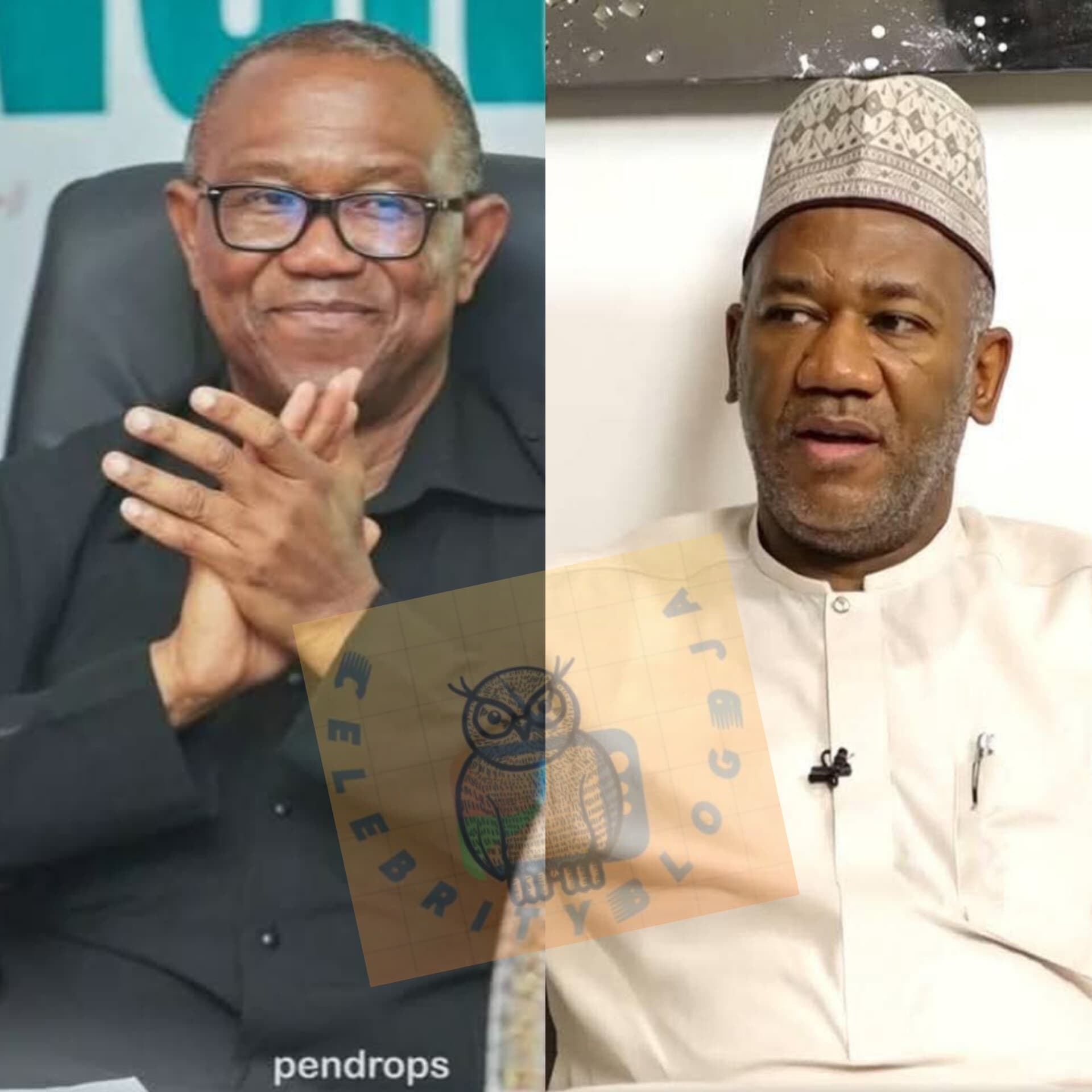
Former vice-presidential candidate outlines conditions for reconciliation as opposition realignments ahead of 2027 gather pace
Datti Baba-Ahmed, the former vice-presidential candidate of the Labour Party in the 2023 general election, has said that Peter Obi would be welcomed back into the party if he fails to secure the presidential ticket of the African Democratic Congress, ADC, ahead of the 2027 elections.
Baba-Ahmed made the remarks on Friday during an interview on The Morning Brief, a programme aired on Channels Television. His comments come amid growing political realignments within Nigeria’s opposition space, as key figures begin to position themselves for the next electoral cycle.
According to Baba-Ahmed, the Labour Party remains open to reconciliation, stressing that Obi’s return would be preferable to pursuing what he described as “another type of agenda” outside the platform on which they jointly contested the last presidential election.
“I also said if Peter Obi does not get the ticket there in ADC, he is more than welcome back to the Labour Party,” Baba-Ahmed said during the interview. “I will stand there and nobody will do anything bad to Peter Obi. It is better for him to come back than for him to do another type of agenda.”
Context of Obi’s Move to the ADC Coalition
Peter Obi and Datti Baba-Ahmed emerged as the Labour Party’s presidential and vice-presidential candidates during the 2023 elections, a contest that significantly altered Nigeria’s political conversation. Although they did not win, their campaign energized millions of young voters and first-time participants, reshaping Labour Party’s national relevance.
However, nearly three years after that election, Obi has aligned with a coalition associated with the African Democratic Congress, a move widely interpreted as part of broader opposition negotiations ahead of 2027. While Obi has not formally declared his intention to run under the ADC, his involvement has sparked intense debate within Labour Party ranks.
According to Baba-Ahmed, the decision does not erase the political bond formed during the 2023 campaign. He maintained that Labour Party’s door remains open, provided Obi does not secure the ADC presidential ticket.
Labour Party’s Internal Calculations
Baba-Ahmed’s remarks offer a rare glimpse into Labour Party’s internal thinking at a time when the party is grappling with questions about its future direction. Once considered a fringe political platform, Labour Party gained unprecedented national visibility during the last election cycle, largely driven by Obi’s candidacy.
Related News
Political analysts say the party now faces a strategic dilemma. It must decide whether to rebuild its structure around the momentum generated in 2023 or risk fragmentation as leading figures explore other platforms.
According to political analyst Aisha Bello of the Centre for Democratic Studies in Abuja, Baba-Ahmed’s comments suggest an attempt to keep Labour Party relevant in ongoing opposition talks.
“What we are seeing is a pragmatic approach,” Bello said in a telephone interview. “Labour Party understands that Peter Obi still commands significant public goodwill. Leaving the door open is a way of protecting the party’s relevance, even if alliances shift.”
Pride in a Shared Political Journey
Despite the current uncertainty, Baba-Ahmed emphasized that he remains proud of what he and Obi achieved together in 2023. He described their joint campaign as a turning point that challenged traditional voting patterns and forced established parties to rethink their engagement with young Nigerians.
He did not frame Obi’s current political moves as a betrayal, but rather as part of the complex negotiations that often precede major elections in Nigeria.
According to him, political realignments are not unusual at this stage of the electoral cycle, particularly when opposition parties are seeking a viable path to unseating an incumbent administration.
With more than two years to the 2027 presidential election, the battle for opposition unity has already begun. Analysts note that early positioning can shape fundraising, grassroots mobilization, and elite endorsements long before formal campaigns start.
The ADC, while relatively small, has become a focal point for coalition discussions, raising questions about whether Nigeria’s fragmented opposition can coalesce around a single candidate. Obi’s participation in these talks has therefore drawn outsized attention.
According to reports from Punch, several opposition figures are exploring coalition arrangements as a way to avoid vote splitting, a factor widely blamed for opposition losses in previous elections.
Baba-Ahmed’s comments highlight Labour Party’s desire not to be sidelined in these negotiations, even if its most prominent figure temporarily looks elsewhere.
Reactions and Implications
Reactions to Baba-Ahmed’s statement have been mixed. Some Labour Party supporters see it as a mature gesture aimed at preserving unity, while others argue that the party should focus on building independent structures rather than waiting on Obi’s decisions.
For now, Obi himself has not publicly responded to Baba-Ahmed’s remarks. His silence leaves open several questions, including whether he intends to formally seek the ADC ticket or leverage coalition talks to strengthen his bargaining position.
Political observers say the next major signal to watch will be the ADC’s internal processes, including whether it formally opens its presidential primaries and who emerges as serious contenders.
Looking Ahead to 2027
As Nigeria edges closer to another election cycle, the dynamics between Peter Obi, Labour Party, and emerging opposition coalitions are likely to remain fluid. Baba-Ahmed’s remarks suggest that personal relationships forged during the 2023 campaign could still influence decisions, even amid shifting political loyalties.
Whether Obi ultimately returns to Labour Party or charts a new course through the ADC or another platform, his next move will have significant implications for opposition strategy, voter mobilization, and the broader contest for power in 2027.
For Labour Party, the challenge will be balancing openness with institutional strength. For Obi, it will be choosing a platform that aligns political ambition with electoral viability. And for Nigerian voters, the unfolding negotiations may determine whether the opposition can present a credible, united alternative in the years ahead.
Add a Comment