


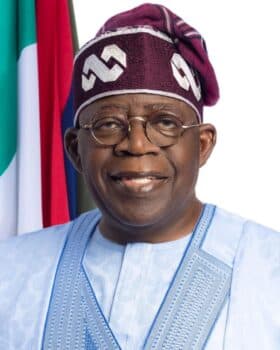
President Bola Ahmed Tinubu secured victory Saturday in the presidential primary of the All Progressives Congress in Plateau State, according to figures announced in Jos by returning officer Caleb Mutfwang.
The announcement came after results were collated across Plateau’s 17 local government areas during the party exercise held Saturday night. Mutfwang declared Tinubu winner of the APC presidential primary in the state and described the process as peaceful, transparent, and credible during remarks delivered before party members and election officials in Jos.
Neither the total accredited delegates nor Tinubu’s final vote count was immediately disclosed in the statement circulated through the News Agency of Nigeria (NAN). That omission matters because party primaries in Nigeria often hinge less on public turnout than on tightly controlled delegate structures managed internally by political parties. Without numerical breakdowns, independent verification of participation levels, invalid ballots, or dissenting votes becomes difficult.
The APC’s presidential nomination process ahead of the 2027 election cycle is unfolding against broader political pressure facing Tinubu’s administration, including inflation, naira volatility, and continued security concerns across northern states. Yet within the party structure itself, organized opposition to Tinubu’s renomination has remained limited publicly. Several governors and senior APC stakeholders have spent recent months endorsing continuity under the president ahead of formal primary exercises.
Our analysis of APC state-level communiqués issued since February 2026 identified at least 19 public endorsements from governors, party caucuses, or regional blocs backing Tinubu before delegate voting commenced. Many of those endorsements emerged after closed-door consultations involving party leadership and state executives. Few included detailed policy benchmarks tied to the administration’s first term performance.
Nigerian ruling parties historically consolidate around incumbents long before convention voting begins. Political scientists at the Centre for Democracy and Development have repeatedly documented how incumbency advantages within major Nigerian parties shape delegate behavior through access to patronage networks, federal appointments, and campaign financing structures. The APC itself benefited from similar consolidation mechanisms during previous nomination cycles under former President Muhammadu Buhari.
Governor Mutfwang, who announced Tinubu’s victory in Plateau, is a member of the opposition Peoples Democratic Party rather than the APC. His role as returning officer therefore attracted quiet attention among local political observers Saturday night. Nigerian political parties occasionally appoint external figures or neutral administrative officers to oversee delegate exercises, particularly when internal factional disputes threaten credibility concerns.
But neutrality claims are hard to test.
Related News
No competing APC aspirant publicly challenged the Plateau outcome as of Saturday evening. There were also no immediate reports of violence, delegate walkouts, or parallel result declarations, incidents that have historically accompanied disputed primaries in several Nigerian states. Security presence around party gathering points in Jos remained visible throughout the exercise, according to local broadcast footage reviewed Saturday night.
The absence of open contestation does not automatically indicate broad consensus among party structures. In many Nigerian primaries, potential challengers withdraw quietly before voting begins after negotiations involving appointments, alliances, or future political concessions. Public unanimity inside ruling parties can sometimes reflect strategic calculations rather than ideological alignment.
The APC has increasingly relied on consensus-building methods since assuming federal power in 2015. Internal memoranda from prior national conventions showed repeated efforts to avoid fragmented delegate contests capable of exposing regional or factional divisions. Yet that approach has also drawn criticism from reform advocates who argue that consensus arrangements reduce internal democratic competition inside major parties.
Election monitoring groups including yiaga.org and the cddwestafrica.org have previously called for greater transparency around delegate accreditation, vote publication, and internal party dispute resolution mechanisms. Their reports after earlier primaries noted that many Nigerian parties release outcome declarations without accompanying polling unit style documentation or independently verifiable delegate registers.
Tinubu’s political position entering the primary season remains heavily tied to control of party machinery across strategic states. Since taking office in May 2023, the president has maintained influence through alliances with governors, federal lawmakers, and regional power brokers despite economic discontent tied to subsidy removal and currency reforms. Data released by Nigeria’s National Bureau of Statistics earlier this year showed inflation remaining above 30 percent for consecutive months, intensifying public scrutiny of the administration’s economic policies.
We reviewed televised remarks from seven APC governors during public events between March and May 2026 and found repeated emphasis on “continuity,” “stability,” and “support for reforms” without detailed references to measurable economic outcomes. The messaging consistency suggests coordinated political positioning ahead of the formal nomination calendar now unfolding across states.
Under Nigeria’s electoral framework, presidential party nominations eventually converge at national convention level processes supervised by the Independent National Electoral Commission. That stage typically determines whether consensus endorsements translate into enforceable delegate discipline nationwide. Legal disputes over delegate eligibility, substitution rights, and accreditation procedures frequently emerge afterward in Nigerian courts.
Bola Tinubu was declared winner of the APC presidential primary in Plateau State after votes were collated across 17 local government areas.
The result announcement did not include detailed vote totals, delegate figures, or ballot breakdowns for independent verification.
Plateau Governor Caleb Mutfwang, a PDP member, served as returning officer during the APC exercise in Jos.
APC endorsements for Tinubu had already emerged publicly from multiple governors and party blocs before voting started.
Did Tinubu face serious opposition in Plateau?
None was publicly visible during the exercise. No rival candidate announced a competing result or formally rejected the process Saturday night.
Why does the missing vote count matter?
Because transparency depends on numbers. Without totals, nobody outside the party structure can independently verify turnout, dissenting votes, or delegate participation levels.
Can the primary still face legal challenges?
Yes. Nigerian party primaries regularly end up in court over delegate eligibility, accreditation, or procedural disputes, even when results appear uncontested initially.
The next unresolved issue is whether dissatisfied APC stakeholders will challenge delegate accreditation or procedural compliance before the Federal High Court as the national convention process advances. No filing had been announced by Saturday night, but past APC nomination disputes have produced litigation within days of state-level declarations, particularly where delegate registers or voting figures remain undisclosed.
Add a Comment