


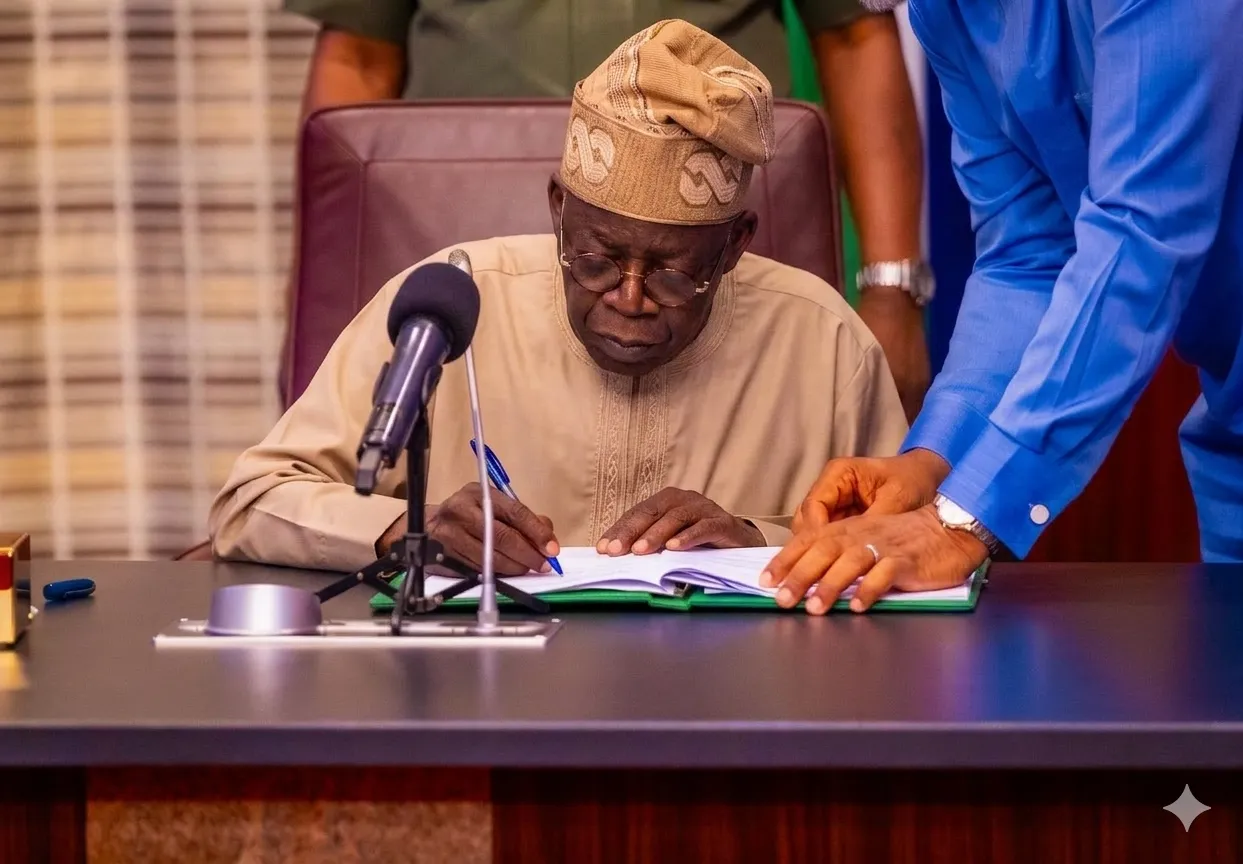
President Bola Tinubu has nominated a 32-year central banking veteran to the CBN's second-highest seat. The move consolidates capital-market and reserve-management experience in one role. The Senate must still sign off.
The Appointment and Its Legal Basis
On Wednesday, March 2026, Bayo Onanuga, Special Adviser to President Tinubu on Information and Strategy, issued a statement confirming the President's approval of Lamido Abubakar Yuguda as Deputy Governor of the Central Bank of Nigeria. The appointment is expressly grounded in Section 8(1) of the Central Bank of Nigeria Act, 2007, which empowers the President to nominate CBN Deputy Governors, subject to Senate confirmation.
The Senate has not yet scheduled a confirmation hearing.
Yuguda's predecessor in the role, Mr. Bala Bello, was recently appointed Special Adviser on Political Economy, a position outside the CBN's statutory framework and carrying no formal monetary-policy vote. The transition creates a structural vacancy in the CBN's Board of Directors, which under the same Act is required to comprise a Governor and four Deputy Governors.
The Onanuga statement asks both Yuguda and Bello to 'discharge their responsibilities with renewed dedication, professionalism, and commitment to Nigeria's economic stability and growth.' That language carries no operational specificity. What it does confirm is the sequence: Bello moved first, Yuguda fills the gap.
A Resume Built Inside the System
Lamido Yuguda graduated from Ahmadu Bello University in 1983 with a BSc in Accountancy, then spent a year in private practice before joining the CBN in 1984 as a Senior Supervisor in the Foreign Operations Department. That entry point matters: foreign operations and reserve management are technically linked functions, and he would spend more than three decades rotating through that nexus.
He left. Then he came back.
From 1997 to 2001, Yuguda worked as an economist in the Africa Department of the International Monetary Fund in Washington, D.C. He returned to the CBN in 2001, eventually rising to Director of the Reserve Management Department, a post he held for six years before retiring from the apex bank in 2016. During those six years, the CBN's external reserves oscillated sharply, hitting a reported high of approximately $62 billion in 2008 before successive shocks tied to crude-oil price cycles eroded the buffer. The Reserve Management Directorate is the internal function responsible for the investment and safeguarding of those holdings.
Related News
In 1991 he obtained a master's degree in Money, Banking and Finance from the University of Birmingham. He is a Fellow of the Institute of Chartered Accountants of Nigeria (ICAN) and holds the CFA charterholder designation from the CFA Institute, a qualification that requires passing three sequential examinations and demonstrating professional experience in investment analysis.
The SEC Interlude: 2020 to 2024
After leaving the CBN in 2016, Yuguda's path through the private sector is not detailed in the official statement released by the Presidency. What is documented is that in 2020, he was appointed Director-General of the Securities and Exchange Commission, Nigeria's capital-markets regulator. He held that post until 2024.
That gap between 2016 and 2020 is unaccounted for in official records.
His SEC tenure coincided with a period of structural review for Nigeria's capital markets. The Nigerian Exchange Group demutualized in 2021, converting from a member-owned entity into a public company, a process the SEC supervised. The Commission also moved to implement a 10-year capital market master plan covering digital assets, commodities exchanges, and market deepening. Whether Yuguda's SEC record on those files will be subject to Senate scrutiny during confirmation proceedings is, as of this writing, unknown.
What his dual CV does confirm is an unusual regulatory breadth. Most CBN Deputy Governors arrive with careers rooted exclusively in banking supervision, monetary policy, or financial stability work. Yuguda adds a four-year layer of capital-market oversight that no recent Deputy Governor nominee is on record as possessing.
The Confirmation Process and What Remains Open
Under Section 8(1) of the CBN Act, 2007, presidential nominations to the CBN Board require Senate confirmation before taking legal effect. The Senate can hold plenary confirmation hearings, request written submissions, and in theory reject a nomination, though Nigeria's upper chamber has not publicly rejected a CBN principal officer nominee in the recent legislative record this publication has reviewed.
The Tinubu administration has not announced a timeline for transmitting Yuguda's nomination letter to the National Assembly. Until the Senate screens and confirms him, Yuguda holds no statutory authority within the CBN. Any exercise of Deputy Governor functions before confirmation would be legally irregular under the Act.
He is the nominee. Not yet the officer.
The CBN under Governor Olayemi Cardoso is simultaneously navigating a high-interest-rate environment, a managed foreign-exchange unification process following the June 2023 policy shift, and pressure from the IMF and World Bank on fiscal consolidation. A confirmed Deputy Governor with reserve-management experience arriving at this particular juncture carries institutional implications the Presidency statement does not address.
Key Takeaways
- President Tinubu approved Lamido Abubakar Yuguda's appointment as CBN Deputy Governor under Section 8(1) of the CBN Act, 2007, pending Senate confirmation as of the date of this report.
- Yuguda served as Director-General of the Securities and Exchange Commission from 2020 to 2024, making him the first CBN Deputy Governor nominee in recent memory to arrive directly from the capital-markets regulator.
- He spent 32 years in the CBN ecosystem, including six years as Director of the Reserve Management Department and four years as an IMF economist covering the Africa Department from 1997 to 2001.
- The appointment follows the elevation of former Deputy Governor Bala Bello to Special Adviser on Political Economy, a role with no statutory monetary-policy function, leaving a confirmed gap in CBN's four-Deputy-Governor structure.
Frequently Asked Questions
Q: Is Lamido Yuguda already the CBN Deputy Governor?
No. As of the date of this report, he is the President's nominee. Section 8(1) of the CBN Act, 2007 requires Senate confirmation before the appointment takes legal effect. No confirmation hearing date has been announced.
Q: Why did the previous Deputy Governor, Bala Bello, leave the CBN?
According to the Onanuga statement, Bello was appointed Special Adviser to the President on Political Economy. That is an executive office role, not a central-bank post. The statement does not explain why a serving Deputy Governor was moved to an advisory position rather than completing his statutory term.
Q: What will Yuguda actually do as Deputy Governor?
The CBN Act assigns Deputy Governors to specific directorates: operations, financial system stability, corporate services, and economic policy, among others. The Presidency statement does not specify which directorate Yuguda will oversee. That assignment is typically determined by the CBN Governor after confirmation.
The unresolved question is procedural and, under the CBN Act, 2007, legally binding: the Senate must screen and confirm Yuguda before he can exercise any statutory function as Deputy Governor. No date has been set. The National Assembly's confirmation calendar for the current legislative session has not, as of this publication, listed the Yuguda nomination. Until that process concludes, the CBN's four-Deputy-Governor structure mandated by the Act remains one seat short of its legal complement, and the gap Bala Bello's departure created continues to sit formally unfilled.
Add a Comment