


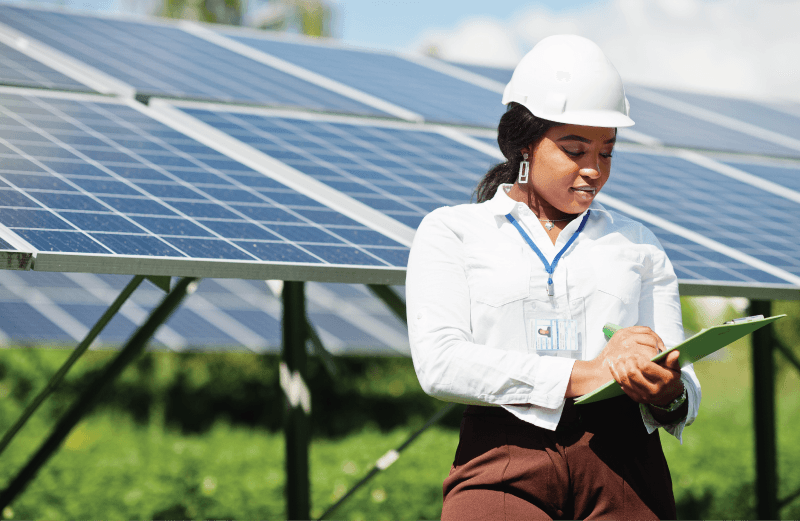
Solar mini grids are increasingly becoming Nigeria’s most practical response to rural electricity shortages, as data shows that national grid expansion continues to lag far behind population growth and energy demand.
According to the World Bank, more than 85 million Nigerians currently lack access to electricity, representing close to 40 percent of the population. Rural communities account for the majority of this figure, largely because extending the national grid to remote settlements remains expensive and slow. In this gap, decentralized solar power systems are emerging not as pilot experiments, but as a central pillar of Nigeria’s electrification strategy.
Government data shows that between 2018 and 2024, solar mini grid deployment accelerated significantly, driven by public funding, private capital, and development finance support. The scale of recent projects suggests that mini grids are no longer marginal interventions, but a structural response to long-standing failures in rural energy delivery.
Why Rural Electrification Has Fallen Behind
Nigeria’s electricity access challenge is rooted in decades of infrastructure underinvestment, transmission bottlenecks, and regulatory instability. While urban centers often experience intermittent supply, rural areas are frequently left entirely off-grid.
According to the International Energy Agency, grid extension in rural Nigeria can cost between two and three times more per household than decentralized renewable alternatives. This cost imbalance has discouraged utilities from expanding into sparsely populated regions.
As a result, rural households rely heavily on kerosene lamps, petrol generators, and candles. The National Bureau of Statistics has repeatedly linked these alternatives to higher household energy spending, poorer indoor air quality, and increased fire risk.
A 2022 World Bank assessment found that rural Nigerian households using kerosene spend up to 15 percent of monthly income on lighting and phone charging alone, compared with less than 5 percent in electrified communities.
Expansion of Solar Mini Grids
Solar mini grids are small, localized power systems that generate electricity using solar panels, battery storage, and low-voltage distribution networks. They operate independently of the national grid and are designed to serve communities ranging from dozens to several hundred households.
Related News
Nigeria’s largest deployment effort has been led through the Nigeria Electrification Project, implemented by the Rural Electrification Agency. According to REA project data, between 2018 and 2024 the program supported the installation of 125 solar hybrid mini grids across multiple states, including Kaduna, Ogun, Plateau, and Nasarawa.
During the same period, over one million solar home systems were distributed under the project’s off-grid component. The REA estimates that these interventions have provided electricity access to approximately 5.5 million Nigerians.
The project is supported by the World Bank and other development partners, with private operators responsible for construction, operation, and tariff collection under regulated frameworks.
Measurable Economic Effects
Data from the World Bank’s Energy Sector Management Assistance Program shows that electrified rural communities experience measurable economic changes within the first two years of connection.
According to the program’s Nigeria country assessment, average microenterprise operating hours increase by between 30 and 40 percent following mini grid deployment. Household surveys conducted in electrified communities also show income gains ranging from 20 to 35 percent for small businesses such as tailoring, welding, phone charging, and food retail.
Electricity access also reduces reliance on generators. REA monitoring reports indicate that households connected to mini grids reduce spending on petrol and diesel by up to 60 percent annually, depending on usage patterns.
In employment terms, the REA estimates that mini grid deployment has created approximately 5,000 direct and indirect jobs, including technicians, installers, customer service agents, and local maintenance staff.
Education and Health Outcomes
The impact of electricity access extends beyond income.
According to UNICEF-supported assessments in rural Nigeria, schools with reliable electricity record higher student attendance and improved teacher retention. Electrified schools are also more likely to use digital learning tools, particularly at the secondary level.
In healthcare, the World Health Organization has identified electricity access as a key determinant of service quality in primary health centers. REA data shows that clinics connected to solar mini grids can operate vaccine refrigeration, lighting for nighttime emergencies, and basic diagnostic equipment.
A 2023 REA and World Bank joint review found that electrified rural clinics reported fewer vaccine stock losses and improved maternal health service delivery compared with non-electrified facilities.
Affordability and Regulatory Challenges
Despite the documented benefits, mini grid deployment faces persistent challenges.
Upfront capital costs remain high, requiring grants or concessional loans to make projects financially viable. According to the World Bank, unsubsidized rural mini grid tariffs can exceed what low-income households can afford, particularly in agrarian communities with seasonal income.
Regulatory uncertainty is another concern. Mini grid developers have repeatedly raised issues around compensation when the national grid eventually reaches their service areas, as well as delays in permitting and land access.
However, recent regulatory reforms by the Nigerian Electricity Regulatory Commission aim to provide clearer rules for tariff setting and grid arrival compensation, a move analysts say could unlock additional private investment.
Energy economists argue that solar mini grids are gaining urgency as Nigeria faces rising fuel costs, foreign exchange pressure, and climate commitments.
Nigeria has pledged to reduce emissions under its energy transition plan, while also expanding electricity access. Mini grids address both goals simultaneously by reducing reliance on diesel generators and expanding clean energy use.
According to BloombergNEF, Nigeria has one of Africa’s highest solar irradiation levels, making solar-based electrification particularly cost-effective compared with fossil fuel alternatives.
What Comes Next
Analysts say the next phase of mini grid expansion will focus on productive use of energy rather than household lighting alone. This includes powering agro-processing equipment, cold storage facilities, and small-scale manufacturing.
According to the REA, future projects will prioritize clusters with agricultural and commercial potential, increasing the likelihood of long-term economic sustainability.
If current deployment rates are maintained, Nigeria could significantly reduce its rural electricity access gap within the next decade, even without full national grid expansion.
Solar mini grids are no longer peripheral to Nigeria’s energy conversation. Backed by data, policy alignment, and measurable economic outcomes, they are reshaping how rural electrification is delivered.
While challenges around affordability and regulation persist, the evidence suggests that decentralized solar power is becoming one of Nigeria’s most effective tools for closing the rural energy divide.
Add a Comment