


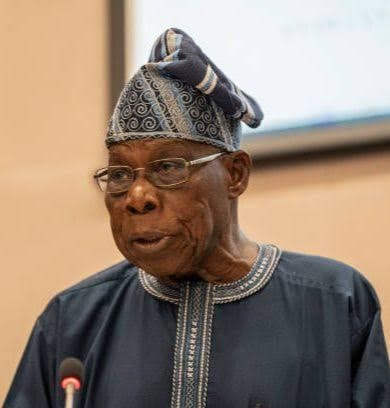
Former President Olusegun Obasanjo has issued a stark warning over Nigeria's deepening security crisis, saying the country “is being killed” and may soon have no choice but to seek help from the international community if authorities fail to protect citizens.
Obasanjo delivered the remarks on Tuesday during the second edition of the Plateau State Unity Christmas Carol held at the Ten Commandments Prayer Altar in Jos. His comments drew strong reactions from residents and leaders who attended the event.
“Insecurity Has Gone From Bad To Worse”
Reflecting on the country’s prolonged struggle with violent crime, Obasanjo said Nigeria has endured insecurity for far too long. According to him, the problem predates the current administration and has only grown more severe in the past decade.
“One problem we have is insecurity, and it has been with us. It did not begin with this administration, not even with the administration before it,” he said. He added that from the 2014 abduction of the Chibok schoolgirls “until now, insecurity has continued to go from bad to worse.”
He condemned attempts to explain away killings based on ethnic or religious identity, describing such reasoning as both “dangerous” and “nonsensical.”
“For anybody at any time to say that when Nigerians are being killed, the explanation is that those killed belong to this group or another group… we are being killed,” he said. “We are Nigerians, no matter the religion or where you come from.”
Calls For Government Accountability
Related News
Obasanjo reminded political leaders that the protection of citizens is a constitutional duty, insisting that governments at all levels have failed to meet this responsibility.
“The first responsibility of any government is the protection and security of its citizens, but our government seems incapable of protecting us,” he said.
He warned that Nigerians may be justified in appealing for external intervention if domestic institutions cannot stem the violence.
“If our government cannot do it, we have a right to call on the international community to do for us what our government cannot do. We should have no apology for that,” he declared.
“Why Are We Not Using Technology?”
The former president also questioned why security agencies were not deploying available surveillance tools to track and dismantle armed groups.
“In these days of technology, nobody should be able to hide anywhere after committing a crime,” he said. “Before I left government, I knew we had the capacity to identify and locate anybody in Nigeria who committed a crime. Now, with drones, you can take them out. Why are we not doing that?”
He stressed that every death is a national tragedy, adding, “We are tired of being killed. The killing of Nigerians must stop.”
Security analysts contacted by local media have echoed similar concerns in recent months, arguing that the absence of sustained intelligence-driven operations has allowed criminal networks to regroup across several states.
Plateau Governor Preaches Unity As Foundation For Peace
Plateau State Governor Caleb Mutfwang, who hosted the event, described the Unity Christmas Carol as a symbol of the state’s determination to rebuild after years of recurring violence.
“Individually, we can worship God in our homes, but God is delighted when we come together as a people in unity,” he said.
Mutfwang noted that internal division had stalled the state’s development for decades. “Plateau is a blessed state, but we have not been able to achieve much because we are fighting one another. Let us drop the things that divide us and focus on the things that unite us.”
He added that unity was not only a moral imperative but also a practical necessity for defeating insecurity. “With unity, we will be able to shut the door against the enemy that troubles us,” he said.
A Festival Aimed At Healing
The Plateau Unity Christmas Carol, introduced last year, was envisioned as a three-day gathering of worship, reflection, and reconciliation. Organisers say the event is intended to bridge religious, ethnic, and political divides at a time when tensions remain high in several communities.
The latest edition drew clerics, political leaders, and residents who expressed hope that renewed dialogue and cooperation could help reduce violence in the months ahead.
Add a Comment