


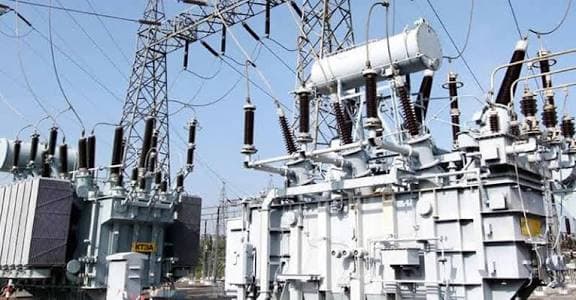
Nigeria’s electricity supply challenges deepened further in December 2025 as stranded power generation capacity rose to 2,275 megawatts, the highest level recorded in five years. The increase underscores long standing weaknesses in transmission infrastructure and persistent financial stress across the power value chain, even as electricity demand continues to grow.
Operational figures obtained from electricity generating companies show that a significant share of available generation capacity could not be evacuated to consumers due to grid limitations. As a result, power plants were forced to idle capacity while homes and businesses across the country experienced unstable supply and frequent outages.
Stranded capacity trends over five years
Data from GenCos indicate that stranded generation capacity stood at 2,248.50MW in 2021. It fell sharply to 1,816.49MW in 2022 before rising again to 2,226.96MW in 2023. A modest decline followed in 2024 when the figure dropped to 2,180.31MW. However, by December 2025, stranded capacity had climbed to 2,275.67MW, marking the highest level within the period under review.
Industry operators say the trend highlights a widening gap between generation potential and the ability of the national grid to absorb and distribute power. According to GenCos, roughly 33.60 percent of available generation capacity is currently unevacuated, largely due to obsolete transmission infrastructure and limited grid expansion.
According to Punch and other industry reports, Nigeria’s installed generation capacity is significantly higher than what is typically delivered to end users. However, transmission bottlenecks mean that additional megawatts generated often cannot reach distribution networks.
Why the issue matters now
The rising volume of stranded power comes at a time when electricity demand is increasing, driven by population growth, urbanisation and rising energy needs from small businesses and industry. Analysts warn that continued underutilisation of generation capacity discourages fresh investment in power plants, as investors remain wary of committing capital to a system where output cannot be reliably sold.
Related News
- A Nigerian skate brand just became adidas' first official Nigerian collaborator.
- A senior ISWAP finance operative surrendered to Nigerian troops at 6:45 a.m. on July 25 along the Gamboru-Wulgo Main Supply Route in Borno State.
- Nigeria's reported digital payment fraud losses fell 52 percent last year, dropping to N25.85 billion from N52.26 billion in 2024.
GenCos say the financial implications are severe. When generated power cannot be evacuated, companies lose revenue, struggle to service debts and face difficulties paying gas suppliers. Over time, this weakens plant maintenance and reduces overall system reliability.
According to industry sources, the situation also undermines Nigeria’s broader economic objectives, particularly efforts to improve productivity, attract manufacturing investment and reduce reliance on self generation through diesel and petrol generators.
DisCos and TCN trade responsibility
Distribution companies have blamed transmission constraints for the unstable supply experienced by consumers. According to DisCos, load limitations imposed by the Transmission Company of Nigeria force them to shed load across their networks, even when demand exists.
Meanwhile, TCN has previously pointed to limitations within distribution networks, including outdated equipment and high technical losses, as factors preventing DisCos from taking available power. This long running blame exchange reflects deeper coordination challenges across the value chain.
The situation deteriorated further in December 2025 following the vandalisation of gas pipelines supplying several key power plants. The incident occurred during the Christmas period, leading to a drop in electricity generation and widespread outages across multiple regions.
Confirming the disruption, the Nigerian Independent System Operator, an arm of TCN, said national grid generation declined due to gas supply constraints caused by vandalism in the upstream gas network. According to NISO, several gas fired power plants recorded low output as gas availability fell.
Gas pipeline repairs and partial recovery
Weeks after the festive season, NISO announced an improvement in generation levels. The recovery followed repairs to the Lagos–Escravos–Lagos gas pipeline by the Nigerian Gas Infrastructure Company and the restoration of gas supply to key thermal power plants.
Despite the improvement, electricity supply has remained unstable in many parts of the country. According to reports, transmission and distribution constraints continue to limit how much of the recovered generation can be delivered to consumers.
When contacted, the Lagos Regional Operations Manager of NISO, Engr. Yusuf Gbadamosi, said there was no generation shortfall affecting supply. He explained that all available power had been fully allocated, suggesting that constraints lie elsewhere in the system.
Experts describe a systemic problem
Power sector experts argue that Nigeria’s electricity challenges cannot be reduced to isolated incidents such as gas vandalism. Instead, they describe the problem as systemic, rooted in weak transmission infrastructure, frequent grid instability, limited gas transportation capacity and load rejection by DisCos due to network limitations.
They also point to the sector’s chronic liquidity crisis as a major constraint. Inadequate revenue collection and delayed payments have reduced the ability of GenCos to maintain plants optimally and secure firm gas supply agreements.
Speaking to Vanguard, the Managing Director and Chief Executive Officer of the Association of Power Generation Companies, Dr. Joy Ogaji, said generation companies are capable of producing more electricity but are constrained by failures in other segments.
According to her, generation cannot function in isolation without reliable gas supply, stable transmission, efficient distribution and full payment for electricity delivered. Without these elements, available capacity will continue to be stranded.
Transmission and tariffs under renewed focus
On the policy front, the Chief Executive Officer of the Centre for the Promotion of Private Enterprise, Dr. Muda Yusuf, said the power sector remains one of the most politically sensitive and technically complex areas of Nigeria’s economic reform agenda.
He explained that the close interdependence of gas supply, generation, transmission and distribution means inefficiencies in one segment quickly destabilise the entire system. According to him, the failure to implement cost reflective electricity tariffs has worsened liquidity challenges, forcing repeated government intervention.
Yusuf noted that without pricing reforms and targeted infrastructure investment, the cycle of stranded capacity and unstable supply is likely to persist.
Government intervention seen as unavoidable
In the short term, analysts say government intervention appears unavoidable. Yusuf cited recent bond issuances to settle outstanding debts owed to gas suppliers and GenCos as necessary steps to prevent a collapse of the electricity system.
However, experts warn that financial bailouts alone will not resolve structural weaknesses. They argue that sustained investment in transmission expansion, improved grid management and clearer accountability across the value chain will be critical.
Efforts to reach the General Manager, Public Affairs of TCN, Ms. Ndidi Mbah, were unsuccessful as calls and text messages sent to her were not returned as of press time.
What to watch next
Stakeholders say attention should now focus on planned transmission upgrades, the pace of tariff reforms and the implementation of market rules under the evolving power sector framework. Without coordinated progress across these areas, Nigeria risks seeing stranded capacity rise further, even as consumers continue to face unreliable electricity supply.
Add a Comment