


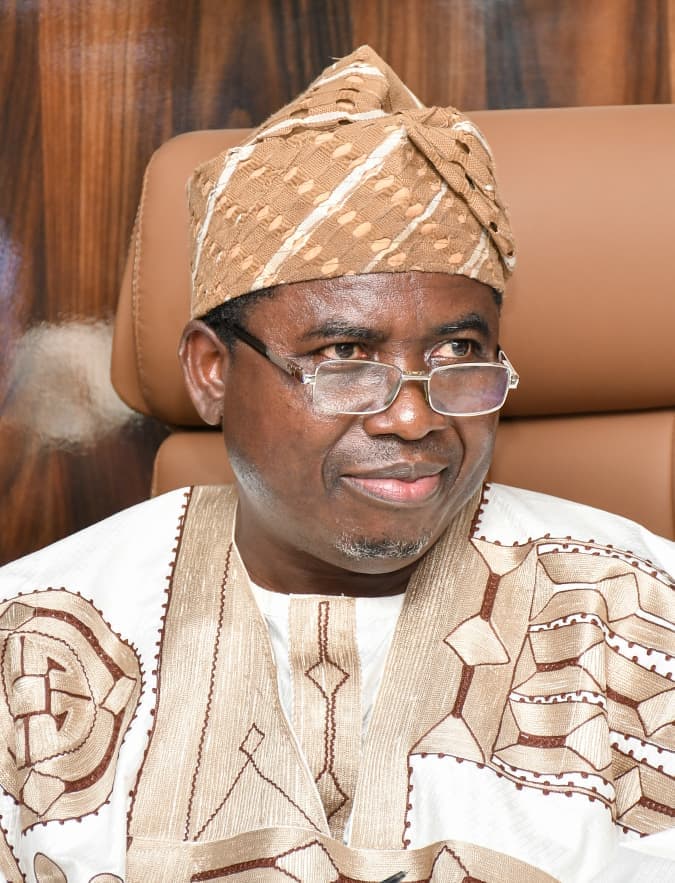
The controversy surrounding Nigeria's newly appointed Independent National Electoral Commission (INEC) Chairman, Professor Joash Amupitan, has ignited fierce debates about religious bias, electoral integrity, and freedom of expression in Africa's most populous democracy.
The Genesis of the Controversy
The Supreme Council for Shari'ah in Nigeria has called for the immediate removal of INEC Chairman Prof. Joash Amupitan , citing a legal brief he authored in 2020 that characterized violence in Northern Nigeria as part of a systematic campaign against Christians.
Amupitan contributed to a 2020 report titled "Nigeria's Silent Slaughter" where he wrote a legal brief describing alleged mass killings as acts of genocide (Statehouse) . The report, published by The International Committee on Nigeria, documented what researchers claimed were coordinated attacks by Boko Haram and Fulani militants against Christian communities.
In his 80-page legal analysis, Amupitan declared that crimes against humanity, war crimes and genocide were being perpetrated in Nigeria (Statehouse) , calling for urgent international intervention from the United Nations and global powers.
What Did Amupitan Actually Write?
Amupitan accused both state and non-state actors of participating in alleged genocide and mass killings across Nigeria (Nigerian Eye) , specifically calling out the Nigerian government for lacking sufficient willpower to address the crises.
The professor urged the U.S. Department of State to refer the matter to the Criminal Division of the U.S. Department of Justice and to the U.N. Security Council (Nigerian Eye) , proposing that the U.N. Security Council should refer Nigeria to the International Criminal Court. Amupitan warned that Nigeria risked repeating the Rwandan and Sudanese mistakes where the world stood by as ethnic massacres unfolded.
Related News
- A Nigerian skate brand just became adidas' first official Nigerian collaborator.
- A senior ISWAP finance operative surrendered to Nigerian troops at 6:45 a.m. on July 25 along the Gamboru-Wulgo Main Supply Route in Borno State.
- Nigeria's reported digital payment fraud losses fell 52 percent last year, dropping to N25.85 billion from N52.26 billion in 2024.
The Sharia Council's Response
The Supreme Council for Shari'ah in Nigeria described Amupitan's legal brief as containing provocative, distorted and bigoted assertions against Muslims in Northern Nigeria. In a strongly-worded statement, the Council expressed deep disappointment that someone now entrusted with overseeing Nigeria's democratic integrity had previously made such divisive claims.
The SCSN argued that the violence affecting Northern and North-Central Nigeria is complex and multidimensional, affecting both Muslims and Christians. The Council claimed that Muslims have suffered more casualties than any other group in the ongoing crises , directly contradicting Amupitan's characterization.
The Council demanded that President Tinubu immediately review and reverse Amupitan's appointment, declaring that the integrity of Nigeria's electoral process cannot be entrusted to someone whose record reveals open hostility toward one of the country's largest faith communities.
Northern CAN Defends Amupitan
The Christian Association of Nigeria in the 19 Northern states has firmly rejected the Sharia Council's demands. Northern CAN described the demand as an attempt to politicize religion and weaken a critical national institution .
Northern CAN noted that the two immediate past INEC chairmen were Muslims from Northern Nigeria, arguing against what they perceive as efforts to "Muslimize" electoral leadership. The group emphasized that competence, not faith, should remain the benchmark for public office.
Northern CAN also pointed out that Amupitan, like every Nigerian, enjoys constitutional rights to freedom of religion and expression. They argued that expressing concern about challenges faced by one's faith does not automatically constitute bias or grounds for disqualification from public service.
The "Nigeria's Silent Slaughter" report was released in 2020 amid escalating violence across Nigeria. The report documented how Boko Haram killed more than 43,000 Nigerians between 2000 and 2020, while Fulani Militants killed nearly 19,000 Nigerians, primarily Christian farmers.
Data showed that three of every four Fulani Militant victims during this period were Christians, lending credence to claims of targeted religious violence. However, the Nigerian government has consistently maintained that security challenges affect all religious groups.
Legal and Political Implications
Amupitan was sworn in as INEC Chairman on October 23, 2025, after Senate confirmation on October 16. At his swearing-in, President Tinubu charged him to serve with integrity beyond reproach and protect the integrity of Nigeria's electoral process.
The timing of this controversy is particularly sensitive. INEC faces a busy electoral cycle in 2026, including the FCT Area Council Elections scheduled for February and off-cycle governorship elections in Ekiti and Osun states, with the 2027 general elections looming on the horizon.
The Religious Divide
The Amupitan controversy has exposed deep religious fault lines in Nigerian society. Many Northern Muslims view his 2020 legal brief as inflammatory and prejudiced, while many Christians, particularly in Southern Nigeria, see it as a courageous documentation of legitimate security concerns affecting Christian communities.
What's At Stake?
Nigeria's electoral credibility hangs in the balance. INEC has struggled for years to build public trust in the electoral process, with past elections marred by allegations of rigging, violence, and partisan manipulation. The controversy surrounding Amupitan threatens to further erode confidence in the commission's ability to conduct free and fair elections.
For Christians who feel their communities have been disproportionately affected by violence, Amupitan's appointment represents long-overdue recognition. For Muslims who view his past writings as prejudiced, his chairmanship raises legitimate concerns about whether he can impartially oversee elections in a religiously diverse nation.
As of now, the federal government has remained largely silent on the controversy. INEC has stated that Amupitan was appointed based on competence, not faith, and that he passed all required screenings.
Several outcomes remain possible: Amupitan could resign to defuse tensions, though this would set a troubling precedent of religious groups effectively vetoing government appointments. President Tinubu could remove him, but this might be seen as capitulating to pressure. Or Amupitan could remain in position, forcing Nigerians to judge him based on his actual performance rather than his past writings.
Whether one views Amupitan's past writings as courageous advocacy or dangerous bigotry likely depends on one's own religious identity and experiences with Nigeria's security crisis. As Nigeria heads toward critical elections, the resolution of this controversy will send powerful signals about the role of religion in Nigerian public life and whether the country can transcend sectarian divisions to build stronger democratic institutions.
Add a Comment