


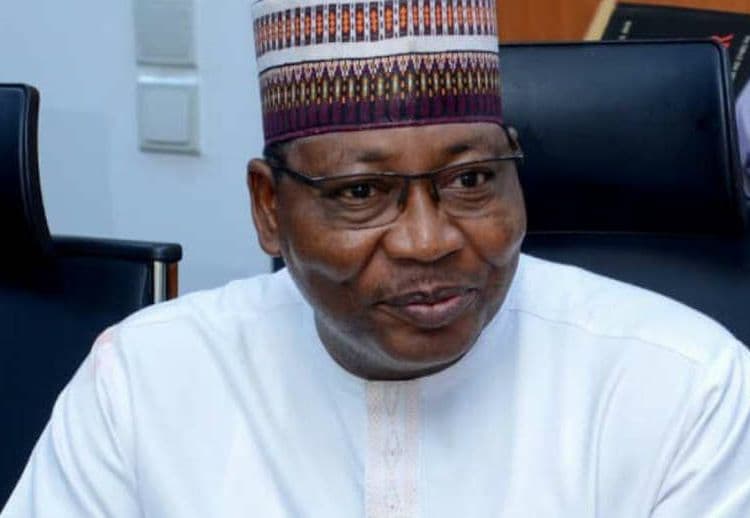
Nigerian officials say Abu-Bilal Al-Minuki was killed in Borno State.
The reported operation, carried out near Metele in northern Borno State under the authority of Operation HADIN KAI, has been described by Nigerian military sources as a joint air and ground assault coordinated with the United States military through United States Africa Command. Nigerian authorities claim Abu-Bilal Al-Minuki served as a senior figure within the Islamic State network and held operational influence inside the Islamic State West Africa Province insurgency structure.
The claim has not been independently verified by Western intelligence agencies or by the Islamic State itself. That distinction is important because both Nigerian and extremist groups have, in previous years, issued conflicting battlefield casualty claims during the 15-year insurgency in the Lake Chad Basin. Still, the Nigerian military’s public framing of the operation suggests officials believe the strike represents more than a routine tactical success.
For more than a decade, Boko Haram and its ISWAP offshoot have destabilised large sections of north eastern Nigeria, particularly communities surrounding Lake Chad. According to data published by the United Nations High Commissioner for Refugees, violence linked to the insurgency has displaced millions across Nigeria, Cameroon, Chad and Niger. Civilian deaths, attacks on military formations and the destruction of farming communities have repeatedly undermined stabilisation efforts in the region.
Nigerian officials say the Metele operation relied on prolonged surveillance, intelligence gathering and coordinated targeting. Metele itself carries military significance. In November 2018, ISWAP fighters overran a military base there, killing dozens of Nigerian soldiers in one of the deadliest attacks on the armed forces during the conflict. The location has since become symbolically important within military planning and insurgent propaganda.
Intelligence Cooperation Between Abuja and Washington
The Nigerian government has increasingly leaned on foreign intelligence partnerships since 2023, particularly in surveillance, satellite imaging and signals intelligence. Nigerian defence officials have publicly acknowledged expanded cooperation with the United States in counter-terrorism operations, although the exact operational scope usually remains classified.
Our analysis of Nigerian budget documents filed before the National Assembly of Nigeria shows defence and security allocations exceeded ₦3.25 trillion in the 2025 appropriation cycle, with a substantial increase tied to air mobility, intelligence systems and counter-insurgency operations in the North East theatre. The budget documents did not specifically reference the Metele operation. They did, however, identify “joint intelligence interoperability” as a strategic priority.
Related News
The reported involvement of AFRICOM also reflects Washington’s continuing security interest in the Lake Chad Basin despite broader geopolitical distractions elsewhere. The United States has long viewed ISWAP as one of the most organised Islamic State affiliates operating outside the Middle East, particularly because of its ability to conduct cross-border raids and maintain taxation networks in remote communities.
President Bola Ahmed Tinubu publicly commended the troops involved and praised international collaboration after reports of the operation emerged. Nigerian military statements also claimed the strike caused no personnel or equipment losses on the government side, although operational details remain limited.
Independent confirmation remains scarce.
What the Killing of Abu-Bilal Al-Minuki Could Change
Counter-terrorism analysts caution against overstating the immediate impact of leadership decapitation campaigns. Research published by the International Crisis Group and the Combating Terrorism Center at West Point has repeatedly shown that insurgent groups often replace field commanders quickly after targeted killings.
ISWAP has demonstrated that resilience before.
After the deaths of previous commanders, including figures linked to the original Boko Haram hierarchy, the organisation fragmented temporarily but continued operations across parts of Nigeria, Chad, Cameroon and Niger. In several cases, splinter factions reorganised around access to weapons routes, fuel taxation and control of fishing corridors near Lake Chad.
The reality is, insurgencies rarely collapse because of one battlefield death. They weaken when intelligence pressure, financial disruption and territorial denial happen simultaneously over extended periods. Nigerian security officials appear aware of that limitation. Military statements issued after the operation emphasised follow-on offensives and intelligence exploitation rather than declaring victory.
We reviewed prior Nigerian military communiqués issued after major operations between 2021 and 2024 and found at least six instances where officials announced the elimination of “top commanders,” only for successor leadership figures to emerge within months. That pattern does not invalidate battlefield successes. It does show the structural durability of the insurgency.
Regional Pressure Now Shifts to the Lake Chad Borders
The operation also exposes the continuing dependence on regional military coordination. The insurgency is not confined to Nigeria’s borders, and security officials privately acknowledge that militants routinely exploit poorly monitored crossing points between Nigeria, Chad, Cameroon and Niger.
The Multinational Joint Task Force was created precisely because unilateral operations repeatedly failed to contain militant mobility. Yet the force has struggled with inconsistent funding, uneven troop contributions and political tensions among member states.
That complicates consolidation efforts after high-profile operations.
Security researchers at the Institute for Security Studies have documented how insurgent cells increasingly rely on smaller mobile formations rather than large territorial occupations. That tactical shift makes conventional military victories harder to convert into permanent security gains, particularly in remote rural areas where state presence remains weak.
Nigerian officials nevertheless appear eager to present the Metele operation as evidence of improving operational capability. Military officers involved in the North East campaign have argued for years that intelligence coordination, rather than troop numbers alone, determines whether targeted operations succeed.
Nigerian authorities say Abu-Bilal Al-Minuki was killed during a joint operation near Metele, but independent confirmation remains limited.
The operation highlights expanding intelligence cooperation between Nigeria and the United States through AFRICOM.
Security analysts warn that ISWAP has historically replaced senior commanders quickly after battlefield losses.
The next phase of the campaign will depend on whether Nigeria and neighbouring states can prevent regrouping across Lake Chad border corridors.
Was Abu-Bilal Al-Minuki really the second-in-command of ISIS globally?
Nigerian officials described him that way. Independent verification is still missing. Large terrorist organisations often have overlapping command structures, and governments sometimes use inflated titles to signal operational significance.
Why is Metele important?
Because ISWAP previously attacked and overran a Nigerian military base there in 2018. The location carries operational and symbolic weight inside the conflict.
Does this mean the insurgency is ending?
No. ISWAP and Boko Haram have survived multiple leadership losses before. What matters now is whether follow-up operations disrupt financing, recruitment and movement routes across the region.
The next unresolved question is whether Nigerian authorities can convert the reported killing into lasting territorial control before insurgent cells reorganise. Attention is now shifting toward operational coordination inside the Multinational Joint Task Force and whether additional cross-border offensives will follow before the next rainy season restricts military mobility across the Lake Chad corridor.
Add a Comment