


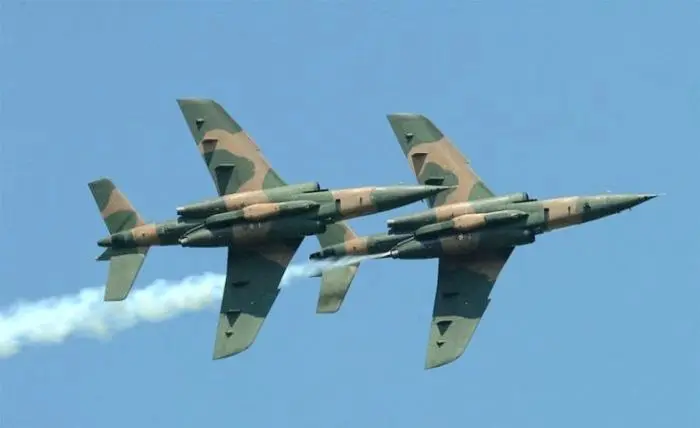
The Nigerian Air Force said on May 26, 2026, that it carried out fresh air strikes inside the Sambisa Forest corridor in Borno State, targeting what it described as terrorist camps and logistics structures linked to insurgent groups operating under the wider Lake Chad basin network.
The operation focused on Biramiri in the Gezuwa area, according to an official statement released through the Nigerian Air Force’s verified communication channels. Military authorities said the strikes were conducted by the Air Component of Operation HADIN KAI after Intelligence, Surveillance and Reconnaissance missions identified what officials called “active terrorist infrastructure” within the forest axis.
The claims arrive at a sensitive point for Nigeria’s counter-insurgency campaign. Security agencies have repeatedly declared operational gains inside Sambisa Forest over the last five years, yet attacks on civilian communities and military formations in parts of the North-East continue to surface in security briefings and humanitarian reporting from international agencies.
That tension remains unresolved.
Operation HADIN KAI Expands Air Pressure Inside Sambisa
According to the Nigerian Air Force statement dated May 26, air assets deployed under Operation HADIN KAI conducted what the military described as precision engagements against identified insurgent positions in Biramiri, located within the Gezuwa axis of Sambisa Forest.
Military officials said the targets included logistics structures and operational shelters allegedly used by fighters moving across forest routes linking southern Borno State to border corridors near Cameroon and the Lake Chad region.
The statement did not disclose the aircraft platforms used during the operation. It also omitted casualty figures beyond the phrase “several fighters were neutralised.” No independent casualty verification was immediately available from local authorities, humanitarian monitors, or community leaders within the affected axis.
Related News
The Nigerian military has increasingly relied on air power in inaccessible terrain where ground offensives carry higher casualty risks and slower operational timelines. Defence analysts at the Abuja-based Centre for Crisis Communication have previously noted that Sambisa’s dense vegetation and fragmented insurgent cells make long-term territorial control difficult even after repeated bombardments.
But repeated strikes have altered insurgent mobility patterns. Conflict data compiled by the Armed Conflict Location & Event Data Project (ACLED) shows insurgent groups in the North-East increasingly shifting toward smaller mobile attacks, raids on rural infrastructure, and temporary occupation tactics rather than fixed camp defence.
Sambisa Forest Still Holds Strategic Value for Insurgents
Sambisa Forest has remained central to Nigeria’s counter-terrorism operations since the insurgency escalated in 2009 under Boko Haram. The forest covers thousands of square kilometres across parts of Borno State and has historically provided concealment routes, weapons storage points, and hostage holding areas for armed groups.
The forest also carries symbolic significance for the military. Successive administrations have publicly framed gains inside Sambisa as indicators of wider operational momentum against insurgent networks.
Yet operational control inside the forest has repeatedly proven temporary.
United Nations humanitarian assessments and Nigerian security briefings over the last three years have continued documenting attacks in surrounding local government areas despite periodic announcements of cleared camps and neutralised commanders. Aid agencies operating in the North-East have also warned that displacement patterns in Borno remain fluid because civilians frequently leave villages after renewed attacks or fear of reprisals.
Our analysis of prior Nigerian military communiqués between 2023 and 2026 found at least 14 separate announcements describing Sambisa-based facilities as “destroyed” or “dismantled.” Insurgent activity nevertheless persisted across Marte, Konduga, Damboa, and parts of southern Borno during the same period, according to incident tracking by SBM Intelligence and ACLED.
Intelligence-Led Strikes Reflect a Broader Tactical Shift
The Nigerian Air Force specifically referenced Intelligence, Surveillance and Reconnaissance operations as the basis for the latest strikes. That wording reflects a broader shift within Operation HADIN KAI toward intelligence-led targeting rather than large-scale territorial sweeps.
Military sources have increasingly emphasised drone surveillance, aerial reconnaissance, and communications monitoring in operational summaries released since late 2024. Security researchers say the approach reduces exposure for ground troops while allowing rapid targeting of temporary insurgent camps.
But intelligence-led warfare creates verification problems.
Independent observers rarely gain direct access to strike locations immediately after operations, particularly inside Sambisa Forest. That leaves casualty assessments and infrastructure damage claims heavily dependent on military reporting. Human rights groups including Amnesty International have previously called for stronger transparency mechanisms around Nigerian air operations after earlier incidents involving civilian casualties in conflict zones.
No civilian casualty allegations were attached to the May 26 operation at the time of publication.
The military’s statement also framed the strikes as part of “sustained offensives” intended to restrict insurgent freedom of movement and access to safe havens. Security officials have used similar language in recent operations around the Tumbuns region and Lake Chad fringes, where insurgent groups maintain fragmented supply corridors across difficult terrain.
Pressure on the Air Force Extends Beyond the Battlefield
The renewed offensives come amid continuing scrutiny of Nigeria’s defence spending and force readiness. Budget documents presented to the National Assembly allocated hundreds of billions of naira to defence and security operations for the 2026 fiscal cycle, with air mobility, surveillance systems, and counter-insurgency logistics receiving substantial appropriations.
Yet lawmakers and auditors have repeatedly questioned procurement transparency and long-term sustainability.
We reviewed procurement disclosures attached to recent federal budget implementation reports and identified multiple defence acquisition lines marked as ongoing despite previous funding releases between 2023 and 2025. Several entries involving aerial surveillance systems and tactical aircraft support infrastructure remained classified under restricted expenditure categories.
Public accountability remains limited.
Military officials argue that operational secrecy is necessary during active counter-terrorism campaigns. Critics inside civil society groups counter that secrecy has complicated independent assessment of whether expanded military spending has produced measurable reductions in insurgent capacity.
For civilians in parts of Borno State, the practical measure is simpler. Roads stay open or they do not. Markets function or they close after attacks. Farmers return to fields or abandon them again after night raids.
The Nigerian Air Force said air strikes on May 26 targeted terrorist camps and logistics sites at Biramiri in the Gezuwa axis of Sambisa Forest.
Military authorities did not release independent casualty verification or detailed damage assessments from the operation.
Conflict tracking data shows insurgent activity has continued across parts of Borno despite repeated announcements of destroyed camps in Sambisa.
Defence spending on surveillance and air operations has increased, but procurement transparency questions remain unresolved.
Did the military provide evidence from the strikes?
Not publicly. The Nigerian Air Force released a written statement describing the operation, but no strike footage, satellite imagery, or independent verification accompanied the announcement as of May 27, 2026.
Why is Sambisa Forest still important after years of operations?
Because geography still matters. Dense terrain, border access routes, and limited state presence allow insurgent groups to regroup, move supplies, and avoid permanent military control.
Were civilians reported killed in this operation?
No confirmed civilian casualty reports were publicly attached to the May 26 strikes. Independent verification inside Sambisa Forest remains difficult because access is heavily restricted during active operations.
The next unresolved question sits outside the battlefield itself. Nigeria’s 2026 defence appropriations and classified procurement expenditures are expected to face additional review before committees of the National Assembly of Nigeria during the current budget oversight cycle. At issue is whether billions of naira allocated for surveillance platforms, tactical air support, and counter-insurgency infrastructure can be independently audited while operations in Sambisa Forest continue under restricted disclosure rules.
Add a Comment