


By Eromosele Abiodun, London
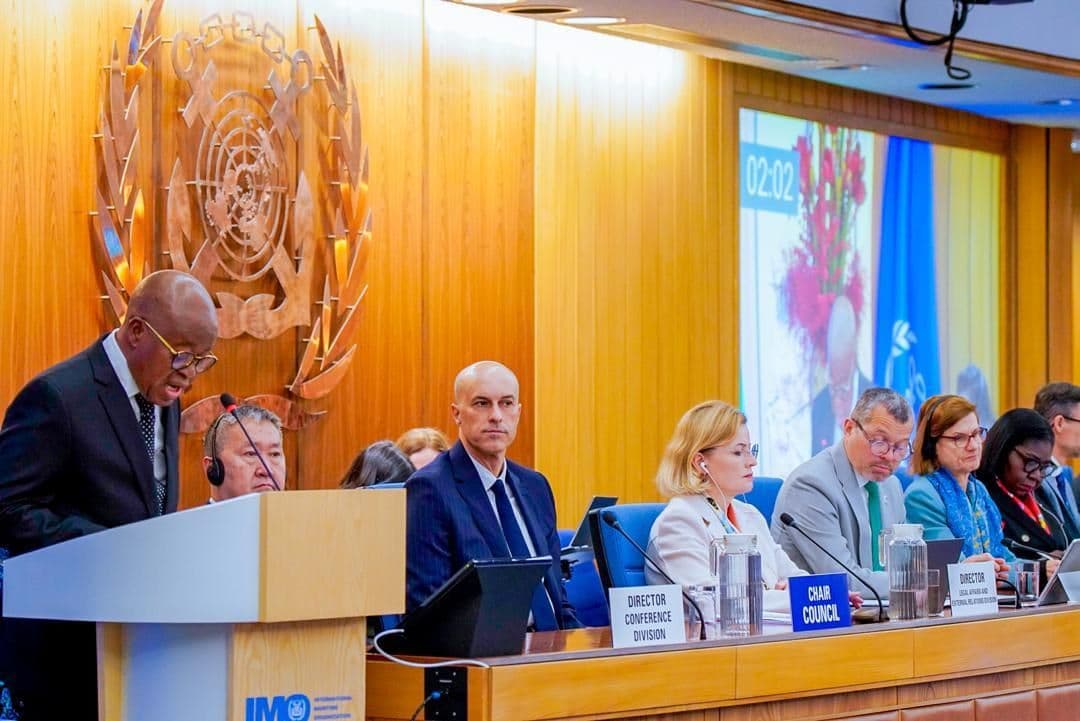
Nigeria has secured a long-awaited victory at the International Maritime Organisation, reclaiming a seat on the agency’s highest governing council for the first time since 2009. The country won election into Category C on Friday after a vigorous contest that drew 26 contenders for 20 available positions.
According to reports from the IMO General Assembly, Nigeria received 116 votes, placing it ahead of Denmark, Kenya, Bangladesh and several other competing nations. The win is considered a major diplomatic milestone, especially after years of unsuccessful bids that had become a source of frustration for past administrations.
What Category C Represents
Category C seats are reserved for countries that have significant interests in maritime transport and navigation and help ensure balanced global representation within the council. Nigeria now joins 19 other members in the group, including Malaysia, Morocco, Mexico, Singapore, Saudi Arabia, Jamaica and South Africa.
Other categories were also filled during the elections.
Category B, which covers nations with the largest stakes in global seaborne trade, saw the election of Australia, Brazil, Canada, France, Germany, India, the Netherlands, Spain, Sweden and the United Arab Emirates.
Category A, representing the world’s major shipping nations, includes China, Greece, Italy, Japan, Liberia, Norway, Panama, the Republic of Korea, the United Kingdom and the United States.
Related News
- A Nigerian skate brand just became adidas' first official Nigerian collaborator.
- A senior ISWAP finance operative surrendered to Nigerian troops at 6:45 a.m. on July 25 along the Gamboru-Wulgo Main Supply Route in Borno State.
- Nigeria's reported digital payment fraud losses fell 52 percent last year, dropping to N25.85 billion from N52.26 billion in 2024.
Maritime analysts say Nigeria’s return will likely boost its efforts to strengthen the blue economy, attract investment and improve cooperation on maritime security, particularly in the Gulf of Guinea where piracy incidents have declined in recent years.
Nigeria Makes Its Case
Before the vote, the Minister of Marine and Blue Economy, Adegboyega Oyetola, addressed delegates and highlighted Nigeria’s contributions to regional maritime stability. According to him, Nigeria has made deliberate investments in port efficiency, maritime governance and domain security, while also supporting capacity development for emerging maritime nations.
He noted that international bodies, including the International Maritime Bureau, have acknowledged Nigeria’s efforts to reduce piracy and foster collaboration through the Yaounde architecture, the regional framework for maritime security in West and Central Africa.
Oyetola urged member states to view Nigeria as a committed partner. He said the country was not seeking the position for prestige but to play a more constructive role in shaping global maritime regulations, environmental standards and safety policies. He appealed to delegates to vote for “a reliable, solution-driven voice from the developing world.”
Celebration After a Hard-Fought Campaign
Shortly after the results were announced, Oyetola described Nigeria’s election as a “landmark endorsement” of renewed international confidence in the country under President Bola Ahmed Tinubu’s administration.
He said the victory reflects global recognition of Nigeria’s maritime reforms and security gains in the Gulf of Guinea, as well as President Tinubu’s commitment to expanding the blue economy as a key pillar of growth.
“Our return to the IMO Council after 14 years signals that Nigeria is back, stronger and better prepared to contribute to the future of global shipping and sustainable ocean governance,” he said. He added that the campaign required extensive diplomacy, including travel across multiple continents and engagement with maritime partners.
Oyetola also credited President Tinubu for offering full political and financial support throughout the campaign. According to him, the president’s backing opened doors, secured goodwill and ensured that Nigeria presented a unified, credible case to the international community.
He thanked IMO member states for their confidence in Nigeria and promised that the country would serve with integrity and responsibility. He also praised the work of the Technical Committee of Experts led by Permanent Secretary Olufemi Oloruntola, noting their planning and coordination were vital to the win.
What Comes Next
Maritime experts say Nigeria’s return to the council could help fast-track reforms in port operations, strengthen regulatory institutions and elevate Nigeria’s leadership role in the Gulf of Guinea. Stakeholders also expect greater access to technical assistance and increased investor confidence in the sector.
According to policy analysts, the challenge now is sustaining the momentum. They emphasise the need for continuous reforms, stronger institutional frameworks and consistent engagement with global maritime partners.
As Oyetola put it, “We have earned the world’s confidence. Now we must deepen our reforms and ensure that Nigeria takes its rightful place as a leading maritime nation.”
Add a Comment