


When people picture billionaires, they often imagine dramatic breakthroughs or sudden strokes of luck. The reality is more methodical. Vast fortunes are typically constructed over decades through ownership, disciplined reinvestment, calculated risk and expansion into global markets. For entrepreneurs navigating an uncertain economic climate in 2026, these patterns offer practical lessons that extend far beyond celebrity business stories.
According to Forbes’ 2025 Billionaires List, there are 3,028 billionaires worldwide with a combined net worth of 16.1 trillion dollars. That represents a notable rise from 2024, when total billionaire wealth stood at 14.2 trillion dollars. The figures underscore not just the scale of global wealth creation, but the concentration of economic power in relatively few hands.
Understanding how that wealth is built is essential for anyone aiming to grow a business sustainably.
The Global Distribution of Wealth
The United States remains the epicenter of billionaire wealth. Forbes reports that the country is home to 902 billionaires who collectively control approximately 7.6 trillion dollars, nearly half of global billionaire wealth. China follows with more than 400 billionaires, while India has crossed the 200 mark.
This geographic concentration reveals where capital markets are deepest and where entrepreneurial ecosystems are most developed. However, it also reflects structural advantages such as access to venture funding, mature stock exchanges and stable legal systems that protect ownership rights.
For entrepreneurs outside these hubs, the lesson is not discouragement but strategy. Markets with fewer billionaires may also present untapped opportunity. Rapidly growing regions in Africa and Southeast Asia, for example, have expanding middle classes and rising digital adoption. In 2025, global internet penetration surpassed 67 percent according to data from the International Telecommunication Union, creating new consumer markets across emerging economies.
The broader insight is that wealth tends to accumulate where systems support scale.
Where Billionaire Fortunes Begin
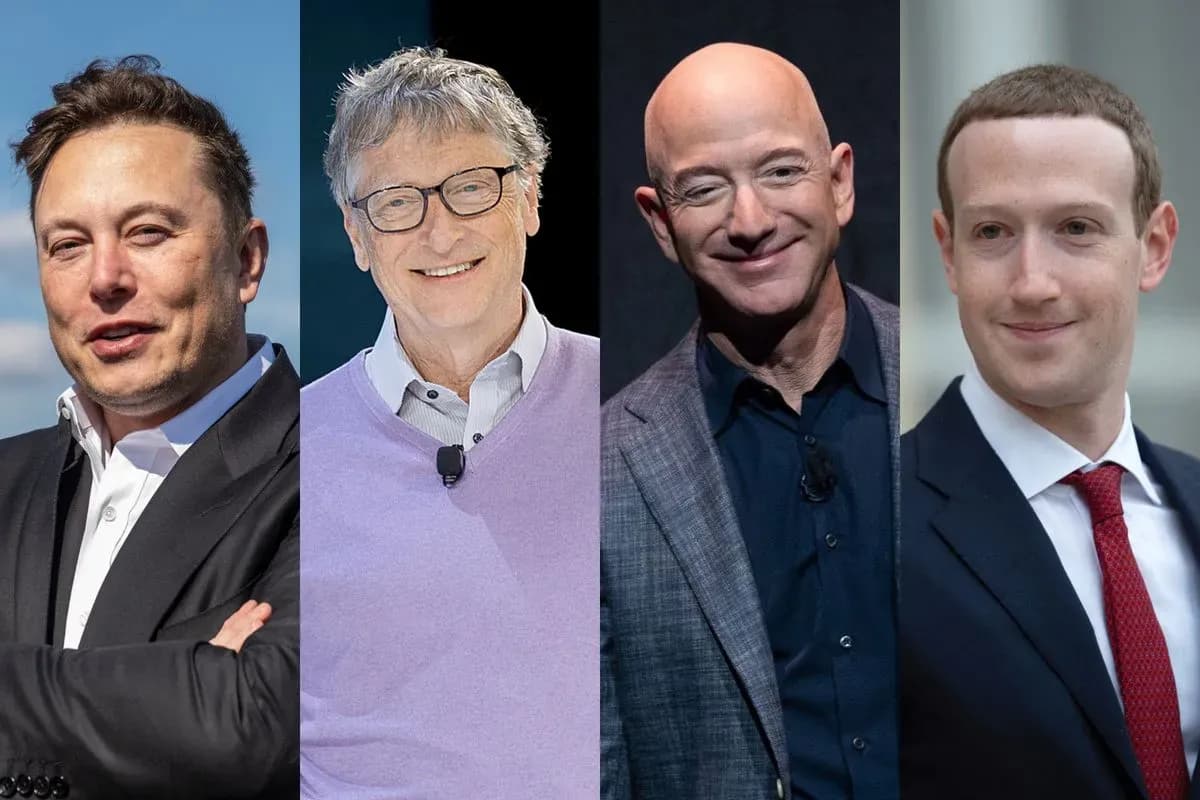
Billionaire wealth is rarely uniform in origin. Finance and investments account for roughly 15 percent of global billionaires, including hedge fund managers and private equity founders. Technology remains another dominant source. In the United States alone, about 110 billionaires are technology founders, among them Elon Musk of Tesla and SpaceX, Jeff Bezos of Amazon and Mark Zuckerberg of Meta.
Related News
Real estate and manufacturing also continue to produce significant fortunes, particularly across Asia, where industrial expansion remains strong. Meanwhile, about one third of U.S. billionaires inherited substantial wealth, according to Forbes, highlighting that not all fortunes are self-made.
That distinction matters. While inheritance offers a head start, long term preservation and growth still depend on strategic management. Many inherited fortunes shrink within two generations due to poor allocation or lack of reinvestment discipline, a trend wealth management firms frequently document.
The underlying theme across sectors is ownership.
Ownership Over Income
One defining characteristic of billionaire wealth is equity. Billionaires typically hold substantial ownership stakes in the companies they build or invest in. Jeff Bezos’ wealth, for example, is tied primarily to his Amazon shares, which appreciated significantly over decades as the company expanded into cloud computing, logistics and streaming.
Salaries alone rarely create billionaires. Equity, by contrast, allows individuals to benefit from rising company valuations. According to S and P Global data, the S and P 500 index delivered an average annual return of about 10 percent over the long term, illustrating how ownership in productive enterprises compounds over time.
For entrepreneurs, this means structuring ventures to retain meaningful stakes rather than trading ownership too quickly for short term funding or compensation.
The Power of Compounding
Patience is another recurring theme. Warren Buffett’s fortune illustrates the mathematics of compounding. By reinvesting earnings consistently over decades, he transformed relatively modest early investments into one of the largest personal fortunes in history.
Compounding rewards time in the market more than timing the market. The earlier profits are reinvested, the more exponential the growth curve becomes. This principle applies not only to public equities but also to private businesses that reinvest profits into expansion, research or acquisitions.
In an era dominated by rapid startup cycles and viral trends, this long horizon perspective can seem unfashionable. However, data consistently show that companies surviving beyond ten years significantly outperform early stage peers in cumulative value creation.
The excitement often arrives years after the groundwork has been laid.
Diversification as Risk Management
While billionaires often become famous for a single company, their portfolios rarely remain concentrated. Many diversify into real estate, private equity, venture investments and global assets. Diversification reduces exposure to downturns in any one sector.
Elon Musk’s net worth, for instance, fluctuates sharply with Tesla’s stock price. Public filings show that single day market swings can alter his net worth by billions. Diversification mitigates that volatility.
For entrepreneurs, diversification does not necessarily mean launching multiple unrelated businesses at once. It may involve developing complementary revenue streams, expanding into adjacent markets or investing profits outside the core company.
Risk is not avoided. It is structured.
Global Scaling and Systems Thinking
Another defining pattern is global reach. Companies such as Amazon and Tesla scaled far beyond domestic markets. Tesla now operates manufacturing facilities on multiple continents, while Amazon Web Services serves clients worldwide.
Global scaling increases total addressable market size. The World Bank estimates that global GDP exceeded 105 trillion dollars in 2025, providing enormous cross border demand for goods and services.
Entrepreneurs who think in systems rather than single products are better positioned to capture this scale. Instead of asking how to generate immediate revenue, they design infrastructure, logistics and technology that can expand without proportionate cost increases.
This systems mindset often appears slow at first. However, once operational foundations are established, growth accelerates.
Philanthropy, Influence and Legacy
Many billionaires also channel wealth into philanthropy. The Bill and Melinda Gates Foundation has committed billions to global health initiatives, influencing vaccine distribution and disease prevention strategies worldwide.
Philanthropy serves multiple purposes. It addresses social challenges, enhances reputation and extends influence into policy and research. For entrepreneurs, this illustrates that wealth creation and societal impact are not mutually exclusive.
An overlooked insight is that philanthropic engagement often provides access to global networks of policymakers, scientists and business leaders. Influence, in this context, becomes a form of long term capital.
Risks, Inequality and Policy Debates
Billionaire wealth is not without controversy. Rising concentration of assets has intensified debates over taxation and fairness. Several governments are examining proposals for higher wealth taxes or stricter capital gains regulations.
Volatility is another reality. Equity driven fortunes can shrink quickly during market downturns. The technology sector’s corrections in recent years demonstrated how quickly valuations can shift.
Entrepreneurs should therefore understand both opportunity and vulnerability. High upside potential comes with exposure to economic cycles and regulatory change.
In 2026, global markets are navigating technological disruption, geopolitical shifts and debates over artificial intelligence regulation. Entrepreneurs building today must contend with tighter funding environments and increased scrutiny.
The billionaire playbook offers a counterintuitive lesson. Sustainable wealth is rarely built through noise or rapid trend chasing. It is built through ownership, disciplined reinvestment, diversified exposure and strategic expansion.
The path may not produce overnight headlines. It produces durable value.
Billionaires do not typically earn their way to extraordinary wealth through salaries or short term gains. They accumulate assets, scale systems and reinvest consistently. While not every entrepreneur will reach billionaire status, the underlying principles are widely applicable.
Ownership creates leverage. Patience unlocks compounding. Diversification protects growth. Global thinking expands opportunity.
For entrepreneurs in 2026, the challenge is not to imitate celebrity success stories but to understand the structures beneath them. Wealth at scale is rarely accidental. It is designed, protected and expanded over time.
Add a Comment