


Community Crime Networks
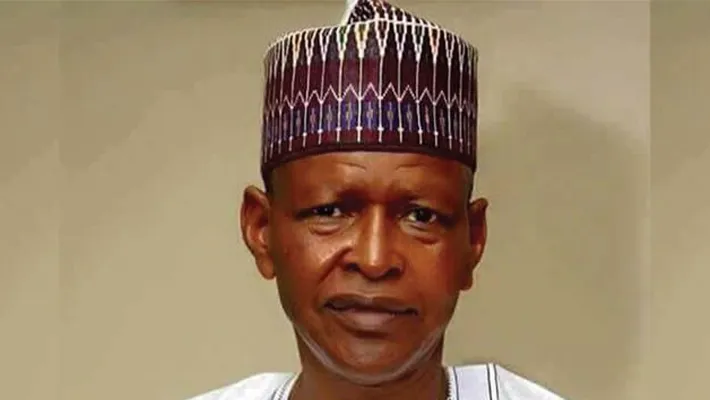
Former Bauchi Deputy Governor Abdullmalik Mahmud has pledged to identify criminal hideouts across Bauchi communities after his appointment as chairman of the Police Community Relations Committee (PCRC), Zone A, covering Bauchi and Gombe states.
The appointment was announced by PCRC national chairman Ibrahim Olaniyi during remarks on the committee’s regional operations. Mahmud responded by promising closer coordination between residents, traditional actors, and security agencies, according to statements released at the event.
The pledge lands at a difficult moment for both states. Parts of Bauchi and neighboring Gombe continue to face kidnapping, rural banditry, farmer-herder disputes, and highway attacks that have strained local policing capacity. Police officials have repeatedly leaned on community intelligence networks because conventional patrol coverage remains thin across many rural districts.
Abdullmalik Mahmud said the PCRC would map security flashpoints across Bauchi communities and expand intelligence-sharing with police.
The committee also promised to secure farmland for police officers ahead of the 2026 rainy season.
PCRC leadership tied the appointment directly to Inspector General of Police Olatunji Disu’s deployment strategy in northern commands.
The announcement contained broad security promises, but no operational budget, staffing figures, or implementation timeline were disclosed.
Related News
Mahmud said the committee’s immediate focus would include identifying communities vulnerable to criminal infiltration and improving communication between residents and law enforcement agencies. He also promised what he described as “active partnership” structures that would allow communities to help define local security priorities.
Those arrangements often depend on volunteer participation.
The PCRC operates as a civilian support structure linked to the Nigeria Police Force, with committees established across states and police zones to improve public cooperation with officers. Success has varied sharply by region. In several northern states, community policing initiatives have struggled because intelligence provided by residents did not consistently translate into rapid police response capacity, according to internal police assessments and public testimony during state security meetings over the past three years.
Olaniyi framed Mahmud’s appointment as part of a broader leadership structure under Inspector General of Police Olatunji Disu. He said the IGP had strengthened operations by deploying “capable officers to strategic positions” and credited the assistant inspector general overseeing the zone with improving public confidence through community engagement.
The statement did not identify specific crime reductions.
Bauchi and Gombe have both expanded local security partnerships in recent years, partly because federal policing resources remain limited relative to population spread. According to Nigeria Police staffing estimates cited in National Assembly security debates, officer-to-citizen ratios remain below United Nations recommendations in several northern regions. Rural response times are often shaped by terrain, fuel availability, and personnel shortages rather than intelligence quality alone.
Mahmud introduced another element that drew attention from local stakeholders. He announced plans to allocate hectares of land for police officers interested in participating in 2026 rainy season farming activities.
The proposal appears designed partly as a welfare measure.
Security agencies across Nigeria have increasingly explored agricultural programs for personnel, especially as inflation and food costs continue affecting public sector workers. But the announcement leaves unanswered questions about funding, land ownership structure, and whether participation would occur through cooperatives, state support schemes, or private arrangements.
No acreage figures were disclosed.
The connection between agricultural support and policing strategy is also politically sensitive in northern Nigeria, where land allocation disputes have fueled communal tensions in several states. Any state-backed or committee-backed land distribution effort typically requires coordination with local governments, traditional institutions, and land administration authorities.
Neither the PCRC nor Mahmud outlined those mechanisms during the announcement.
Olaniyi nevertheless argued that Mahmud’s experience as a former deputy governor gave the committee operational advantages. He said the former official “understands the terrain” and could help coordinate anti-crime efforts more effectively across communities in the zone.
That claim carries political implications.
Former senior state officials often retain informal influence networks involving district heads, political ward structures, and local business actors. Security agencies sometimes rely on those relationships for mediation and intelligence gathering, particularly in areas where distrust of formal policing institutions remains high.
But community policing programs in Nigeria also carry accountability risks. Human rights groups have repeatedly warned that informal intelligence systems can be abused if oversight structures are weak or politically influenced. In some states, vigilante-style enforcement initiatives evolved into parallel security systems with inconsistent training standards and limited legal supervision.
No new oversight framework was announced alongside Mahmud’s appointment.
Our analysis of public PCRC statements from the last 24 months found that most committee announcements emphasize cooperation and intelligence gathering but rarely publish measurable targets such as response-time benchmarks, arrest figures tied directly to community reporting, or independent auditing of outcomes. That pattern makes it difficult to evaluate effectiveness beyond official claims.
The gap remains significant.
Security analysts familiar with policing operations in the North-East say community trust can improve intelligence quality, but sustained results usually depend on logistics, telecommunications coverage, and judicial follow-through after arrests. Without those systems, local residents often stop reporting suspicious activity because they see little practical response.
Mahmud’s appointment now places those expectations directly on the PCRC structure in Bauchi and Gombe. The committee has promised closer engagement with residents and stronger coordination with security agencies. What remains unclear is whether those promises will produce measurable operational changes before the 2026 farming season begins.
What exactly is the PCRC?
The Police Community Relations Committee is a civilian-police partnership structure linked to the Nigeria Police Force. It is supposed to improve communication, intelligence sharing, and local cooperation. It does not replace the police.
Did Mahmud announce any specific anti-crime operations?
No. He spoke about identifying flashpoints, improving intelligence gathering, and strengthening partnerships with residents. No operational timeline, deployment figures, or funding details were released.
Why is the farmland proposal important?
Because it mixes police welfare with local land access. In northern states, land allocation can become politically sensitive quickly, especially where farming disputes already exist.
The next unresolved question is financial. Neither the PCRC nor Bauchi authorities disclosed who will fund the proposed land allocation program for police personnel before the 2026 rainy season, or whether any formal approvals are required under Bauchi State land administration rules. No deadline for implementation has been announced.
Add a Comment