


For decades, health advice has traveled faster through word of mouth than through science. Family traditions, social media posts, and outdated medical guidance often shape how people think about their bodies. Even as access to credible health information has expanded, many myths continue to influence daily decisions, sometimes with real consequences.
According to public health experts, misinformation does not always spread because people reject science. More often, it persists because earlier advice was once reasonable based on limited evidence, or because it feels intuitive. Understanding where these myths came from, and why they still matter today, is critical as health systems worldwide focus more on prevention and long-term well-being.
Myth 1: Drinking Eight Glasses of Water a Day Is Mandatory
The idea that everyone must drink exactly eight glasses of water daily has been repeated for generations. It appears in fitness blogs, workplace wellness posters, and even school lessons. However, researchers say the number itself has no strong scientific foundation.
According to the National Academies of Sciences, Engineering, and Medicine, hydration needs vary widely depending on age, climate, physical activity, and overall health. Much of a person’s daily fluid intake also comes from food, including fruits, vegetables, and soups.
Dr. Tamara Hew-Butler, an exercise-associated hyponatremia researcher at Wayne State University, has noted in peer-reviewed studies that overhydration can be as dangerous as dehydration, particularly for endurance athletes. The more reliable indicator, experts agree, is thirst and urine color rather than a fixed number.
Why it matters now is tied to rising interest in wellness challenges and social media trends that encourage excessive water consumption. Health professionals warn that simplified rules can backfire when applied without context.
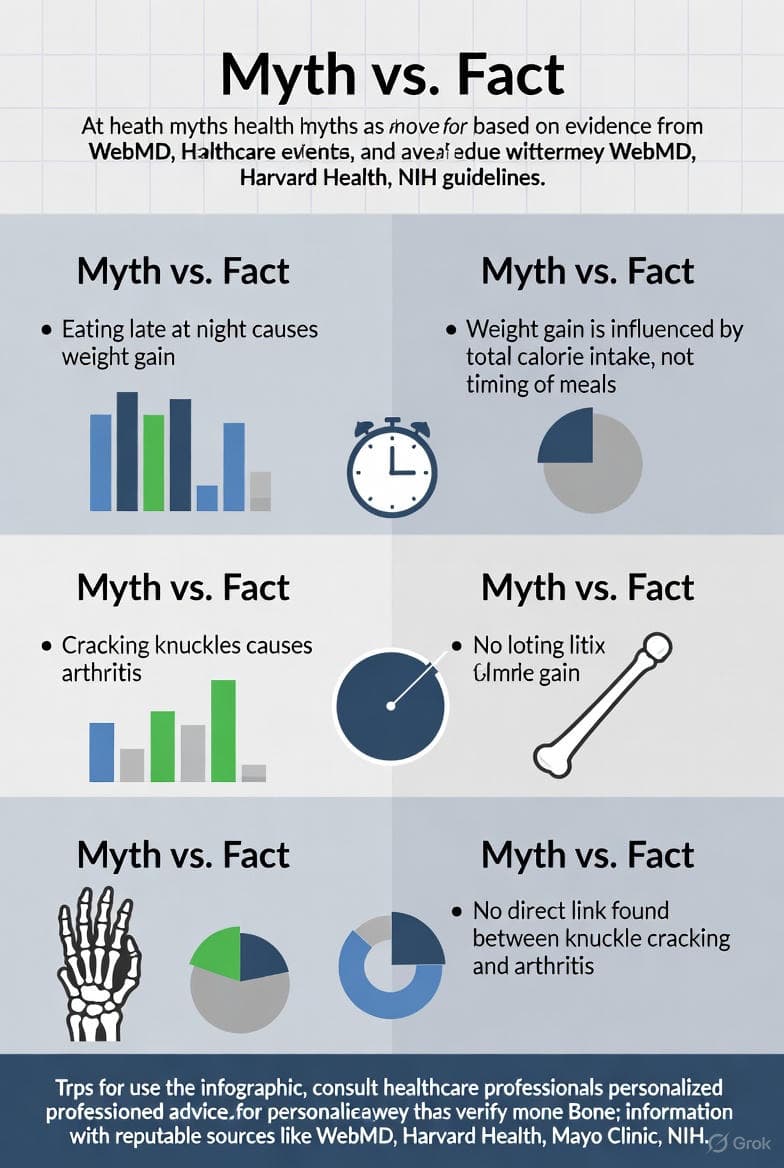
Myth 2: Cracking Your Knuckles Causes Arthritis
This belief has been passed down through families worldwide, often reinforced by parents trying to stop a noisy habit. The fear is that repeated knuckle cracking damages joints and leads to arthritis later in life.
However, multiple studies, including a long-term observational study published in the journal Arthritis and Rheumatology, found no clear link between knuckle cracking and arthritis. The popping sound comes from gas bubbles collapsing within the joint fluid, not bones grinding together.
Related News
That said, doctors caution that habitual knuckle cracking may cause temporary swelling or reduced grip strength in some individuals. While it may be irritating, it is not the arthritis trigger many believe it to be.
The persistence of this myth highlights how visible behaviors often attract blame, even when the real risk factors, such as genetics and joint injuries, are less obvious.
Myth 3: Natural or Herbal Products Are Always Safe
As interest in alternative medicine has grown globally, many people assume that natural products are inherently harmless. This belief has fueled a booming supplements market, valued at hundreds of billions of dollars worldwide.
According to reports from the World Health Organization, herbal remedies can interact with prescription medications, cause allergic reactions, or contain inconsistent dosages. Unlike pharmaceuticals, many supplements are not subject to rigorous pre-market testing in several countries.
Dr. Pieter Cohen, an associate professor at Harvard Medical School who studies supplement safety, has warned that some products marketed for weight loss or energy have been found to contain undisclosed pharmaceutical ingredients.
The issue matters now because online marketplaces make these products available across borders, often without clear labeling or regulatory oversight. Health authorities increasingly urge consumers to discuss supplements with qualified healthcare providers rather than relying on marketing claims.
Myth 4: You Can Detox Your Body With Special Diets or Cleanses
Detox teas, juice cleanses, and fasting programs are often promoted as ways to flush toxins from the body. The concept gained popularity in the early 2000s alongside celebrity endorsements and wellness branding.
Medical experts consistently point out that the human body already has an effective detox system. The liver, kidneys, lungs, and digestive system work continuously to remove waste and harmful substances.
According to the British Dietetic Association, there is no convincing evidence that commercial detox diets improve toxin elimination or overall health. In some cases, extreme cleanses can lead to nutrient deficiencies, dehydration, and blood sugar instability.
A less discussed perspective is that detox marketing thrives on vague fears rather than specific threats. By rarely defining what toxins are being removed, these programs avoid measurable accountability, making them difficult to scientifically evaluate.

Myth 5: Mental Health Problems Are a Sign of Weakness
Perhaps the most damaging myth is the idea that mental health struggles reflect personal failure rather than medical conditions. This belief has deep cultural roots and has historically discouraged people from seeking help.
Over the past several decades, research has shown clear biological, psychological, and social factors contributing to conditions such as depression, anxiety, and bipolar disorder. Brain imaging studies and genetic research have reinforced that mental health disorders involve real physiological processes.
According to the World Health Organization, depression is now a leading cause of disability globally. The COVID-19 pandemic further exposed how stress, isolation, and uncertainty affect mental well-being across all societies.
Why this myth matters now is tied to workforce productivity, healthcare costs, and social stability. Destigmatizing mental health care is increasingly seen not just as a personal issue but as a public policy priority.
Why Does These Myths Persist?
One unique insight from health communication research is that myths often survive because they offer simple explanations for complex systems. The human body is complicated, and simplified rules feel easier to follow than nuanced guidance.
Another factor is generational trust. Advice passed down from elders often carries emotional weight, even when scientific understanding has changed. Correcting misinformation, therefore, requires sensitivity as well as evidence.
Health myths endure because they are familiar, comforting, and easy to remember. Yet clinging to outdated beliefs can influence daily choices in ways that undermine well-being. As scientific knowledge continues to evolve, the challenge lies not just in discovering new information but in communicating it clearly and responsibly.
For readers, the takeaway is simple. Question absolute claims, seek credible sources, and recognize that good health advice often depends on context rather than one-size-fits-all rules.
Add a Comment