


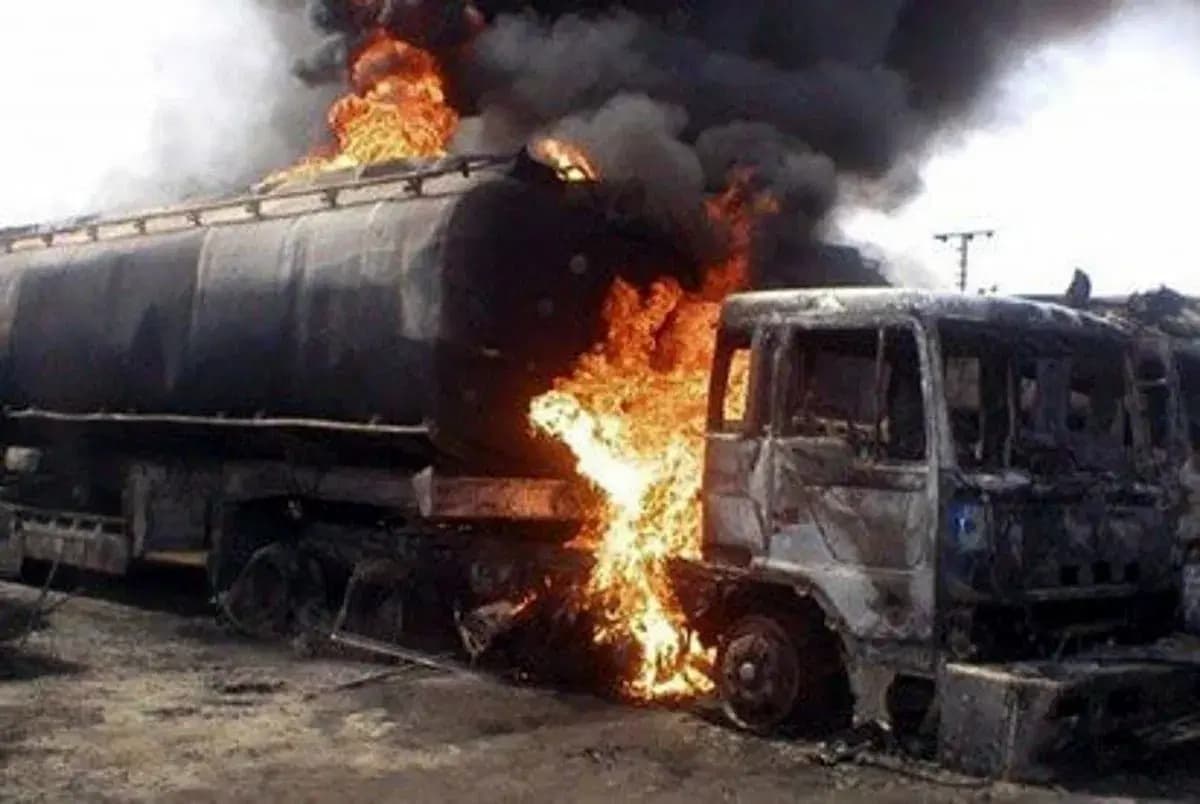
Two separate fire outbreaks at petrol filling stations in Kano State on Tuesday night left extensive damage in their wake, with at least 17 commercial tricycles and two fuel tankers destroyed, according to the Kano State Fire Service. The incidents, which occurred in different local government areas, have renewed concerns about safety practices during fuel offloading in densely populated communities.
Officials said no deaths were recorded, but the scale of the losses has again drawn attention to the recurring danger posed by fuel-related fires, particularly when tankers discharge petrol late at night.
First fire incident along Gwarzo Road
According to the Public Relations Officer of the Kano State Fire Service, Saminu Abdullahi, the first incident occurred at AA Ayagi filling station in Kanye village, along Gwarzo Road in Kabo Local Government Area.
Abdullahi said the fire service control room received a distress call at about 8:45 pm from a staff member, Muhammad Wada Abdulsalam, reporting a fire outbreak at the station.
Firefighters from the Rijiyar Zaki division were immediately deployed to the scene. On arrival, they found a petrol tanker already engulfed in flames while offloading Premium Motor Spirit.
The tanker, with registration number XPB 999 FA and owned by AA Ayagi Company, was said to be in the middle of discharging its contents when the fire started. According to the fire service, two compartments of the tanker had already been emptied into an underground storage tank.
However, three remaining compartments containing an estimated 5,000 litres of petroleum products were still being offloaded when the inferno broke out. The fire spread rapidly, completely destroying the tanker truck before firefighters were able to bring the situation under control.
Abdullahi did not disclose the exact cause of the fire but noted that the timing and circumstances were consistent with risks commonly associated with fuel transfer operations.
Second outbreak in Nassarawa LGA
A second fire incident was recorded the same night at Al-Wahida Nigeria Limited filling station, located at Rimin Kebe Karshen Kwalta in Nassarawa Local Government Area.
According to the fire service, a petrol tanker belonging to BA Bello Company, with registration number KHX 29 XA, was offloading fuel when the fire started. The tanker was reportedly carrying about 45,000 litres of petroleum products.
The blaze destroyed the tanker’s head and part of its body. Seventeen tricycles, popularly known as Adaidaita Sahu, which were parked nearby, were also completely burnt.
Abdullahi said firefighters were able to prevent the fire from spreading further, saving a portion of the petroleum products as well as parts of the tanker body.
“It was by God’s intervention that the fire was contained,” he said, adding that the timely response helped avert a potentially larger disaster in the area.
Residential building also affected elsewhere
Meanwhile, the Kano State Fire Service also responded to another fire incident at Kundila Quarters, near SALSA College. In that incident, one room, a toilet, and a corridor in a residential building were destroyed.
Although unrelated to the filling station fires, the residential incident added to the spate of fire emergencies handled by the service within a short period.
No casualties were reported in any of the incidents, according to officials.
Authorities warn on fuel handling risks
Reacting to the incidents, the Director of the Kano State Fire Service, Sani Anas, urged filling station operators, tanker drivers, and fuel handlers to strictly comply with safety regulations during fuel offloading.
He warned that petrol is highly flammable and that minor lapses during handling can result in devastating fires, especially in areas close to homes, markets, and parked vehicles.
According to him, safety measures such as proper grounding of tankers, switching off engines during offloading, restricting movement around discharge points, and keeping fire extinguishers readily available are critical to preventing similar incidents.
Anas added that public awareness and cooperation are equally important, noting that residents often gather around filling stations during fuel discharge, increasing the risk of casualties if a fire breaks out.
The latest fires come at a time when fuel distribution activities have intensified across the country, following changes in petrol pricing and supply patterns. Industry observers note that increased tanker movements and late-night offloading, often done to avoid traffic, have raised safety risks at filling stations.
Kano, as one of the most populous states in the country, has many filling stations located close to residential areas. This proximity means that fires can quickly escalate beyond commercial premises and threaten lives and homes if not promptly contained.
According to fire safety experts, tanker-related fires remain one of the most dangerous categories of fire incidents because of the volume of flammable materials involved and the speed at which petrol fires spread.
The Kano incidents also echo similar fire outbreaks reported in other parts of the country in recent days. On Sunday morning, a fire erupted at the Guangdong Free Trade Zone in Igbesa, Ogun State, according to reports. The blaze reportedly started from an industrial facility and spread to nearby residential areas, causing panic among residents.
While the causes and circumstances differ, the repeated incidents have underscored ongoing challenges in fire prevention, industrial safety enforcement, and emergency preparedness nationwide.
Safety analysts say that many filling stations and industrial facilities still operate with outdated equipment or insufficient compliance with safety standards, despite existing regulations.
Authorities are expected to assess the affected filling stations to determine the immediate causes of the Kano fires and whether any safety violations occurred. Such assessments could lead to sanctions, safety audits, or temporary closures if lapses are identified.
Fire service officials have also indicated the need for stronger collaboration between regulators, filling station operators, and transport companies to reduce the frequency of tanker-related fires.
For residents, the incidents serve as a reminder of the importance of staying clear of fuel discharge areas and promptly reporting any fire outbreak to emergency services.
As investigations continue, safety advocates argue that consistent enforcement, public education, and improved infrastructure remain key to preventing future incidents of this nature.
Although no lives were lost, the destruction of two fuel tankers and 17 tricycles in Kano highlights the persistent risks associated with fuel handling and distribution. With similar incidents occurring across the country, the latest fires reinforce calls for stricter safety compliance and greater vigilance by operators, regulators, and the public alike.
Add a Comment