


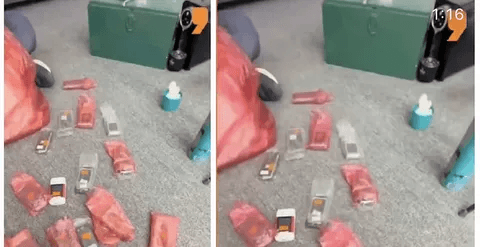
A Libyan mobile phone dealer has finally taken delivery of a shipment of Nokia handsets ordered in 2010, closing a chapter that has stretched across 16 turbulent years and multiple phases of Libya’s conflict. The long-delayed delivery, according to local accounts, had been trapped in storage facilities since the outbreak of Libya’s civil war in 2011, when violence and institutional collapse brought much of the country’s logistics and customs systems to a standstill.
The arrival of the phones, though minor in commercial value today, has drawn widespread attention because it captures in concrete terms how deeply Libya’s prolonged instability has disrupted ordinary economic activity. What was once a routine cross-border transaction turned into a decade-long ordeal shaped by war, insecurity and the slow recovery of state institutions.
A routine order caught in a national crisis
According to reports circulating among Libyan traders, the dealer placed the order for the Nokia devices in 2010, when Libya was still under the rule of Muammar Gaddafi and international trade routes were functioning normally. At the time, Nokia remained one of the dominant global phone brands, and feature phones were widely used across North Africa.
However, the following year marked a turning point. In 2011, Libya descended into civil war following an uprising that led to the collapse of the Gaddafi government. The conflict fractured the country’s political and security structures, shut down ports and airports, and paralysed customs operations.
As fighting spread and control of key infrastructure changed hands, countless shipments were abandoned or left in limbo. According to traders familiar with the period, warehouses filled with goods that could no longer be cleared, insured or safely transported.
The Nokia shipment was one of them.
Warehouses frozen by conflict
Industry sources say the phones remained stuck in storage facilities for years as Libya’s logistics networks collapsed. Transport routes became unsafe, documentation was lost or invalidated, and companies involved in shipping either withdrew from the country or ceased operations entirely.
Customs clearance, once a predictable process, became nearly impossible. Rival authorities claimed control over ports, while insecurity made routine inspections risky. In some cases, goods deteriorated or were looted. In others, they remained untouched, locked away as paperwork and ownership disputes piled up.
According to reports, the Nokia shipment survived these years largely because it was stored in a secured warehouse that remained intact despite the surrounding instability. Even so, there was little prospect of release while fighting persisted and governance remained fragmented.
Why the delivery matters now
The eventual release of the phones in 2026 reflects gradual improvements in certain parts of Libya’s administrative and security environment. Although the country remains politically divided, some ports and customs offices have resumed more consistent operations, allowing long-delayed goods to be processed.
A Tripoli-based trade analyst said the episode highlights both progress and persistent fragility.
“The fact that the shipment was eventually released shows that parts of the system are working again,” the analyst said. “But the 16-year delay also reminds us how deep the damage was and how long recovery takes after state collapse.”
For the dealer involved, the phones themselves are now obsolete. Mobile technology has moved far beyond the basic Nokia models popular in 2010. Smartphones dominate the market, and consumer demand has shifted dramatically.
However, the symbolic value of the delivery has resonated widely, especially among Libyan business owners who experienced similar disruptions.
A broader pattern of frozen trade
The Nokia case is not unique. According to reports from Libyan chambers of commerce, thousands of shipments ordered before or during the early years of the conflict were delayed, abandoned or written off entirely.
Small traders were particularly affected. Many lacked the resources to pursue legal claims or track goods across changing authorities. Some businesses collapsed after losing inventory or capital tied up in stranded imports.
An official with a regional trade association, speaking anonymously, said unresolved shipments continue to surface sporadically.
“Every now and then, something reappears from the pre-war period,” the official said. “It could be electronics, machinery or even food equipment. Each case tells a story of how trade simply stopped overnight.”
The human cost behind the logistics
Beyond supply chains, the delayed shipment underscores the human impact of Libya’s prolonged instability. Traders who built livelihoods around import and retail saw their businesses disrupted or destroyed. Employees lost jobs, and communities dependent on local commerce suffered.
The phone dealer at the centre of the story reportedly waited years before giving up hope that the shipment would ever arrive. Like many Libyan entrepreneurs, he had to adapt to an unpredictable environment, relying on informal networks and short-term trading to survive.
Economic researchers say such experiences have reshaped Libya’s private sector, pushing many businesses toward low-risk, small-scale operations rather than long-term investment.
“When contracts cannot be enforced and deliveries take years, planning becomes impossible,” said a North Africa economist based in Tunis. “That uncertainty discourages growth.”
A reminder of technological change
The arrival of the Nokia phones also highlights how much the world has changed since the order was placed. In 2010, Nokia was still a global leader, and smartphones were only beginning to gain mass adoption.
Today, the devices are largely relics. Some observers joked online that the phones belong in a museum rather than a shop shelf. Yet others noted that basic feature phones still have limited use in rural areas or as backup devices.
According to technology analysts, the contrast underscores how conflict can freeze not just goods, but time itself.
“These phones are a snapshot of 2010,” one analyst said. “They show what happens when a country is cut off from global progress.”
As Libya continues efforts to stabilise its economy, attention is likely to focus on clearing other long-delayed shipments and rebuilding confidence in trade systems. Customs reform, unified governance and improved security remain key challenges.
Business groups have urged authorities to audit warehouses and ports to identify stranded goods and resolve ownership disputes. Such steps, they argue, could unlock value and send a signal that Libya is open for business again.
However, analysts caution that without lasting political settlement, progress may remain uneven.
The delivery of a Nokia shipment ordered in 2010 and received 16 years later is a striking illustration of how deeply Libya’s civil war disrupted everyday commerce. While the phones themselves may no longer hold commercial relevance, their journey from warehouse to shop reflects the long shadow of conflict on trade, technology and livelihoods. As Libya slowly rebuilds, the story serves as both a marker of how far the country has come and a reminder of how much remains unresolved.
Add a Comment