


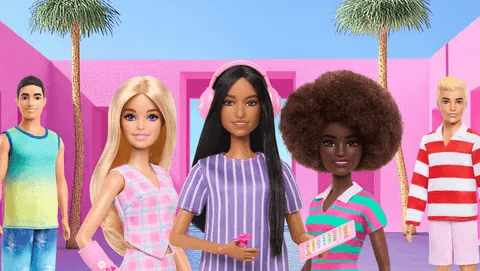
Mattel has introduced its first-ever autistic Barbie, marking a significant expansion of the company’s long-running efforts to reflect disability and neurodiversity in children’s toys. The new doll joins the Fashionistas line, which already includes Barbies and Kens with vitiligo, a Barbie with Down syndrome, a blind Barbie, and dolls representing a range of physical disabilities and medical conditions.
According to Mattel, the autistic Barbie was developed over more than 18 months in close collaboration with the Autistic Self Advocacy Network, a nonprofit organization that works to advance the rights of autistic people and improve how autism is portrayed in media and popular culture. The company said the goal was not to present a definitive image of autism, but to create a doll that reflects some of the ways autistic individuals may experience, navigate, and interpret the world.
Building the doll through collaboration
Mattel said the extended development period was necessary to ensure that design decisions were informed by lived experience rather than assumptions. Representatives of the Autistic Self Advocacy Network were involved throughout the process, offering feedback on physical features, accessories, and overall presentation.
Advocates involved in the project stressed that autism exists on a broad spectrum, with traits that vary widely from one person to another. Many characteristics associated with autism are also not outwardly visible, making representation particularly complex.
A representative of the advocacy group noted that the doll was never intended to capture every autistic experience. Instead, the aim was to highlight a few commonly shared expressions in a respectful and recognisable way, while avoiding stereotypes that have historically shaped portrayals of autism.
Visual cues and movement features
One of the most discussed aspects of the new Barbie is the design of the eyes, which shift slightly to the side. According to Mattel, this choice reflects how some autistic people may avoid sustained eye contact, especially in social settings. The company emphasized that this is one possible trait, not a universal one.
The doll also features articulated elbows and wrists. These joints were included to acknowledge stimming behaviors such as hand flapping or repetitive movements, which many autistic people use for self-regulation, sensory comfort, or to express excitement. Designers said it was important to frame these movements as natural and supportive, rather than something to be corrected or hidden.
Toy designers involved in the project described these features as subtle but meaningful. In their view, small physical details can shape how children understand difference, especially during imaginative play.
Clothing designed with sensory needs in mind
Clothing selection proved to be one of the more complex elements of the design process. According to Mattel, autistic individuals often have differing sensory preferences. Some may prefer loose clothing to avoid irritation from fabric, while others find snug clothing comforting because it provides a sense of body awareness.
After consulting with advocates, the design team settled on an A-line dress with short sleeves and a soft, flowy skirt. The structure of the dress was intended to minimise fabric-to-skin contact while still offering visual appeal. Flat shoes were chosen over heels to emphasize comfort and stability.
Advocates said the clothing choices reflect an effort to think beyond aesthetics and consider how clothing can affect sensory experience, a topic that is often overlooked in mainstream representations of autism.
Accessories that reflect daily tools
Each autistic Barbie comes with a set of accessories that mirror tools commonly used by some autistic individuals. These include a pink finger-clip fidget spinner, noise-canceling headphones, and a pink tablet modeled after augmentative and alternative communication devices.
Mattel said these accessories were selected to normalise items that autistic people may rely on in daily life. Noise-canceling headphones can help manage sensory overload, while communication devices support individuals who have difficulty speaking.
Advocates involved in the collaboration said including these tools sends an important message. Rather than presenting them as medical equipment, the doll treats them as everyday objects, reinforcing the idea that different communication and coping methods are valid.
Representing an underseen demographic
Another notable aspect of the new Barbie is its facial design, which draws inspiration from women of Indian heritage. According to Mattel, this decision was informed by employee input and visual references, with the aim of reflecting a part of the autistic community that is often underrepresented in toys and media.
Experts on autism representation have long noted that portrayals tend to focus on white, male children, despite growing evidence that autism affects people across racial and ethnic backgrounds. By introducing a doll that reflects this diversity, Mattel appears to be responding to calls for broader representation within neurodiversity advocacy.
Context within Mattel’s wider strategy
The autistic Barbie is the latest addition to Mattel’s expanding Fashionistas line, which in recent years has introduced dolls with hearing aids, prosthetic limbs, and Type 1 diabetes. The company has also increased the range of body types, skin tones, and hair textures available across its Barbie products.
According to Mattel executives, this strategy reflects both social responsibility and consumer demand. Parents and educators have increasingly called for toys that reflect real-world diversity, while research suggests that inclusive play can help children develop empathy and understanding from an early age.
Why the timing matters
The release comes at a time of growing public awareness around autism and neurodiversity. According to the US Centers for Disease Control and Prevention, autism affects about one in 31 eight-year-old children in the United States. Diagnosis rates are higher among boys and are also higher among Black, Hispanic, Asian, and Pacific Islander children compared to white children.
Experts say representation in toys can play a subtle but important role in shaping attitudes. A developmental psychologist based in California said children often process social differences through play long before they can articulate them in words.
“When children see difference normalized in their toys, it reduces fear and curiosity rooted in misunderstanding,” the psychologist said. “That can have long-term effects on inclusion.”
Advocates say the real test will be how the doll is received by autistic children and adults themselves. Some will welcome the effort, while others may critique aspects of the design, reflecting the diversity of perspectives within the autistic community.
Mattel has said it plans to continue working with advocacy groups as it expands the Fashionistas line. Observers will be watching to see whether future releases explore other forms of neurodiversity or refine existing designs based on community feedback.
Mattel’s first autistic Barbie represents a careful attempt to translate a complex, often misunderstood condition into a mainstream toy. Developed in partnership with autistic advocates, the doll reflects a shift toward more thoughtful representation that acknowledges sensory needs, communication differences, and cultural diversity. While no single product can capture the full range of autistic experiences, the release signals a broader recognition that inclusion in play matters, and that representation begins early.
Add a Comment