


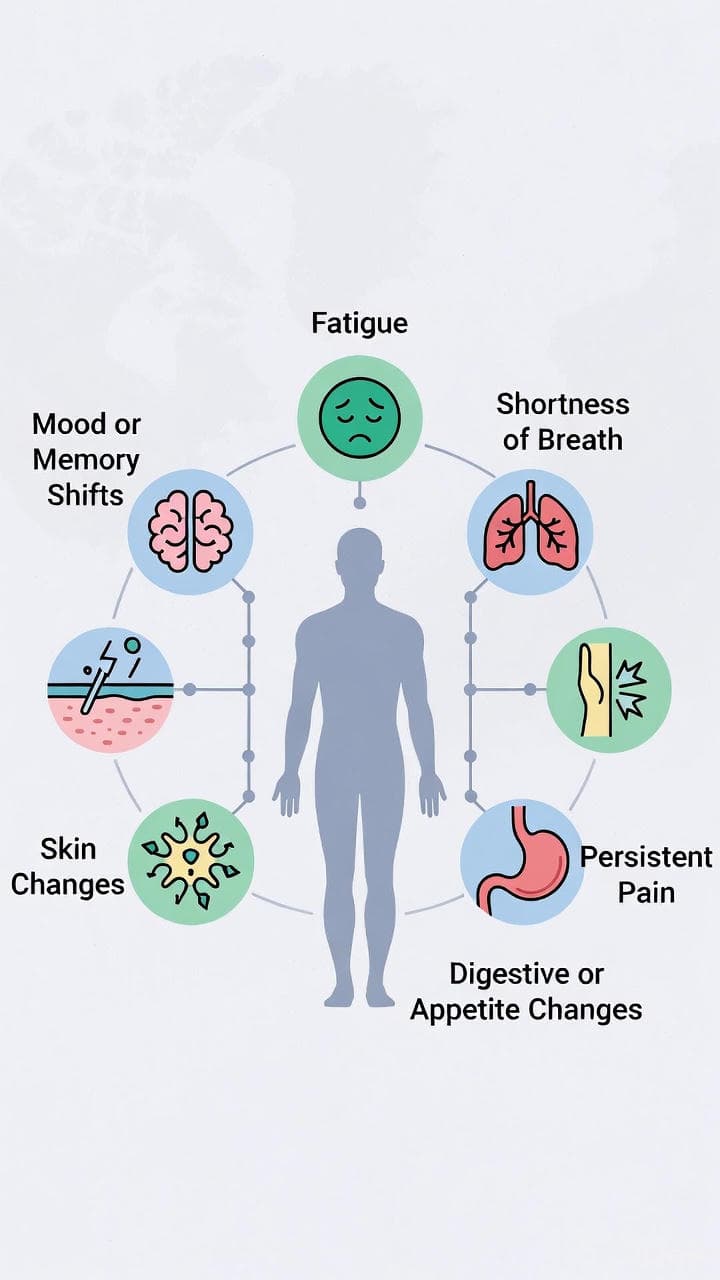
Awareness of health warning signs does not require alarm or a rush to worst case conclusions. It does require attention. As health systems worldwide continue to emphasize prevention and early detection, clinicians say many serious conditions still arrive late because early signals were dismissed as routine stress, aging, or temporary discomfort. The challenge is not to fear every ache, but to recognize patterns that warrant a closer look.
Doctors and public health researchers increasingly agree on a simple message. Your body often communicates change quietly before it does so loudly. Learning to notice those signals can improve outcomes and reduce the need for urgent care later.
Why this conversation matters now
Over the past decade, early detection campaigns have reshaped outcomes for conditions ranging from heart disease to cancer. According to data from the World Health Organization, noncommunicable diseases account for roughly 74 percent of global deaths, many linked to delayed diagnosis.
Meanwhile, primary care visits dropped sharply during the early years of the COVID-19 pandemic. In the United States, the Centers for Disease Control and Prevention reported a significant decline in routine screenings between 2020 and 2022. Those missed appointments mean that subtle warning signs may now be surfacing all at once.
Health experts say the moment calls for renewed awareness without panic.
“The goal is not self diagnosis,” said Dr. Lina Morales, an internist at Mount Sinai Hospital in New York. “It is understanding what is normal for you and recognizing when something has shifted enough to justify a conversation with a professional.”
Persistent fatigue that rest does not fix
Feeling tired is common. Feeling exhausted despite adequate sleep is different.
Chronic fatigue that lasts for weeks can be linked to anemia, thyroid disorders, sleep apnea, autoimmune disease, or depression. According to the Mayo Clinic, fatigue is one of the most frequent reasons patients seek medical advice, yet it is often normalized until it becomes disabling.
Related News
What to watch is duration and impact. If tiredness begins to interfere with daily tasks, concentration, or physical activity, it may be time to investigate.
A useful approach, doctors say, is tracking energy levels over time rather than reacting to a single bad day.
Unexplained weight changes
Sudden weight loss or gain without changes in diet or activity can signal underlying issues. Involuntary weight loss has been associated with conditions such as diabetes, gastrointestinal disorders, and certain cancers. Rapid weight gain may point to hormonal imbalance, fluid retention, or heart and kidney problems.
According to reports from the National Institutes of Health, unintended weight change of more than 5 percent over six to twelve months should be evaluated.
This does not mean every fluctuation is dangerous. However, trends matter more than daily numbers on a scale.
Ongoing pain that evolves or spreads
Pain that persists or changes in character deserves attention. This includes headaches that become more frequent, back pain that begins to radiate, or joint pain accompanied by swelling or stiffness.
Dr. Marcus Lee, a neurologist at Stanford Health Care, noted that many serious conditions present with mild discomfort at first.
“Patients often tell us they waited because the pain was tolerable,” Lee said. “The red flag is not intensity alone. It is progression, especially when pain starts affecting sleep or mobility.”
Changes in bowel or bladder habits
Digestive and urinary changes are among the most overlooked warning signs. Persistent constipation, diarrhea, blood in stool, frequent urination, or pain during urination can indicate infections, inflammatory conditions, or in some cases cancer.
Public awareness campaigns have improved recognition of colorectal cancer symptoms, yet experts say embarrassment still delays care.
Normal varies from person to person. A notable departure from your usual pattern is the key signal.
Shortness of breath during routine activity
Breathlessness is expected during intense exertion. It is not expected when walking up familiar stairs or performing everyday tasks.
Shortness of breath can be linked to heart disease, lung conditions, anemia, or anxiety disorders. According to the American Heart Association, unexplained breathlessness is one of the most common early symptoms of heart failure.
Meanwhile, respiratory symptoms have taken on new relevance in the post pandemic era, as clinicians continue to study long term effects of viral infections.
Skin changes that persist
The skin is the body’s most visible organ, yet subtle changes are often dismissed. New moles, changes in color or texture, slow healing sores, or yellowing of the skin can signal underlying disease.
Dermatologists emphasize that it is not about memorizing complex criteria, but noticing what is new or changing.
“Your skin tells a story over time,” said Dr. Rachel Nguyen, a dermatologist with the American Academy of Dermatology. “Comparing photos taken months apart can reveal changes you might otherwise miss.”
Mood and cognitive shifts
Mental and emotional changes can be physical signals. Persistent low mood, anxiety, memory problems, or confusion may reflect hormonal imbalances, vitamin deficiencies, neurological conditions, or medication side effects.
According to reports from the Alzheimer’s Association, early cognitive changes are often first noticed by family members, not patients themselves.
This highlights a broader insight that experts say deserves more attention. Health awareness is not purely individual. Social observation matters.
A less discussed insight. Patterns over symptoms
One emerging perspective in preventive medicine focuses less on isolated symptoms and more on patterns across systems. Wearable devices, symptom journals, and longitudinal health data are giving clinicians a clearer picture of gradual change.
A resting heart rate that slowly rises over months, combined with worsening sleep and fatigue, may reveal risk earlier than any single complaint.
“This pattern based awareness is where prevention is heading,” said Dr. Morales. “It shifts the question from what hurts today to what has changed over time.”
What happens if warning signs are ignored
Delayed evaluation often leads to more complex treatment, higher costs, and poorer outcomes. However, experts stress that awareness should not create fear or constant monitoring.
The balance lies in curiosity rather than anxiety.
Knowing when to check in allows people to partner more effectively with healthcare providers and make informed decisions.
Health systems are increasingly integrating remote monitoring and preventive screening into routine care. Public health agencies are also refining guidance on when to seek evaluation for common symptoms.
For individuals, the next step is simple. Notice changes. Write them down. Discuss them openly during medical visits.
Suggested visuals to accompany this article include a chart showing common warning signs by body system, a timeline graphic illustrating symptom progression, or an infographic on how to track health changes over time.
Your body does not issue headlines. It sends signals quietly, often repeatedly. Paying attention does not mean assuming the worst. It means respecting the information your body provides and responding thoughtfully.
In an era where medicine increasingly rewards early action, awareness remains one of the most effective tools available.
Add a Comment