


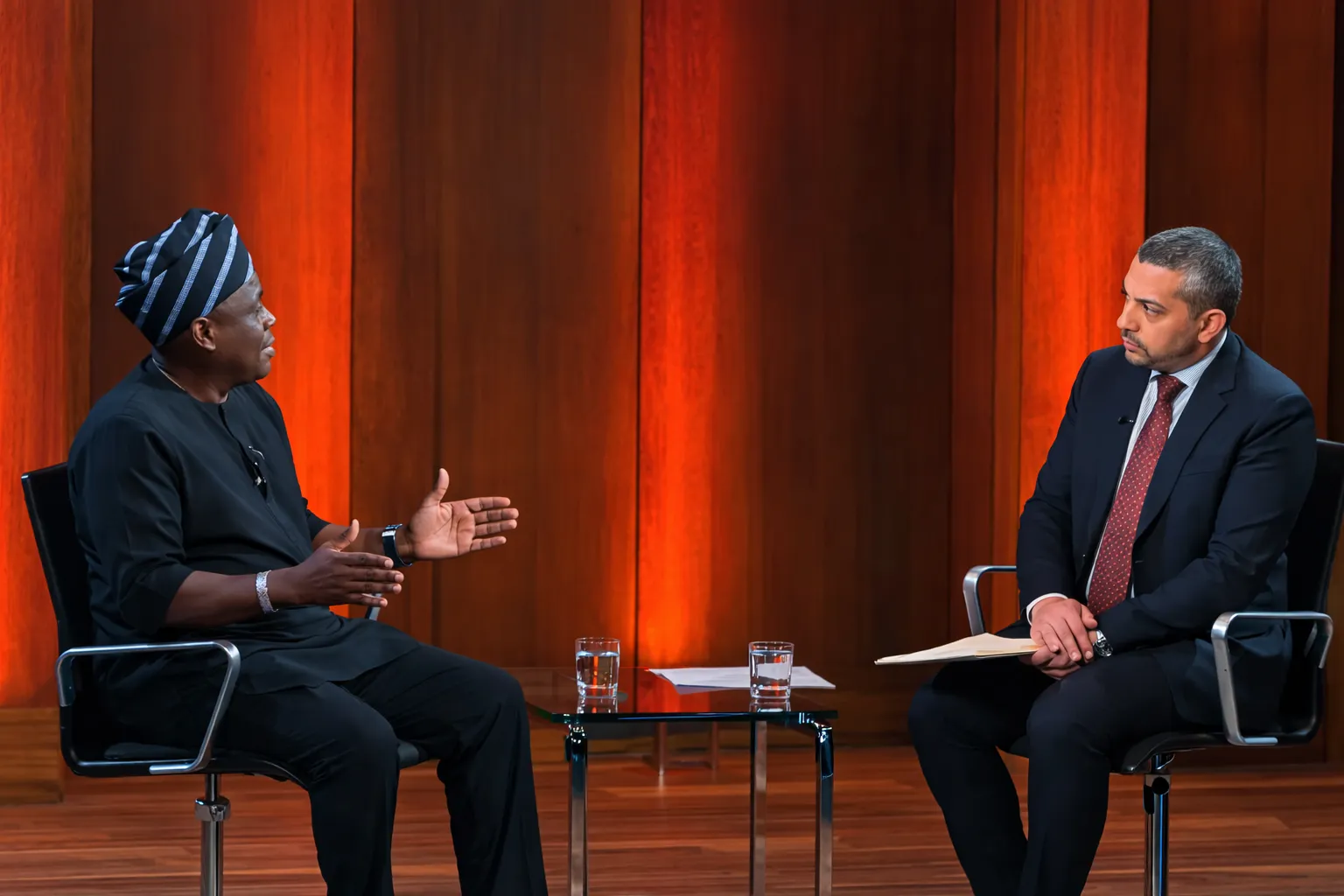
Presidential aide Daniel Bwala says Al Jazeera recorded 80 minutes of his testimony on February 11, 2026, published 49 of them on March 5, then cut the footage again to 8 minutes for wider online distribution. He has not released the recording himself. Neither has Al Jazeera.
The 31-minute discrepancy between what Bwala says was recorded and what the network published is the only verifiable number in this dispute. Everything else is contested.
What Bwala Says Happened, and What He Has Not Provided
According to a written statement released by Bwala's office, the February 11 session with Al Jazeera anchor Mehdi Hasan was structured as an 80-minute interview. The agreed format, per Bwala's account, required the full session to air on Al Jazeera's television channel before any digital upload was made. That sequence never happened.
Al Jazeera's stated reason, as relayed by Bwala, was that breaking coverage of developments involving Israel, Iran, and the United States displaced the segment in the network's broadcast schedule. The network then bypassed the television airing entirely and uploaded a 49-minute version to YouTube on March 5, 2026, 22 days after the recording date.
That alone would be a scheduling dispute. The 8-minute version is where Bwala's complaint sharpens.
He describes that shorter cut as joining and severing portions of his responses in a sequence that "emphasized certain points while leaving out crucial context," a quote from his written statement. He has not identified, in any public document released as of March 10, 2026, which specific exchanges were rearranged, what order they originally appeared in, or which of his qualifications were removed. His office has not published a timestamped comparison between the original recording and either published version.
Bwala's statement is explicit on one point: he is not disputing the authenticity of his words. "I didn't deny anything," he wrote. The complaint is editorial assembly, not fabrication.
That is a meaningful distinction. It is also a significantly harder claim to prosecute without the source recording.
Related News
Al Jazeera's Position, and the Absence of One
Al Jazeera had not issued a public response to Bwala's statement as of March 10, 2026. Mehdi Hasan, who conducted the interview, has not published a rebuttal, a corroborating account of the agreed format, or any statement acknowledging the gap between the recorded duration and the published duration.
The network has not confirmed the 80-minute figure. It has not denied it.
A non-response from a broadcaster facing an editorial complaint is not, by itself, evidence of wrongdoing. Al Jazeera operates under the editorial jurisdiction of Qatar's media regulatory environment and is not subject to directives from Nigeria's National Broadcasting Commission, which governs licensed broadcasters operating within Nigerian territory under the National Broadcasting Commission Act, Cap N11, Laws of the Federation of Nigeria 2004. No Nigerian regulatory body has announced any inquiry into the matter.
Bwala's formal options are limited. He can file a complaint with Al Jazeera's internal editorial standards division. He can pursue a civil claim in a jurisdiction where Al Jazeera operates, though no legal action has been announced. Or he can release the recording himself, if he has a copy, and let the timestamps do the work.
He has not done that.
Why the Nigerian Public Reaction Preceded the Editing Complaint
The social media backlash against Bwala from Nigerian commentators, widely documented across Nigerian news platforms including Naija News, was triggered by the content of the published interview, not by any allegation of editing. Viewers who watched the 49-minute and 8-minute versions criticized Bwala's performance in defending the Tinubu administration's positions under questioning by Hasan.
The editing complaint came after the backlash, not before it.
That sequence matters because it shapes how the complaint is received. A pre-emptive dispute over editorial framing, filed before public criticism accumulates, reads differently from one filed after. Bwala's office has not addressed the timeline directly.
The criticism from Nigerians was directed at what they saw, not at what was allegedly removed. Whether the missing 31 minutes would have changed the public's assessment is unknowable without the full recording.
Key Takeaways
- Al Jazeera published 49 minutes of a session Bwala says ran 80 minutes, and neither party has released the full recording to resolve the 31-minute factual gap.
- Bwala is contesting editorial assembly, not fabrication, which means his complaint requires a timestamped comparison of the original and published versions to be verifiable.
- No Nigerian regulatory body holds jurisdiction over Al Jazeera's YouTube distribution, leaving Bwala without a formal complaints channel outside the network's own internal process.
- The public backlash against Bwala predates his editing complaint by days, a sequence his office has not addressed in any public statement.
FAQ
Did Bwala say Al Jazeera put words in his mouth? No. His statement is clear: questions were asked, he answered them, he denied nothing. What he's contesting is the order and selection of what aired. That's an editorial complaint, not a fabrication claim. Different standard of proof required.
Can Al Jazeera legally edit an interview without the subject's sign-off? Almost universally, yes. Unless a prior written agreement restricts how the material is used, broadcasters hold editorial control over footage they record. Whether such an agreement existed here is one of the things neither side has documented publicly.
Why hasn't Bwala just released his own copy of the recording? That's the question his office hasn't answered. If he has a copy, releasing it with timestamps would settle the dispute faster than any statement. The fact that he hasn't done so doesn't prove bad faith. It does mean the claim remains unverifiable.
The one question that would close this story is whether a written agreement between Bwala's office and Al Jazeera specified the broadcast-first condition Bwala describes, and if so, what remedy it provides. No court filing has been announced in any jurisdiction. No sum has been named. The full 80-minute recording, if it exists in Bwala's possession, remains unpublished. Al Jazeera's editorial standards office has received no documented public complaint, and Mehdi Hasan has said nothing. The story is waiting on a tape that two parties are each, for their own reasons, declining to release.
Add a Comment