


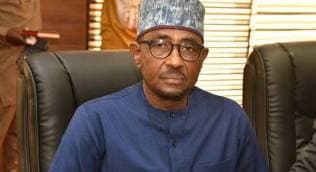
Nigeria’s petroleum industry was shocked on Wednesday by the sudden resignation of the heads of its two most powerful regulators, a move that has deepened uncertainty across the fuel market and intensified debate over regulation, competition and governance.
Farouk Ahmed, Chief Executive of the Nigerian Midstream and Downstream Petroleum Regulatory Authority, and Gbenga Komolafe, head of the Nigerian Upstream Petroleum Regulatory Commission, both stepped down following mounting controversy linked to a petition by Africa’s richest man, Aliko Dangote, and an escalating dispute over fuel imports and pricing.
The Presidency confirmed the resignations, which industry watchers widely interpret as a direct consequence of the fierce standoff between the Dangote Petroleum Refinery and regulators over import licences, pricing policy and oversight in the downstream sector.
Dangote allegations trigger high-level fallout
The leadership shakeup followed days of public accusations by Dangote, who alleged that Ahmed was undermining the economy by approving large volumes of fuel imports despite rising domestic refining capacity.
The situation escalated sharply after Dangote accused the NMDPRA boss of unexplained personal wealth and formally petitioned the Independent Corrupt Practices Commission to investigate claims that Ahmed spent about $5 million on secondary education for his four children in Switzerland.
According to sources familiar with the matter, Ahmed was summoned to the Presidential Villa earlier on Wednesday. His resignation was announced shortly afterward. Although Komolafe was not directly tied to the immediate controversy, officials said the Presidency opted for a simultaneous leadership change at both agencies to reset regulatory oversight.
Presidency names replacements, seeks Senate approval
Confirming the development, the President’s Special Adviser on Information and Strategy, Bayi Onanuga, said President Bola Tinubu had forwarded the names of new nominees to the Senate for confirmation.
“The requests followed the resignation of Engr Farouk Ahmed of the NMDPRA and Gbenga Komolafe of the NUPRC, both appointed in 2021 under the Petroleum Industry Act,” Onanuga said.
Related News
The President nominated Oritsemeyiwa Amanorisewo Eyesan as Chief Executive of the NUPRC and Engr Saidu Aliyu Mohammed to lead the NMDPRA.
Eyesan, an economics graduate of the University of Benin, spent nearly 33 years at the Nigerian National Petroleum Company and its subsidiaries, retiring in 2024 as Executive Vice President for Upstream operations. Mohammed, a chemical engineer trained at Ahmadu Bello University, previously led the Kaduna Refining and Petrochemical Company and the Nigerian Gas Company, and has served on several major energy sector boards.
Marketers warn of rising tension
The resignations have rattled fuel marketers already grappling with steep price cuts by the Dangote refinery. Several operators warned that the uncertainty could accelerate business failures across the downstream sector.
A senior marketer, who spoke on condition of anonymity due to the sensitivity of the issue, said the events sent troubling signals to investors and dealers.
“It is not illegal to issue fuel import licences, and Dangote cannot criminalise that alone,” the marketer said. “But the sudden resignation of regulators in the middle of a price war naturally creates fear. Dealers will think twice, especially when negotiating supply contracts with Dangote.”
He added that many businesses were already struggling after Dangote reduced petrol gantry prices to as low as N699 per litre.
“Over 90 percent of marketers have stopped lifting products from our depots. We have vessels already paid for, arriving in weeks, and there is no way to sell at Dangote’s price without huge losses. That is why people are jittery,” he said.
Roots of the Dangote regulatory dispute
The conflict between Dangote and the NMDPRA dates back to 2024, shortly after the $20 billion Lekki refinery began producing fuel.
At the time, Dangote’s vice president, Devakumar Edwin, accused the regulator of approving imports of substandard diesel and aviation fuel, forcing the refinery to export products to Europe and other markets.
The disagreement intensified when Ahmed publicly questioned the quality of Dangote-produced fuel, claiming it had higher sulphur content than imports. He argued that Nigeria could not rely on a single refinery for energy security, comments that sparked public backlash and calls for his removal.
Import data fuels fresh accusations
Last week, the NMDPRA defended its decision to approve fuel imports, citing supply shortages in September and October. Official data showed that Nigeria imported about 1.5 billion litres of petrol in November, the highest monthly volume since the Dangote refinery began petrol production in September 2024.
According to the regulator, Dangote supplied about 17.6 million litres per day in September, while imports averaged 22.1 million litres per day. Dangote disputed this justification, accusing the regulator of issuing “reckless” licences even when his refinery tanks were full.
He further alleged plans to approve up to 7.5 billion litres of imports for the first quarter of 2026, despite assurances of sufficient domestic supply. Dangote rejected claims that his refinery sought a monopoly, insisting that no company was prevented from building competing refineries.
Komolafe’s exit and upstream tensions
Although Komolafe was not central to the petrol pricing dispute, his resignation is linked to longstanding friction over crude supply to the Dangote refinery.
In mid-2024, Dangote accused international oil companies of denying the refinery access to local crude, forcing it to import from the United States and other countries. The refinery also faulted the NUPRC for weak enforcement of domestic supply obligations.
The dispute eased after the Federal Government ordered crude sales to Dangote in naira, a policy that began in October 2024 and helped stabilise fuel supply and prices. Despite this, Dangote has said he still imports crude from abroad, noting that the United States supplied about 100 million barrels within a year.
Industry reactions and calls for accountability
The President of the Petroleum Products Retail Outlet Owners Association of Nigeria, Billy Gillis-Harry, said marketers were prepared to work with the new regulators, even though the association had passed a vote of confidence in Ahmed just a day earlier.
“Leadership changes should translate into better and more inclusive service delivery,” he said, declining to engage in personal accusations.
Energy experts described the resignations as a turning point. Jeremiah Olatide, Chief Executive of Petroleumprice.ng, said the exits reinforced concerns about deep-seated problems in the industry. Energy lawyer Rasheed Osagie argued that the outcome was inevitable, given the scale of Dangote’s investment and its importance to the economy.
Professor Wumi Iledare, a petroleum economist, warned that regulatory credibility under the Petroleum Industry Act was at stake, while civil society leaders Auwal Rafsanjani and Debo Adeniran called for full investigations, stressing that resignation alone was insufficient.
As new leadership prepares to take over, operators across Nigeria’s oil and gas sector are watching closely. The central question remains whether the shakeup will restore confidence or further unsettle an industry already strained by an intense petrol price war.
Add a Comment