


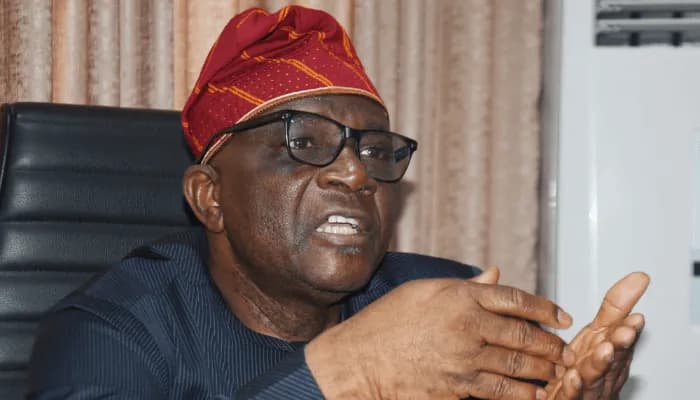
Bayo Onanuga, President Tinubu's Special Adviser on Information and Strategy, dismissed Peter Obi's call for Tinubu's resignation within hours of the All Progressives Congress posting victories in four state-level polls.
The timing was deliberate. Obi, the 2023 presidential candidate of what is now the Nigerian Democratic Congress, posted on X on Monday, June 22, urging President Tinubu to follow United Kingdom Prime Minister Keir Starmer's example and step down, arguing the President had failed to deliver on the bulk of his campaign promises. The Presidency's rebuttal arrived the same day, and Onanuga made the electoral context explicit: the resignation call came "just hours after President Tinubu's party recorded resounding victories in the weekend polls."
The exchange crystallises a confrontation that will shape the political landscape heading into the 2027 general election.
A Constitutional Argument
Onanuga's central rebuttal rested on constitutional structure. Nigeria operates a presidential system in which the president is elected to a fixed four-year term, he said. The United Kingdom's parliamentary model allows a prime minister to lose a confidence vote, face a party leadership challenge, or resign without triggering a constitutional crisis. Starmer's departure, under whichever circumstances it occurred, was possible precisely because of that structure. That mechanism does not exist in Nigeria.
"Obi forgets our country does not run a parliamentary system of government like the UK," Onanuga said in the Monday statement. "We run a presidential system, with the president elected to a fixed 4-year term."
The Presidency's argument was narrow but legally accurate. The 1999 Constitution, as amended, provides for presidential removal through impeachment by the National Assembly, not through public resignation demands issued on social media.
Onanuga did not stop at the constitutional point. He described Obi's comparison as "simplistic, as is often the case anytime he opens his mouth," a line that moved the response from legal analysis into personal attack, and one that will likely be cited by Obi's supporters as evidence the Presidency is rattled rather than confident.
Related News
The Election Results
The APC's weekend wins were the backdrop the Presidency was keenest to establish. The party secured victories in Ekiti State and in senatorial district contests in Nasarawa, Enugu, Ondo, and Rivers states. The Presidency's statement described these results as evidence of "continued popularity" and said they "should concern Obi and his new political platform ahead of 2027."
No specific vote margins were provided in the statement reviewed for this article. The claim of "resounding victories" is the Presidency's characterisation. Independent verification of the results from Nigeria's Independent National Electoral Commission was not cited in the statement.
Security and the Anambra Counterattack
Obi's original post criticised Tinubu's security record. The Presidency's response acknowledged that the President "inherited longstanding challenges" but maintained that military operations, technology deployment, and increased security investment had produced measurable results, including the neutralisation of thousands of fighters and the rescue of kidnapping victims. No figures, dates, or operational names were provided to substantiate those numbers.
The Presidency then turned the security argument back on Obi directly. It described him as "a colossal failure" as Anambra State governor, citing his successor Willie Obiano as the source of that assessment. The claim that Obiano documented Obi's security failures is a serious one. It was not supported in the statement by a specific document, date, or direct Obiano quote.
The Economy
On the cost of living, the Presidency's statement was notably measured. It acknowledged economic pressure but attributed it in part to global factors: tensions in the Middle East and disruptions to international supply chains. That framing places some causation outside the government's control. It did not dispute that prices have risen, nor did it offer a timeline for when reforms are expected to reduce the burden on ordinary Nigerians.
What the Presidency Did Not Address
Obi's original X post made a specific claim: that Tinubu had failed to fulfil most of his campaign promises. The Presidency's statement did not identify which promises have been met, or provide a checklist of commitments against outcomes. It instead characterised Obi as operating in "self-constructed echo chambers" and dismissed the resignation call as "political grandstanding."
Whether that framing persuades voters who are paying more for food, fuel, and transport than they were in 2023 remains the question neither side has answered with data.
The Presidency closed by urging Nigerians to judge the government "based on its policies and results rather than political rhetoric." It did not specify which policies, which results, or by what measure.
The next formal test of that judgment arrives at the 2027 presidential election. Obi has not confirmed whether the NDC will field him as its candidate. His party has not publicly responded to Monday's Presidency statement. As of publication, neither the NDC nor Obi's team had issued a reply.
Add a Comment