


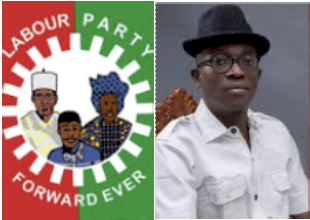
The Federal High Court in Abuja has formally removed Julius Abure as National Chairman of the Labour Party, bringing a decisive legal turn to the party’s long-running leadership crisis.
In a ruling delivered on Wednesday, Justice Peter Lifu held that Mr Abure no longer had the legal authority to occupy the position, citing the Supreme Court judgment of 4 April 2025 as binding and conclusive. The court consequently recognised former Minister of Finance, Nenadi Usman, as the legitimate head of the party’s caretaker committee.
According to the ruling, the Independent National Electoral Commission must recognise the Ms Usman-led committee as the only lawful leadership of the Labour Party pending the conduct of a national convention.
The decision marks a significant shift in a dispute that has fractured the party since the aftermath of the 2023 general election and raised questions about internal governance within one of Nigeria’s major opposition parties.
Court relies on Supreme Court judgment
Justice Lifu ruled that the issues raised before the court had already been settled by the Supreme Court, leaving no room for further interpretation. He held that Mr Abure’s tenure had elapsed and that the formation of a caretaker committee was consistent with the apex court’s directive.
According to the judge, the argument that the matter was an internal party affair beyond judicial review could not stand, given the clear constitutional and legal implications of leadership disputes within political parties.
He noted that the Supreme Court had expressly instructed political parties to comply strictly with their constitutions and to ensure that officials whose tenures had expired vacate office.
On that basis, the court declared the Nenadi Usman-led caretaker committee as the only valid authority empowered to act on behalf of the Labour Party until a properly constituted national convention is held.
Related News
Background to the Labour Party crisis
The leadership crisis within the Labour Party has been simmering for more than a year, fuelled by disagreements over tenure, party administration, and control of party structures.
Tensions escalated after the party’s National Executive Committee removed Mr Abure, citing the expiration of his tenure and alleged violations of party rules. To fill the vacuum, the party constituted a 29-member caretaker committee chaired by Ms Usman.
That decision followed an expanded stakeholders meeting held in Umuahia, Abia State. The meeting was convened by Governor Alex Otti and chaired by the party’s 2023 presidential candidate, Peter Obi, who had previously been a close ally of Mr Abure.
The Umuahia meeting resolved to reset the party’s leadership structure ahead of future elections, arguing that unresolved internal disputes could weaken the party’s growing national profile.
Abure’s legal challenge
Unhappy with the decision, Mr Abure approached the Federal High Court to assert his authority as national chairman.
In court filings, he argued that he was duly elected acting national chairman during a National Executive Committee meeting in Benin City on 29 March 2021. He further stated that at another NEC meeting held in Asaba on 18 April 2023, the party renewed the tenure of state chairmen, expelled some members for anti-party activities, and filled vacant offices.
Mr Abure also maintained that he was elected substantive national chairman at the party’s national convention held in Nnewi, Anambra State, on 27 March 2024. He added that under his leadership, the party successfully fielded governorship candidates in Edo and Ondo states.
Earlier rulings by the Federal High Court and the Court of Appeal had initially supported his position and directed INEC to recognise him as chairman. However, those judgments were later overturned by the Supreme Court.
Supreme Court ruling proved decisive
In its judgment delivered in April, the Supreme Court allowed the appeal filed by Ms Usman and the secretary of the caretaker committee, Darlington Nwokocha.
The apex court dismissed Mr Abure’s cross appeal and faulted the process through which his continued stay in office was justified. Justice Inyang Okoro, who delivered the lead judgment, stressed that political parties must adhere strictly to their constitutions, particularly on tenure and leadership succession.
The court also warned that officials whose terms had expired could not rely on internal arrangements to remain in office indefinitely.
Legal analysts say this clarification played a decisive role in Wednesday’s ruling, as the Federal High Court had little discretion left after the Supreme Court’s pronouncement.
The judgment has far-reaching implications for the Labour Party as it attempts to rebuild after internal divisions weakened its momentum following the 2023 elections.
Analysts say the decision provides legal clarity at a time when the party is struggling to present a united front ahead of future off-cycle and general elections. It also reinforces the authority of the courts in resolving internal party disputes, especially where party constitutions are breached.
According to political analyst Kunle Adebayo, the ruling may help stabilise the party if the caretaker committee moves quickly to organise a credible convention.
“This judgment closes the chapter on the leadership dispute, at least legally. What matters now is whether the party can use this opportunity to reconcile aggrieved factions and rebuild internal trust,” he said.
With the court’s directive, INEC is now expected to recognise only the Usman-led caretaker committee in all official dealings with the Labour Party.
The committee is expected to begin preparations for a national convention that will produce a substantive leadership. Observers say the speed and transparency of that process will determine whether the party can avoid further litigation.
There are also expectations that reconciliation efforts will intensify, particularly among party leaders who were aligned with Mr Abure.
For now, the ruling brings temporary closure to a dispute that has distracted the party for months. Whether it marks the beginning of stability or merely another phase of internal contestation will depend on how the leadership transition is managed in the weeks ahead.
Add a Comment