


Adeboye Urges Caution Over Sensational Prophecies Amid AFCON Spotlight
Posted by
Azuka
•Jan 4, 2026
Jan 4, 2026
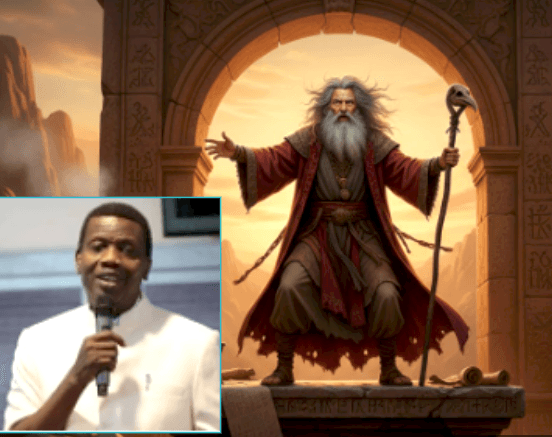
The General Overseer of the Redeemed Christian Church of God, Pastor Enoch Adeboye, has weighed into a renewed national conversation on prophecy, faith, and public accountability, using Nigeria’s Africa Cup of Nations campaign as a pointed example of why believers should exercise wisdom when engaging with prophetic claims.
Speaking at a recent programme at the RCCG Redemption City, Adeboye reflected on a controversial football-related prophecy that circulated widely ahead of the 2025 AFCON tournament in Morocco. His remarks, delivered to a large congregation, have since sparked fresh debate across religious and sports circles.
While Adeboye avoided naming any individual directly, his comments were clearly linked to a prophecy attributed to Primate Elijah Ayodele, the leader of INRI Evangelical Spiritual Church. According to widely shared reports at the time, Ayodele had advised that Super Eagles winger Ademola Lookman should not be selected for the national team if Nigeria hoped to succeed at the tournament.
A prophecy that went viral
The prediction gained significant traction on social media, particularly among football fans already anxious about Nigeria’s prospects at the continental competition. Many interpreted the message as a warning that Lookman’s inclusion could negatively affect the team’s performance.
However, events on the pitch told a different story.
Lookman, who plays his club football with Atalanta in Italy, played a decisive role in Nigeria’s early AFCON matches. He scored the winning goal in the Super Eagles’ 2–1 opening victory over Tanzania. Days later, he delivered another standout performance against Tunisia, scoring once and providing two assists in a pulsating 3–2 win that sealed Nigeria’s qualification for the knockout stage.
Those performances quickly became a focal point in online discussions, with many Nigerians citing them as evidence that the earlier prophecy had failed to materialise.
Adeboye recalls reading the prediction
Addressing the episode during his message, Adeboye said he could not help but laugh when he came across the prophecy and its subsequent outcome.
“I was laughing when I read that a prophet said that if we wanted to win a match, a particular player must not be selected,” he told the congregation. “They ignored him, and the same player scored the winning goal. I just said, glory be to God.”
The comment drew laughter and applause from worshippers, but the cleric quickly shifted to a more serious tone, using the example to caution against uncritical acceptance of every prophetic declaration.
A call for spiritual wisdom
Adeboye emphasised that prophecy remains an important element of the Christian faith but warned that not all claims presented as divine messages should be treated as such.
According to him, there has been a growing trend of sensational or questionable prophecies designed to attract attention rather than provide genuine spiritual guidance. He urged believers to rely on discernment and sound judgment, especially when prophetic statements intersect with public life, sports, or national issues.
Referencing biblical principles, Adeboye said authentic breakthroughs are rooted in true divine direction and obedience, not dramatic pronouncements meant to stir controversy.
“Be careful how you handle a prophet that God has truly sent to you,” he warned, stressing that his comments were not aimed at genuine servants of God but at what he described as self-acclaimed prophets seeking relevance.
Clarifying his own role
In a notable aside, Adeboye also clarified his position within the Christian ministry, distancing himself from the prophetic label often attributed to senior church leaders.
“I am not a prophet; I am a pastor,” he said. “It is only that once in a while, God speaks to me, and I believe many of you will not forget what you have heard today.”
That clarification resonated with many listeners, particularly amid ongoing debates about titles, authority, and expectations placed on prominent religious figures in Nigeria.
Faith, football, and public emotion
Adeboye’s remarks come at a time when the intersection of religion and sports continues to generate strong reactions in Nigeria. Football tournaments such as the AFCON often carry deep emotional significance, and prophetic statements linked to national teams tend to attract outsized attention.
According to sports sociologist Dr. Tunde Akinwale, such prophecies thrive because football offers a shared national narrative. “When religion enters that space, it amplifies emotions,” he said. “People are already invested, so any spiritual claim feels personal and urgent.”
He added that high-profile clerics commenting on these issues can either calm public sentiment or further inflame debate, depending on how their messages are framed.
Ayodele responds to criticism
Primate Ayodele has since responded to criticism surrounding the Lookman prophecy, insisting that his comments were misunderstood. According to statements attributed to him, the prophecy should be judged within the context of the entire tournament rather than isolated matches.
Supporters of Ayodele have echoed that view, arguing that prophetic messages are often symbolic or conditional, and not always fulfilled in straightforward ways.
Critics, however, say the episode highlights the need for greater responsibility when issuing public prophecies, especially those tied to identifiable individuals who may face online abuse or pressure as a result.
Why the debate matters now
The renewed attention generated by Adeboye’s comments reflects a broader reckoning within Nigeria’s religious landscape. As social media accelerates the spread of prophetic claims, the line between private faith and public influence has become increasingly blurred.
Analysts say the Lookman episode underscores the potential consequences of prophecy in the digital age, where statements can quickly shape narratives, reputations, and public expectations.
For footballers and other public figures, such prophecies can add unnecessary psychological pressure. For believers, they raise questions about discernment, accountability, and the nature of spiritual authority.
Looking ahead
As Nigeria progresses through the AFCON tournament, attention is likely to remain on both on-field performance and off-field commentary. Religious leaders, sports administrators, and fans alike will be watching to see how faith-based narratives continue to intersect with football outcomes.
For Adeboye, the central message appears clear. Faith, he suggested, should be anchored in wisdom and humility, not driven by spectacle.
Conclusion
Pastor Adeboye’s reflections on the AFCON prophecy have reopened an important national conversation about prophecy, discernment, and responsibility. By using a real-world example familiar to millions of Nigerians, he challenged believers to think critically about what they hear and how they respond. As debates over faith and football continue, his call for wisdom may prove to be the most enduring takeaway.
Add a Comment