


Why Bimbo Thomas Stepped Away From “Thug” Roles After Omo Ghetto Breakthrough
Posted by
Emmanuella
•Jan 5, 2026
Jan 5, 2026
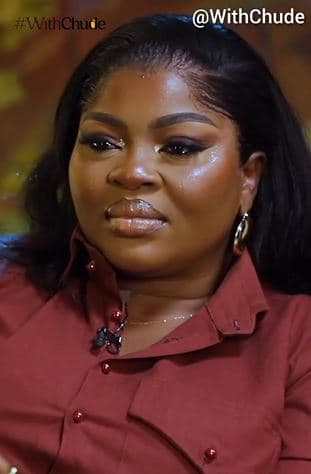
Nollywood actress Bimbo Thomas has opened up about a pivotal decision in her career: stepping away from the street tough and “thug” roles that brought her widespread attention after her performance in Funke Akindele’s popular film Omo Ghetto. While the role boosted her visibility, Thomas said she deliberately chose not to build her career around that single image.
Speaking in an interview with media personality Chude Jideonwo on WithChude, the actress explained that her decision was driven by a desire to avoid being boxed into one character type. According to her, the choice was about long term growth rather than short term comfort.
She said she wanted audiences and filmmakers to see her as a versatile performer, not just as someone suited for street hardened characters.
A breakthrough that came with limits
Omo Ghetto marked a defining moment for Bimbo Thomas. The film, produced by Funke Akindele, was widely received and introduced her to a much broader audience. Her portrayal of a tough, streetwise character resonated with viewers and quickly became one of her most recognised performances.
However, Thomas said the success came with an unintended consequence. Offers that followed began to mirror the same character traits.
According to her, it became clear that many in the industry now saw her primarily through that lens.
“In this industry, once people feel you fit a particular role, they keep calling you for the same thing,” she said during the interview. “I did not want that to be my story.”
Choosing range over familiarity
Thomas explained that she made a conscious decision to stop accepting roles that repeated the same “thug” persona. She said the move was intentional and rooted in her belief that she had more to offer as an actress.
According to her, the goal was not to reject the role that brought her recognition, but to prevent it from defining her entire career.
She said she wanted the freedom to explore different emotions, backgrounds, and personalities on screen, from comedy to drama and beyond.
“I wanted people to know that I can act in different forms,” she said. “Not just one type of character.”
The reality of typecasting in Nollywood
Typecasting remains a persistent challenge in Nollywood, particularly for actors whose breakout roles are strongly defined. Industry observers note that filmmakers often lean toward familiar casting choices, especially when a certain character type has proven commercially successful.
A Lagos based film analyst explained that this pattern is partly driven by market pressure.
“Producers want what they believe will work,” the analyst said. “If an actor becomes popular for a specific role, there is a tendency to repeat that formula rather than take creative risks.”
However, the analyst added that this approach can limit both actors and storytelling.
“When actors are boxed in, audiences also lose out on seeing their full range,” he said.
A difficult but deliberate decision
Thomas admitted that turning down roles was not an easy choice. At a time when demand was high, walking away from familiar offers came with uncertainty.
She explained that saying no sometimes meant waiting longer for the right opportunities, which can be challenging in an industry where visibility often depends on constant appearances.
“There were moments when it was tempting,” she said. “But I had to remind myself why I started acting in the first place.”
According to her, the decision required patience and confidence in her abilities.
Why the decision matters now
Thomas’s comments come at a time when conversations about creative freedom and career longevity are gaining traction within Nollywood. As the industry becomes more global, actors are increasingly mindful of how early career choices shape international perception.
For emerging talents, her experience highlights the importance of intentional career planning, even when success comes quickly.
Her story also reflects a broader shift, with more Nigerian actors openly discussing the pressures of typecasting and the need to challenge it.
Beyond the street character image
While Thomas did not list specific roles she hopes to play next, she said her aim is to take on characters that allow her to grow and surprise audiences.
She noted that acting, for her, is about storytelling and transformation, not repetition.
Industry watchers say this approach may ultimately strengthen her brand rather than weaken it.
“Actors who successfully break away from typecasting often enjoy longer and more respected careers,” said a casting consultant familiar with Nollywood trends. “It takes courage, but it pays off.”
Background on Bimbo Thomas
Bimbo Thomas has appeared in a range of Yoruba and English language Nollywood productions over the years. Before Omo Ghetto, she built a steady career with supporting roles that showcased her comedic timing and strong screen presence.
Her collaboration with Funke Akindele brought her to a wider audience, placing her among a group of actors whose careers were significantly boosted by the film’s success.
Observers will be watching closely to see how Thomas navigates her next phase. Whether filmmakers respond with more diverse roles may signal a broader willingness within the industry to move beyond safe casting choices.
Her stance could also encourage younger actors to think critically about the roles they accept, especially early in their careers.
Bimbo Thomas’s decision to step away from “thug” roles after Omo Ghetto reflects a thoughtful approach to career building in Nollywood. While the choice came with challenges, it underscores her commitment to versatility and artistic growth. As the industry continues to evolve, her experience offers insight into the balance between embracing success and refusing to be confined by it.
Add a Comment