


Owning Less, Living Better: The Practical Rise of Minimalism
Posted by
Chiamaka
•Jan 6, 2026
Jan 6, 2026
Minimalist living is no longer a niche lifestyle reserved for design magazines or urban micro apartments. Across cities and rural communities, more people are choosing to own less and live with intention. The shift reflects rising living costs, changing work patterns, and a growing awareness of how possessions shape daily routines. According to housing and consumer trends observed since the late 2010s, minimalism has moved from aesthetic preference to practical response, with implications for finances, mental health, and community life.
From design trend to daily practice
Minimalism entered the mainstream conversation more than a decade ago, largely through home design and decluttering movements. Early advocates focused on visual simplicity, clean lines, and curated spaces. However, the approach gained broader traction during periods of economic uncertainty, including the global pandemic years, when households reassessed priorities and spending habits.
Reports from consumer research firms show that younger adults, particularly those entering the housing market after 2020, were more likely to delay major purchases and reduce discretionary spending. Meanwhile, rural households faced rising transportation and utility costs, prompting similar reassessments. Minimalist living, in this context, became less about style and more about resilience.
Why owning less matters now
Several developments have made minimalist living especially relevant in recent years. Housing costs continue to rise in major cities, while rural regions face limited access to services and longer supply chains. Storage space, whether in a city apartment or a farmhouse, carries a cost, both financial and mental.
According to Dr. Emily Rios, a behavioral economist at the University of Minnesota, owning fewer items can reduce what she describes as cognitive overhead. In an interview published by the university in 2024, Rios explained that every possession requires attention, maintenance, or decision making, even if unconsciously. Reducing volume lowers that burden and frees up mental capacity for work, relationships, and rest.
This matters now because work and home life are increasingly blended. Remote and hybrid work arrangements mean living spaces must serve multiple functions. Cluttered environments make that transition harder, regardless of location.
Urban and rural experiences differ, but goals align
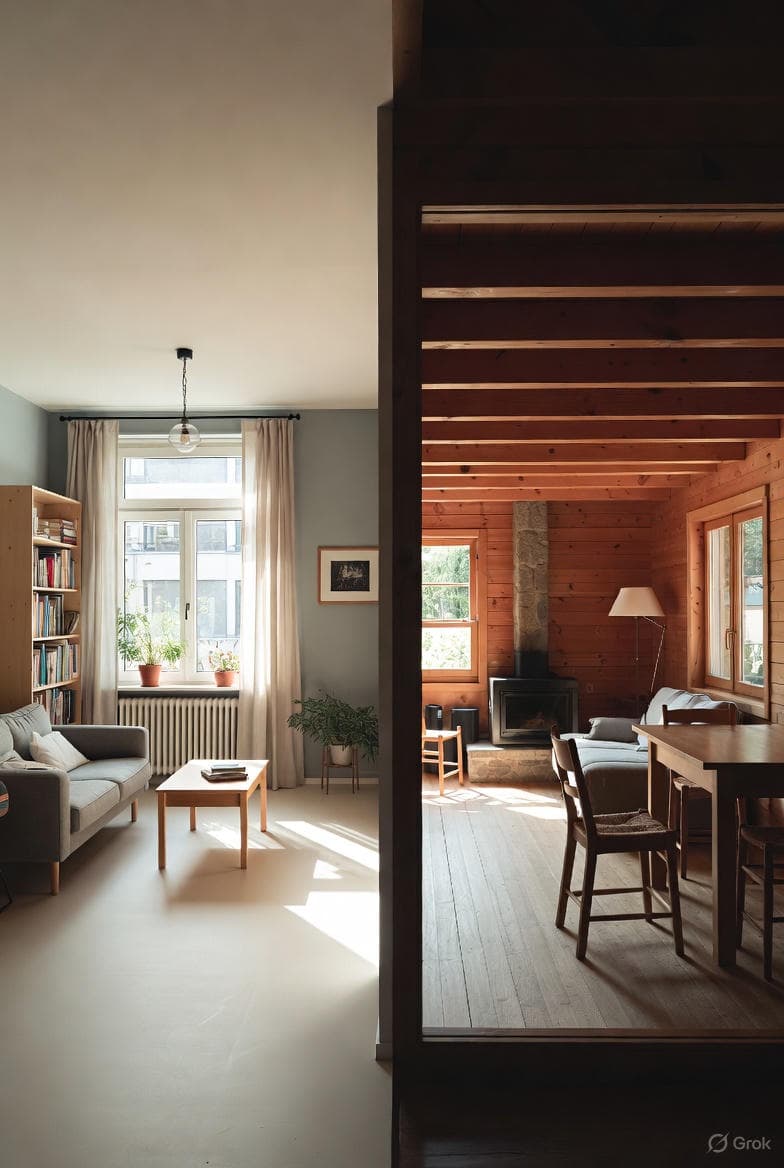
Minimalism looks different in a city than it does in the countryside. Urban residents often focus on maximizing limited square footage, choosing multifunctional furniture and digital subscriptions over physical media. Rural households may have more space but face longer travel times to replace or repair items, which encourages careful selection and long term use.
Despite these differences, the underlying goal is similar. People want fewer but better tools to support daily life. A unique insight emerging from recent community studies is that rural minimalists often prioritize durability over quantity, while urban minimalists prioritize flexibility. Both approaches reduce waste, but they do so through different decision frameworks.
This distinction is rarely discussed in popular coverage, which tends to treat minimalism as a one size fits all solution. In practice, successful minimalist living adapts to geography, climate, and local infrastructure.
Financial and environmental implications
Owning less can have measurable financial benefits. Households that adopt minimalist practices often report lower spending on impulse purchases and reduced maintenance costs. Over time, this can improve savings rates and reduce debt.
Environmental impacts are also significant. Fewer purchases mean less manufacturing demand and reduced waste. According to data from the Environmental Protection Agency, household consumption accounts for a substantial share of landfill waste. Minimalist living addresses this at the source by reducing intake rather than relying solely on recycling.
However, experts caution against framing minimalism as a moral obligation. Sarah Coleman, a sustainability analyst at the nonprofit Green Futures Initiative, notes that access to minimalist choices varies. In a 2023 report, Coleman emphasized that durable, repairable goods often cost more upfront, which can be a barrier for lower income households. The movement’s credibility depends on acknowledging these limits.
The mental health connection
Beyond finances and sustainability, minimalist living is increasingly linked to mental well being. Studies published in psychology journals since 2021 suggest that organized, low clutter environments are associated with reduced stress and improved focus. This holds true across age groups and settings.
What is less widely reported is how minimalism can support social connection. In rural areas, shared tools and community resources have long been common. Minimalist living can revive these practices, encouraging borrowing, sharing, and local cooperation. In cities, co living spaces and libraries of things are emerging as modern equivalents.
This social dimension may be one of the most important implications to watch. As communities seek ways to rebuild trust and cooperation, shared ownership models could expand.
Looking ahead, minimalist living is likely to intersect with policy and urban planning. Smaller housing units, zoning reforms, and investments in public amenities can support lives with fewer private possessions. In rural regions, expanded repair services and local manufacturing could make minimalist choices more practical.
Technology will also play a role. Digital tools that replace physical items, such as streaming services or cloud storage, reduce clutter but raise questions about energy use and data privacy. Balancing physical simplicity with digital responsibility will be an ongoing challenge.
For individuals, the next phase of minimalism may focus less on decluttering events and more on long term habits. This includes buying with intent, maintaining what is owned, and measuring value by use rather than volume.
Visual elements to consider
Images of contrasting minimalist homes in urban apartments and rural houses could illustrate geographic differences. A simple chart showing average household spending before and after adopting minimalist practices would add clarity. Data visualizations comparing waste reduction or storage costs could also support the analysis.
A quieter shift with lasting effects
Minimalist living does not promise instant transformation. Its impact is gradual and often subtle. By owning less, people create room for flexibility, focus, and resilience. In a period marked by economic pressure and environmental concern, that quiet shift carries weight.
The movement’s future will depend on how inclusively it is framed and how well it adapts to different lives and landscapes. What is clear is that minimalism has moved beyond trend status. It is becoming a practical strategy for navigating modern life, whether on a city block or a country road.
Add a Comment