


Abuja protest highlights contractors’ cashflow crisis over delayed federal payments
Tension flared on Monday at the Federal Ministry of Finance headquarters in Abuja after a group of protesting indigenous contractors blocked the main entrance, temporarily preventing the Minister of State for Finance, Doris Uzoka Anite, from accessing the complex. The protest drew attention to long standing grievances over unpaid federal contracts and escalated into a confrontation with security operatives.
The demonstrators, who identified themselves as members of the All Indigenous Contractors Association of Nigeria, said they were compelled to take action after repeated appeals to government authorities failed to produce results. According to the group, the Federal Government has not settled verified payments for projects already completed, despite budgetary provisions made in 2024 and 2025.
The contractors alleged that the prolonged delay in releasing funds has left many of their members in severe financial distress, with some facing loan defaults, asset seizures, and business collapse.
Contractors accuse government of breaching payment agreements
Speaking at the protest, the President of the All Indigenous Contractors Association of Nigeria, Jackson Nwosu, said the demonstration was a response to what he described as a breach of agreement by the Federal Government. According to him, contractors whose project details had been submitted and verified were assured of payment, but those assurances were not honoured.
“The government has failed to honour the agreement to pay contractors whose project details had been submitted and verified,” Nwosu said. “Payments that were finalised before the closure of the payment portal at the end of December never reflected in our accounts.”
He said the situation had worsened in recent months, as contractors continued to execute government projects without receiving corresponding payments. According to Nwosu, this has strained cashflow across the sector and exposed many small and medium sized contractors to financial risk.
Related News
Dispute over scale of payments made
Nwosu also challenged claims by government officials that most of the outstanding obligations had already been cleared. According to him, officials have publicly suggested that about 80 per cent of the debts owed to contractors had been settled.
“That claim is not true,” he said. “What has been paid so far is not more than 30 to 40 per cent of verified claims.”
He further alleged that the issuance of payment warrants stopped around May 2025, even as contractors continued to deliver projects under existing agreements. According to his estimate, the total value of unpaid obligations has now risen beyond N4 trillion.
While the Ministry of Finance has not yet issued a detailed response to these specific figures, the protest has renewed scrutiny of how capital releases are managed and how delays affect project delivery across ministries, departments, and agencies.
Protest disrupts minister’s access to complex
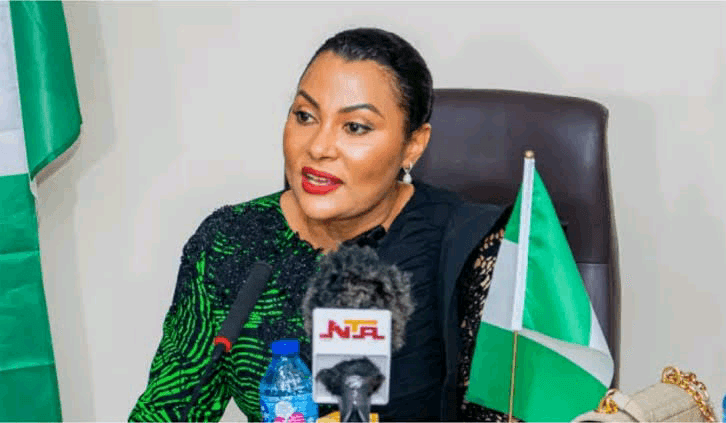
The protest intensified when Minister of State for Finance Doris Uzoka Anite arrived at the ministry. Security operatives attempted to create a passage for her convoy to enter the premises, but the demonstrators resisted, chanting and standing their ground at the gate.
Witnesses said the situation quickly became tense, as security personnel tried to disperse the crowd. During the confrontation, a gunshot rang out, causing panic among protesters and bystanders.
The contractors responded by chanting loudly in protest, accusing the authorities of using force rather than addressing their demands. Some protesters shouted slogans questioning the use of security measures against what they described as a peaceful demonstration.
Contractors insist protest was peaceful
Reacting to the incident, the Vice President of the association, Fredrick Agada, accused the authorities of intimidation. He said the contractors had no intention of disrupting public order and were merely seeking attention for their unpaid claims.
“This is a peaceful protest. We are harmless,” Agada said. “We are just sitting down peacefully, demanding our money, our payment.”
According to him, the contractors resorted to the protest only after several months of engagement with relevant agencies yielded no concrete outcome. He said many members borrowed from commercial banks to execute government contracts, believing payments would be made as scheduled.
Broader impact on indigenous contractors
The protest has highlighted deeper structural challenges facing indigenous contractors who depend heavily on government projects. Industry observers note that delayed payments can have a cascading effect, including job losses, stalled projects, and increased non performing loans within the banking sector.
Contractors argue that unlike multinational firms with stronger financial buffers, local firms are more vulnerable to delayed capital releases. When payments are not made on time, they struggle to meet loan obligations, pay workers, or reinvest in new projects.
A less discussed concern, raised by some industry stakeholders, is that persistent non payment could discourage local participation in public infrastructure projects. This could undermine government efforts to promote local content and strengthen domestic capacity in construction and public works.
Why the issue matters now
The timing of the protest is significant. With the federal government facing fiscal pressures and competing budgetary demands, contractors fear that outstanding obligations could be deprioritised or rolled over indefinitely. The inclusion of funds for contractor payments in the 2024 and 2025 budgets had raised expectations that arrears would be cleared.
According to the protesters, the failure to release those funds has eroded trust between government and contractors. Analysts say restoring that trust will be critical, especially as the government continues to rely on private sector participation to deliver infrastructure and social projects.
Attention is now on how the Ministry of Finance and other relevant authorities will respond to the protest. Contractors are demanding clear timelines for payment, transparency on the status of verified claims, and assurances that future projects will not proceed without secured funding.
There is also growing interest in whether lawmakers or oversight agencies will intervene to examine the scale of unpaid obligations and the processes surrounding payment approvals.
Add a Comment