


President Bola Ahmed Tinubu has reportedly ordered a temporary suspension of the All Progressives Congress electronic membership registration exercise in Kano State, a move widely interpreted as a strategic pause ahead of the expected defection of Governor Abba Kabir Yusuf to the ruling party. According to party and political sources, the decision reflects ongoing high-level negotiations that could significantly reshape Kano’s political landscape and alter the balance of power within the APC in the state.
Registration exercise put on hold
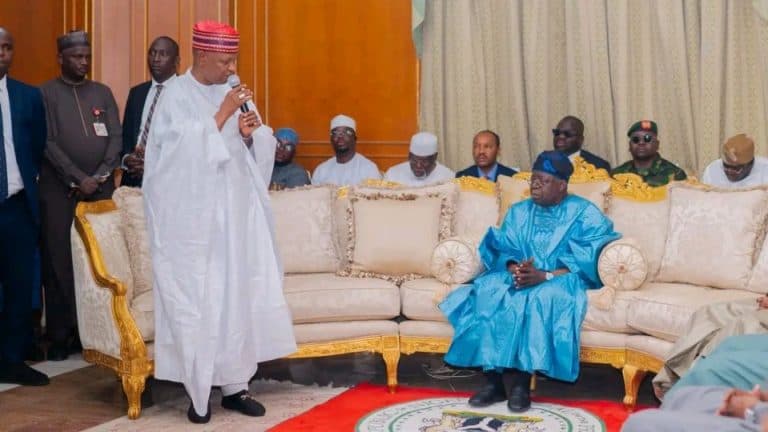
According to Daily Post, the directive to suspend the APC e-registration exercise in Kano State was issued pending the formal entry of Governor Yusuf into the party. The move comes as the governor is scheduled to meet President Tinubu at the Aso Rock Villa in Abuja to conclude arrangements for his anticipated defection from the New Nigeria Peoples Party to the APC.
Sources cited by Daily Post said the Kano governor had remained in Abuja for several days primarily to secure a face-to-face meeting with the President, who had been outside the country. President Tinubu reportedly returned to Abuja late on Wednesday and asked Governor Yusuf to wait and see him immediately upon his return before taking any further political steps.
This instruction, according to party insiders, effectively placed other political activities in Kano on hold, including the much-anticipated electronic registration exercise designed to update the party’s membership database ahead of future elections.
Doguwa confirms presidential directive
Confirmation of the suspension came from Alhassan Doguwa, Chairman of the House of Representatives Committee on Downstream Petroleum and a prominent APC figure in Kano State. Doguwa said the registration exercise was halted following directives from President Tinubu and the APC National Chairman.
Speaking in a video message to supporters that later circulated widely on social media, Doguwa explained that the party leadership wanted Governor Yusuf to be formally unveiled as an APC member before the registration exercise begins.
“You can see that even the APC e-registrations in Kano could not commence because President Tinubu and the party National Chairman asked to allow Governor Yusuf to be the first to do it,” Doguwa said.
According to Doguwa, the move was both symbolic and strategic, signaling unity within the party while setting the tone for subsequent political activities in the state.
Why Yusuf’s defection matters
Governor Yusuf’s anticipated switch from the NNPP to the APC is considered one of the most consequential political developments in Kano since the 2023 general elections. Kano is one of Nigeria’s most politically influential states, with a large voting population and a history of intense party competition.
In the last election cycle, the NNPP, buoyed by strong grassroots support, wrested control of the state from the APC. Yusuf’s defection would therefore represent a major reversal of fortunes for the ruling party at the federal level and could weaken the NNPP’s national relevance.
Political analysts say the APC leadership appears keen to carefully manage the optics and internal dynamics of Yusuf’s entry to avoid factional disputes within the party’s Kano chapter. Suspending the e-registration exercise ensures that the governor’s defection becomes the focal point of party activities, rather than one development among many.
Background to the Abuja talks
According to reports, discussions between Governor Yusuf and APC leaders have been ongoing for weeks, with Abuja serving as the central stage for negotiations. Sources familiar with the talks say the meetings have focused not only on the formal defection but also on power-sharing arrangements, party structure, and the integration of Yusuf’s supporters into the APC fold.
The President’s insistence on meeting the governor personally before any public move is seen as an effort to personally manage a politically sensitive transition. Analysts note that Tinubu has increasingly taken a hands-on approach to party consolidation, particularly in states considered politically strategic ahead of future elections.
Silence from official channels
Despite widespread reports, neither the Presidency nor the APC national leadership has issued an official statement confirming the suspension of the registration exercise or the details of Yusuf’s anticipated defection. This silence, according to party observers, is consistent with the APC’s preference for unveiling high-profile defections through carefully staged political events rather than incremental announcements.
However, party sources told Daily Post that the lack of an official statement does not diminish the significance of the development. Instead, it reflects ongoing coordination behind the scenes to ensure that the defection process proceeds smoothly.
Implications for Kano politics
If confirmed, Yusuf’s defection could trigger a broader realignment of political loyalties in Kano State. Local government officials, lawmakers, and grassroots organizers aligned with the governor may follow suit, potentially reshaping the APC’s internal power structure.
There are also implications for governance. Analysts suggest that closer alignment between Kano State and the federal government could ease access to federal support for infrastructure and social programs. However, it could also intensify political rivalry, particularly among NNPP loyalists who remain influential within the state.
The outcome of the anticipated meeting at Aso Rock, the timing of Yusuf’s formal unveiling as an APC member, and the rescheduling of the e-registration exercise. Observers will also be watching how the APC manages internal dissent that may arise from the governor’s entry.
The reported suspension of the APC electronic registration exercise in Kano underscores the political weight attached to Governor Abba Kabir Yusuf’s expected defection. By placing party activities on hold pending a presidential meeting, the APC leadership appears intent on choreographing a high-impact political transition. As developments unfold, the decisions taken in the coming days are likely to shape not only Kano’s political future but also the broader calculations ahead of Nigeria’s next electoral cycle.
Add a Comment