


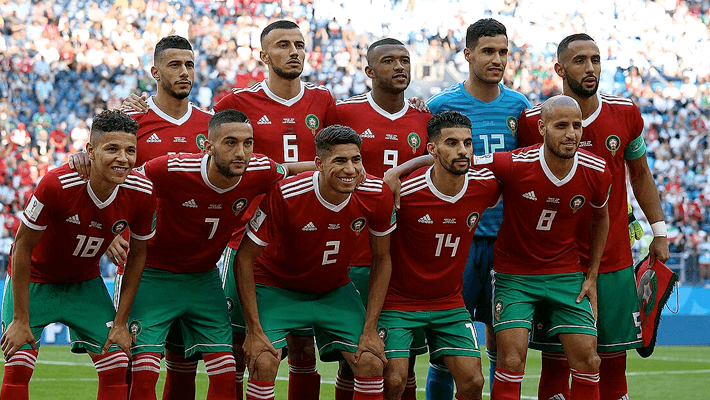
When Morocco walks onto the pitch in Rabat on Sunday night to face Senegal in the final of the 2025 Africa Cup of Nations, the moment will carry far more than the weight of a trophy. It will mark the closing chapter of a tournament that has quietly retraced more than a century of African football history, touching on colonial rule, nationalism, resistance, and the uneasy place of the continent within the modern global game.
For Morocco, the final also completes a personal arc. The last time the country hosted AFCON, in 1988, its campaign ended in heartbreak. A single goal separated the Atlas Lions from Cameroon in the semi-finals, and the Indomitable Lions went on to defeat Nigeria in the final. Eight years before that, Nigeria had eliminated Morocco by the same narrow margin on its way to winning the competition against Algeria.
This time, according to match records from the tournament, Morocco has reversed those memories. Cameroon and Nigeria both fell in Rabat en route to a final date with Senegal, a side equally steeped in football tradition.
A final shaped by history and place
The match will be played at the Stade Moulay Abdallah in Rabat, named after Moulay Abdallah ben Ali Alaoui, brother of the late King Hassan II and uncle of King Mohammed VI. Moulay Abdallah died of cancer in December 1983 at the age of 48. The stadium has become a symbolic venue for Moroccan football, linking the modern game to the country’s post-independence political history.
Yet the symbolism of this final extends beyond Morocco’s borders. As football historian David Goldblatt writes in The Age of Football: The Global Game in the Twenty-First Century, the sport in Africa, despite its colonial introduction, became “an instrument of the independence movement” and later a practical expression of pan-African cooperation through the Confederation of African Football, CAF. African football, he notes, earned a reputation as “the rebellious game”.
That legacy will be on display in Rabat. Morocco and Senegal are among the African nations with the deepest roots in organised football, and the final will be presided over by CAF president Patrice Motsepe, a South African billionaire whose country hosted the continent’s earliest recorded matches. Motsepe’s presence adds another layer of historical irony. The game that arrived on African soil as a colonial pastime is now overseen at continental level by a black African businessman, 164 years after the first documented match.
From colonial pitches to national identity
According to historical accounts, Africa’s earliest documented football match took place in 1862, involving white colonial officials and soldiers in Port Elizabeth and Cape Town. Indigenous Africans were excluded. Over time, however, football spread beyond colonial clubs and became a space where political consciousness and community identity took root.
Senegal’s oldest club, Association Sportive et Culturelle Jeanne d’Arc, was founded in Dakar in 1923 by French Catholic missionaries. Named after France’s patron saint, the club reflected the colonial ambition of shaping disciplined African youth. Yet, alongside rivals ASC Diaraf, it evolved into a cornerstone of local football culture and resistance to imposed identities.
North Africa offers even starker examples of football’s political transformation. In Egypt, the backlash to the 1906 Denshawai Incident, in which British authorities executed Egyptian villagers after a colonial official died of heatstroke, helped ignite nationalist sentiment. While political elites debated strategy, students in Cairo founded Al Ahly Sporting Club in 1907 as a vehicle for national unity and resistance to British rule. Five years later, Zamalek Sporting Club emerged as a rival aligned with elite and middle-class identity.
The Al Ahly–Zamalek rivalry has since become one of the most intense in world football. World Football has ranked it among the greatest global rivalries, while FourFourTwo famously described it as “more than a game”. French journalist Laurent Campistron once quoted a supporter as saying that in Egypt, a person might change religion or spouse, but never their club.
Algeria and football as resistance
If Egypt demonstrated football’s nationalist potential, Algeria revealed its insurgent power. Club Sportif Constantinois was founded in 1898, but it was during the War of Independence that football took on a revolutionary role. As Goldblatt recounts, Algerian clubs often doubled as clandestine nationalist cells.
In 1958, the National Liberation Front formed its own team, the FLN Eleven, persuading 30 professional players of Algerian origin to leave French football and base themselves in Tunis. The team toured widely, giving the independence movement international visibility years before Algeria achieved statehood in 1962 and FIFA recognition in 1964.
Among its stars was Rachid Mekhloufi, a prolific striker at Saint-Étienne who had been selected for France’s 1958 World Cup squad. At his death in 2024, tributes described him not just as a footballer, but as a symbol of Algerian resistance.
Morocco’s own football awakening
Football arrived in Morocco later, in 1917, introduced by French settlers through Racing Athletic Club of Casablanca. The sport soon found a different character in the country’s urban centres. In 1937, Wydad Athletic Club was founded by Moroccan nationalists led by Mohamed Benjelloun Touimi, later a member of the International Olympic Committee. Raja Club Athletic followed in 1949, established by working-class youth resisting colonial authority. Raja’s origins earned it the enduring nickname “The People’s Club”.
These clubs helped embed football within Morocco’s struggle for self-definition, making the game inseparable from politics and popular identity.
Why AFCON still matters
It is this history of community formation and nation-building that gives AFCON its emotional power across the continent. The tournament is not merely a sporting event but a reminder of how African societies claimed space, dignity, and voice through football.
That context also explains why the competition’s future format has generated controversy. FIFA has decided to end AFCON’s biennial cycle. Morocco’s tournament will be the penultimate edition in that format, with the 2028 joint hosting in East Africa set to be the last. From 2032, AFCON will be staged every four years.
Former AFCON-winning coach Claude Leroy has publicly described the decision as “stupid”. Critics argue that the change prioritises European club calendars over African football traditions. Some observers have gone further, describing the move as carrying colonial overtones, given that African competitions are once again being reshaped for external convenience.
Beyond the final whistle in Rabat, attention will turn to how CAF navigates these tensions. Can the organisation protect AFCON’s identity while operating within FIFA’s global commercial structure? And will African football’s administrators find ways to preserve the tournament’s political and cultural significance as the calendar changes?
As Morocco and Senegal contest the trophy, the match will offer a reminder that African football has always been about more than results. It has been a language of resistance, unity, and memory. That legacy may prove just as important as who lifts the cup on Sunday night.
Add a Comment