


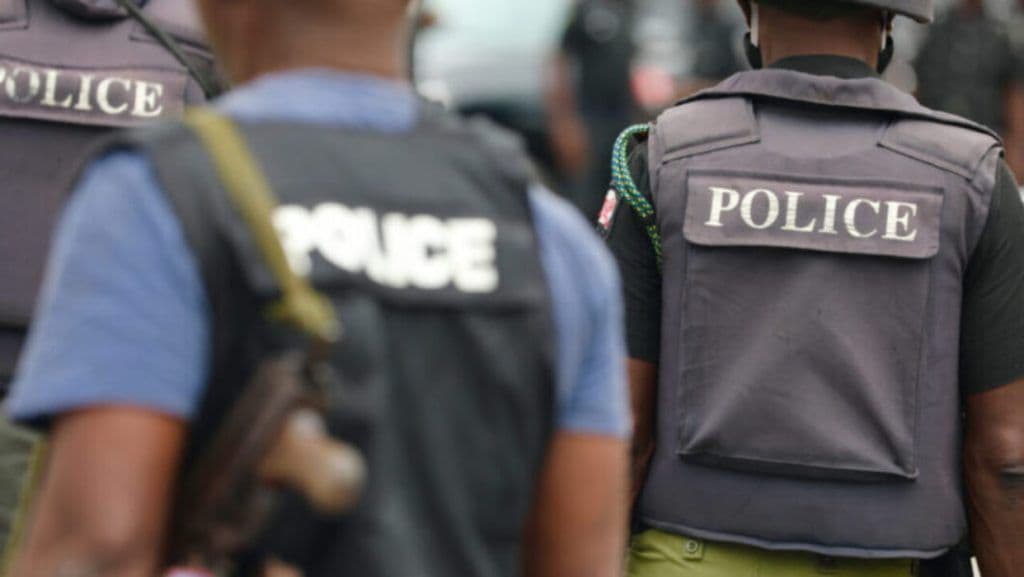
Bauchi State Police arrested a man on June 19, 2026, riding a motorcycle they say belonged to a murder victim, more than three months after the killing was first reported.
The arrest matters because it exposes a gap at the center of this case: from March 7, when the killing of an as-yet-unnamed Gwaram Town resident was reported to the Alkaleri Division, to June 19, when the first suspect was picked up, the motorcycle was apparently in circulation. Twelve weeks passed before police made a move.
The arrested man, Alhaji Muhammad Umar, 25, known locally as "Jijji," was found in possession of the victim's motorcycle during what the Bauchi State Police Command described, in a statement issued Tuesday by spokesperson SP Nafiu Habib, as a covert operation. Under interrogation, Umar allegedly named two other men: Usman M. Gidado, 45, and Danladi Yakubu, 35, also known as "Pagaj." Both are described as residents of Gwaram Town in Alkaleri Local Government Area. A follow-up operation led to their arrest and the formal seizure of the motorcycle as an exhibit.
Three Months. One Motorcycle. No Named Victim.
The statement identifies the case as one of culpable homicide and suspected armed robbery. It does not identify the victim by name, does not state how the person died, and does not give the date of the killing itself, only the date the complaint was filed, March 7, 2026.
That silence is itself a fact. In Nigerian criminal procedure, culpable homicide is a charge that carries the death penalty in capital cases under the Penal Code applicable in Bauchi State. The distinction between culpable homicide punishable by death and the lesser, non-capital form turns on intent, a question that detectives at the State Criminal Investigation Department, where all three suspects have now been transferred, will need to establish before any charge is filed.
The timeline between report and arrest, 104 days, is not addressed in the police statement. SP Habib's statement describes the operation only as "covert," without specifying what investigative steps were taken between March and June, or why the motorcycle remained accessible to Umar until mid-June.
What the Statement Does Not Explain
Related News
Umar's possession of the motorcycle raises a question the police statement leaves open: at what point did he come into possession of it, and through what means? The police have not said whether the motorcycle was taken during the alleged robbery, sold on afterward, or transferred through other channels. Its recovery now as a physical exhibit means that answer may eventually surface in court.
Gidado, at 45, is the oldest of the three suspects and is named only as a result of Umar's interrogation. Yakubu, 35, is similarly implicated through Umar's account. The statement does not specify what role each man is alleged to have played in the killing or the robbery.
Commissioner of Police CP Sani-Omolori Aliyu issued a commendation for the operatives involved and reiterated the command's position on violent crime. "The Command remains resolute in its commitment to fighting violent crime and ensuring justice for victims at all times," he said, in remarks quoted in Habib's Tuesday statement.
Where the Case Stands
All three men are now in the custody of the State Criminal Investigation Department in Bauchi. The statement says they will be charged to court after the department completes what it calls a "discreet and thorough investigation." No court date has been set. No magistrate or judge has been named. The investigation is ongoing.
The case turns, at this stage, on what the SCID can establish independently of Umar's confession. Under Nigerian law, a confession alone is insufficient to sustain a conviction for culpable homicide. Corroborating evidence, physical, forensic, or testimonial, will be required. Whether the motorcycle itself provides a sufficient link between the three men and the scene of the killing is a question for prosecutors to answer before they file charges.
The identity of the victim, the precise date of the killing, and the nature of the forensic evidence recovered in March remain undisclosed. The Alkaleri Division, which received the original March 7 complaint and initiated the covert operation, has not indicated whether any witnesses have been interviewed or whether additional suspects are being sought.
The next development in the case will come from the State Criminal Investigation Department in Bauchi, which has not announced a timetable for completing its inquiry.
Add a Comment