

Login to view saved posts

Login to view saved posts
Posted by
Emmanuella
•about 21 hours ago
about 21 hours ago
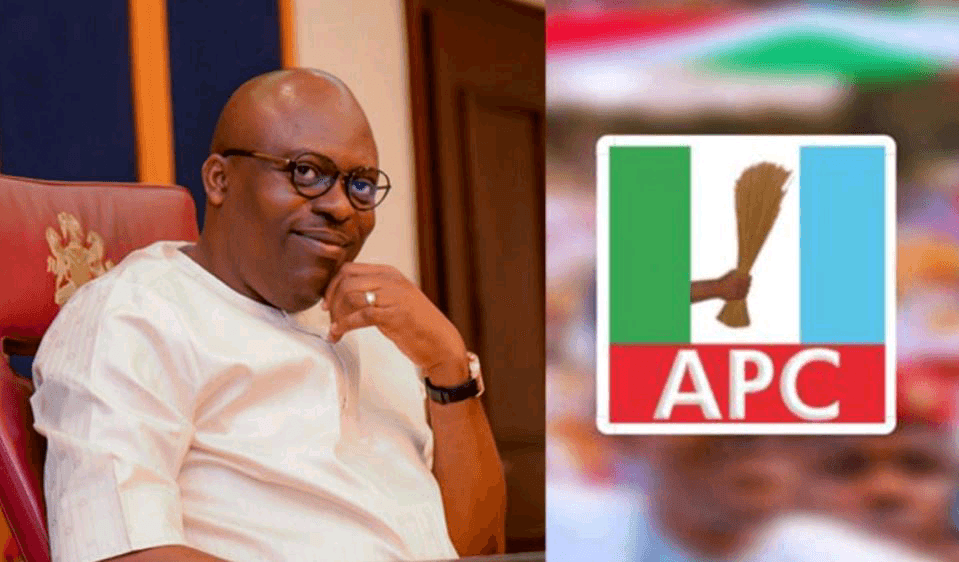
The Rivers State chapter of the All Progressives Congress has rejected moves by the State House of Assembly to begin impeachment proceedings against Governor Siminalayi Fubara and his deputy, warning that the process could destabilise governance in the oil producing state.
The development follows the decision by the Rivers State House of Assembly to commence impeachment proceedings against the governor over alleged misconduct. According to earlier reports by Tori News, lawmakers initiated the process on Thursday, setting the stage for the issuance of a formal impeachment notice to the governor and his deputy within the next seven days.
However, the state chapter of the APC says it will not support the move, describing it as politically damaging and unnecessary at a time when Rivers State requires stability.
APC Rejects Impeachment Plan
In a statement issued on Friday, the Rivers APC Publicity Secretary, Darlington Nwauju, said the party “solemnly rejects” the decision of the House of Assembly to pursue impeachment proceedings against Governor Fubara and his deputy.
“Our position as at today on this matter is that we solemnly reject the resort to an impeachment process against our governor and his deputy,” Nwauju said.
He added that the party would not remain silent while what he described as unresolved political tensions are allowed to spill over into the current administration.
“It will be totally untenable for our party to keep quiet when an obvious hangover from strifes that occurred within the PDP are allowed to resurface in our great party,” he stated.
According to the APC spokesperson, the party is committed to protecting the stability of the Rivers State government, which he described as an APC led administration.
He said the party “will do everything possible to ensure that the Government of Rivers State, which is an APC government, is not destabilised”.
Background to the Impeachment Move
The impeachment process was triggered following allegations of misconduct against Governor Fubara, although details of the alleged offences have not yet been fully outlined publicly. According to legislative sources, the House of Assembly is expected to serve a formal impeachment notice on both the governor and his deputy within seven days, in line with constitutional provisions.
Under Nigeria’s constitution, impeachment is a multi stage process that requires lawmakers to clearly state allegations, allow the affected officials to respond, and constitute a panel to investigate the claims before any final decision is taken.
Political observers note that impeachment processes in Rivers State have historically been contentious and often tied to broader political struggles rather than purely legislative oversight.
A State with a History of Political Tension
Rivers State has long been a flashpoint for high stakes political battles, particularly between rival factions within dominant political parties. In recent years, disputes within the Peoples Democratic Party shaped much of the state’s political atmosphere, leading to court cases, defections, and sharp divisions.
Governor Fubara’s emergence and subsequent alignment with the APC marked a significant shift in the state’s political balance. Analysts say this background makes the current impeachment move especially sensitive.
According to political analyst Charles Nwankwo, Rivers politics is rarely isolated from wider power struggles.
“Any impeachment process in Rivers State must be viewed within the context of long standing rivalries and unresolved alignments,” Nwankwo said. “That is why political parties are quick to interpret such moves as either corrective or destabilising, depending on where they stand.”
Why the Development Matters Now
The APC’s rejection of the impeachment process matters because it signals a potential internal disagreement between the legislature and the ruling party’s leadership structure. While lawmakers may insist on their constitutional role, party leaders appear concerned about the broader consequences for governance and public confidence.
Rivers State remains one of Nigeria’s most economically important states due to its oil and gas resources. Any prolonged political crisis could affect policy implementation, investor confidence, and security coordination.
Meanwhile, the timing of the impeachment move has also raised questions. The state government is currently expected to focus on budget implementation, infrastructure delivery, and addressing economic pressures affecting residents.
According to governance advocates, impeachment proceedings often consume political attention and resources, even when they do not ultimately succeed.
Party Discipline Versus Legislative Independence
One key issue emerging from the controversy is the balance between party discipline and legislative independence. While political parties often expect loyalty from their members, lawmakers are constitutionally empowered to initiate impeachment where they believe misconduct has occurred.
However, critics argue that impeachment should be reserved for clear and grave violations, not as a tool for political bargaining.
Former lawmaker and constitutional lawyer Emeka Okorie said impeachment processes lose credibility when they appear rushed or politically motivated.
“Impeachment is not meant to be a routine political weapon,” Okorie said. “If the allegations are not clearly communicated to the public, it creates suspicion and weakens democratic institutions.”
In the coming days, attention will be on whether the Rivers State House of Assembly formally serves the impeachment notice as planned. The response of Governor Fubara and his deputy will also shape the next phase of the process.
Observers will be watching closely to see if party leaders intervene behind the scenes to de escalate tensions or broker dialogue between the executive and the legislature.
There is also the possibility of legal challenges, as impeachment processes in Nigeria frequently end up in court over questions of procedure and constitutional compliance.
Broader Implications
Beyond Rivers State, the episode highlights ongoing debates about governance stability in Nigeria’s states. Frequent political confrontations between governors and lawmakers have raised concerns about policy continuity and democratic maturity.
For the APC, the situation presents a test of internal cohesion in a politically complex state. How the party manages the dispute could influence its standing ahead of future electoral contests.
The Rivers APC’s firm rejection of the House of Assembly’s move to impeach Governor Siminalayi Fubara and his deputy adds a new layer to an already tense political situation. While the legislature maintains its constitutional authority, the ruling party is warning against actions it believes could destabilise governance. As the impeachment process unfolds, the coming days will be critical in determining whether the dispute escalates into a full political crisis or is resolved through negotiation and institutional restraint.
Loading related news...
Add a Comment