


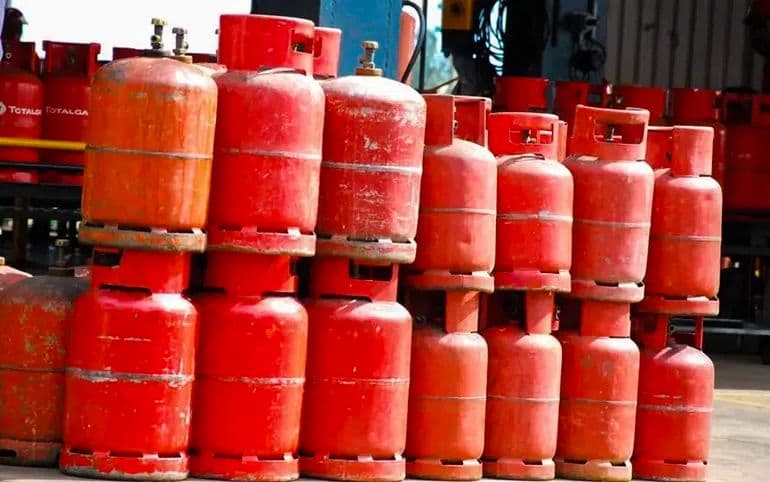
Liquefied petroleum gas prices in Nigeria have dropped from N2,200 per kilogramme to N1,500/kg, a fall of N700, or 31.8 percent, within weeks of a federal government directive ordering regulatory and security agencies to pursue operators suspected of diverting and hoarding supply.
The decline matters because cooking gas had become a proxy crisis. Households cut consumption or abandoned gas stoves entirely during the price surge, and the government's emergency response, including the mobilisation of the EFCC, the DSS, and the Nigeria Police Force alongside energy regulators, signalled that officials viewed the situation as a threat to domestic stability, not merely a market fluctuation.
The Government's Hand
The price spike prompted an emergency stakeholder meeting in Abuja convened by the Minister of State for Petroleum Resources (Gas), Ekperikpe Ekpo. At that meeting, Ekpo directed the Nigerian Midstream and Downstream Petroleum Regulatory Authority (NMDPRA) to develop a pricing framework, sanction market-distorting operators, and coordinate enforcement with security agencies. "We have directed the NMDPRA to intensify monitoring, engage operators and work with security agencies to discourage hoarding, eliminate artificial scarcity, and strengthen transparency in distribution and pricing," the minister said in a statement from the meeting.
The NMDPRA's Authority Chief Executive, Rabiu Umar, told the same gathering that an enforcement campaign targeting pricing and supply-chain practices had already begun. His language was direct. "We are going to be much more aggressive in ensuring that no factor is allowed to keep prices at excessively high levels," Umar said, adding that he expected a significant improvement in supply and a reduction in prices before the end of the following month.
That timeline has now been met, at least partially.
What the Marketers Say
Edu Inyang, president of the Nigerian Association of Liquefied Petroleum Gas Marketers (NALPGAM), attributed the price drop in an interview with Daily Sun to a series of consultations among industry operators, regulators, and government agencies. "Product availability has improved and confidence has returned to the market, which has helped bring down prices," he said.
Related News
Inyang's explanation credits coordination, not enforcement alone. The distinction matters. If availability improved because regulators removed bottlenecks and frightened off hoarders, prices should hold. If it improved because of a temporary injection of supply, they may not.
On sustainability, Inyang was measured. He acknowledged that LPG prices remain sensitive to international market conditions, foreign exchange rates, and logistics costs, any one of which could reverse the current trend. "If these remain favourable, consumers should continue to enjoy lower prices," he said, stopping short of a firm commitment.
The Supply Side
Minister Ekpo, at the Abuja meeting, named specific supply additions he expected to come online. Anticipated deliveries from the Seplat gas facility were cited as a factor that would boost domestic availability in the weeks following the emergency session. The government also disclosed it was exploring a local blending initiative involving Nigeria LNG Limited, domestic producers, and depot owners, aimed at reducing import dependence.
Inyang echoed the supply argument from the private sector's side, stating that marketers with sufficient capacity were ready to take advantage of import opportunities. Greater private participation in importation, he argued, would deepen competition and help moderate prices over the longer term. The NALPGAM meeting drew senior representatives from the Nigerian Gas Association, the Major Energy Marketers Association of Nigeria, and consumer groups, giving the stakeholder process a breadth that earlier, bilateral conversations lacked.
Still, the gap between a willingness to import and an actual improvement in supply infrastructure is not closed by a press statement.
What the Price Drop Does Not Settle
A 31.8 percent decline from peak is a meaningful number for families spending a significant share of household income on cooking fuel. It is not, by itself, evidence that the structural problems are solved. The market reached N2,200/kg in the first place because of a combination of foreign exchange pressure, distribution bottlenecks, and, according to regulators, deliberate hoarding. The forex rate has not been fixed. The logistics costs Inyang flagged remain variable. The NMDPRA's pricing framework, which Ekpo ordered to be developed at the emergency meeting, has not been publicly released.
The enforcement campaign Umar announced has produced no published record of sanctions against named operators as of the time of reporting.
The unanswered question is whether the NMDPRA will make its pricing framework public, name and sanction any operators found to have artificially inflated prices, and disclose whether the Seplat facility deliveries cited by the minister have actually reached the domestic market. The authority has not responded to that question.
Add a Comment