


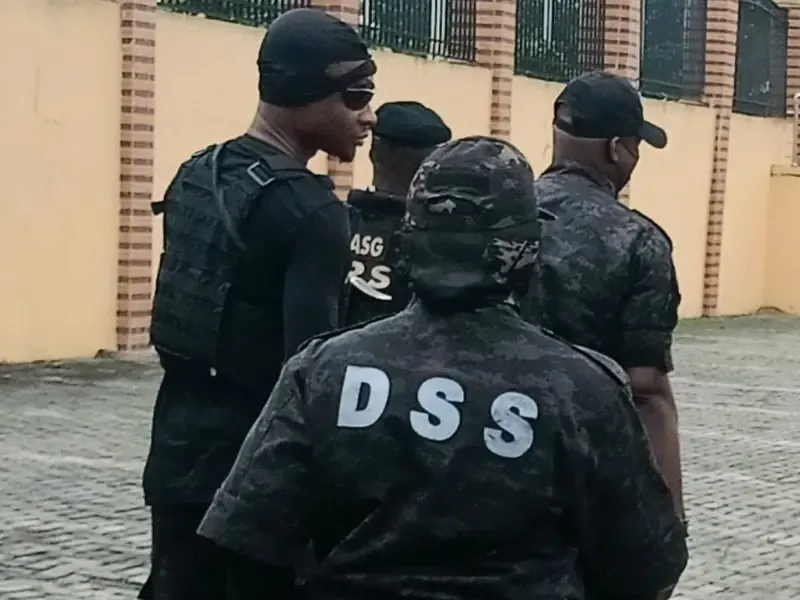
Nigeria's Department of State Services has paid N3 million to a farmer it detained on terrorism allegations, after an internal review panel found no evidence connecting him to Boko Haram.
The case of Nura Idris matters now because it is not isolated. The DSS says more than 30 people have received a combined sum exceeding N300 million in compensation following similar case reviews, a figure that implies a pattern of prolonged detention without sufficient evidentiary basis, and raises questions about how many more cases remain unreviewed.
Idris, a farmer and herder from Soba Local Government Area in Kaduna State, was arrested in Suleja, Niger State, in 2024. The arresting authorities alleged he had ties to terrorist groups. He was subsequently handed over to the DSS. No charge was filed in any public court, according to the Daily Nigerian report that first carried the story.
The DSS Director-General, Oluwatosin Adeola Ajayi, personally ordered Idris' release and approved the N3 million payment to help him, in his words, rebuild his life and business. The payment was not described as a legal settlement or a court-ordered award. It was an administrative decision made within the agency.
That distinction carries legal weight.
The Review Panel
A review panel established by the DSS examined Idris' case and found, according to the agency, no evidence connecting him to terrorist activities. The panel's composition, its mandate, and its procedural rules have not been made public. It is not clear whether Idris had legal representation during the review, whether he was permitted to present witnesses, or whether the panel's findings are subject to any external oversight.
Idris spoke after his release. He praised the DSS leadership for the manner in which he was treated during detention. He said the compensation money would allow him to restart his life. The Daily Nigerian quoted no critical statement from him about the detention itself, and no independent account of his conditions in custody has been published.
Related News
Security sources cited by the same report said the DSS is conducting a broader review of old cases, specifically targeting individuals held for extended periods. The sources gave no timeline for completing the review and named no specific cases beyond Idris.
The N300 Million Figure
The aggregate compensation figure is the most consequential number in this story. More than 30 people have collectively received over N300 million from the DSS following case reviews, the report states. That works out to an average of roughly N10 million per person, though the figure was given as a collective total, and individual payments almost certainly vary.
Thirty people compensated implies thirty wrongful or unsubstantiated detentions processed through the same internal mechanism. The DSS has not published a list of cases reviewed, the duration of each detention, the charges alleged, or the evidentiary basis on which individuals were originally held. None of those disclosures have been made voluntarily.
The agency's stated rationale frames the compensation programme as evidence of its commitment to protecting citizens' rights while maintaining national security. That framing positions the payments as institutional responsibility rather than legal liability. Whether any of the detainees or their families have filed civil claims, or whether any of the detentions have been referred to the National Human Rights Commission, is not addressed in the available record.
What the Idris Case Reveals About the Arrest Process
Idris was arrested not by the DSS but by another authority in Suleja before being transferred to DSS custody. The original arresting body has not been named in available reports. That gap matters. If the initial allegation of Boko Haram ties originated with a third party and was accepted without independent verification before detention, the failure point sits upstream of the DSS review panel that eventually cleared him.
He spent time in custody across at least two agencies before being reviewed and released. The precise duration of his detention has not been stated in any published account. A farmer from Kaduna, arrested in Niger State, held by the DSS, cleared by an internal panel, and compensated by administrative order: the geography alone suggests the kind of jurisdictional handoff that makes accountability difficult to trace.
Soba Local Government Area, where Idris is from, sits in southern Kaduna, a region that has experienced persistent farmer-herder conflict and sporadic security operations. The report does not say whether the terrorism allegation arose from that context or from separate intelligence.
The Transparency Gap
The DSS has not published the terms of reference for its review panel, the total number of cases currently under review, the criteria used to determine compensation amounts, or the legal framework under which administrative payments of this scale are authorized. The N300 million figure, if accurate, represents a significant expenditure of public funds disbursed outside any court process that has been reported publicly.
Nigerian law provides for the right to compensation for unlawful detention under the Administration of Criminal Justice Act and under the 1999 Constitution. Whether the DSS payments are structured to satisfy those provisions, or whether they are made in exchange for any form of waiver of future legal claims, has not been disclosed.
The DSS has not confirmed whether the review process is ongoing, how cases are selected for review, or whether individuals still in detention who believe they have been wrongly held can apply to the panel.
The National Human Rights Commission, which has a statutory mandate to investigate allegations of human rights violations by state agencies, has not commented publicly on the DSS compensation programme. Whether the Commission has been notified of the payments, or whether it has opened any inquiry into the detention practices the payments implicitly acknowledge, remains the open question this story has not yet answered.
Add a Comment