


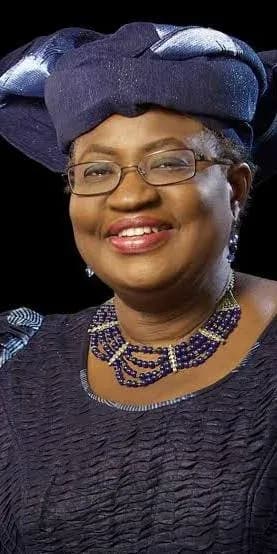
The World Trade Organization director-general's remarks, delivered as the keynote address at the 2026 Delta State Economic and Investment Summit, land at a moment when the state government is actively courting foreign capital, with delegations from China and Brazil in attendance. Her core claim: infrastructure spending in Nigeria has failed to translate into reliable systems, and that gap is what keeps the cost of doing business high.
"We need better ports and digital infrastructure, and lower trade costs," Okonjo-Iweala said. "Execution is what matters, and successful execution requires focus. It requires prioritisation." The line came during a lecture built around the summit's stated theme, "Harnessing Our Strengths, Unlocking Our Potentials."
She did not stop at ports. Okonjo-Iweala used the platform to name a structural problem she said undercuts nearly every capital project in the country: maintenance. "We lack a maintenance culture in the country," she said. "I have to say that. I am Nigerian, but we need that."
That distinction, between building and sustaining, formed the spine of her argument. Budgets alone do not produce results, she said. "The fact is that endowments alone do not add value. Budgetary allocations alone do not lead to new roads or good maintenance." The claim reframes Nigeria's infrastructure story away from funding gaps and toward operational failure, a harder problem to fix with a single appropriation.
Okonjo-Iweala's institutional position gives the remarks weight beyond a typical summit speech. She is not a domestic politician scoring points against a rival administration. She runs the WTO, the body that referees global trade rules, and she spent years as Nigeria's finance minister before that. When she says trade costs are too high, she is describing a variable that shows up in export competitiveness data the WTO itself tracks. She did not cite a specific figure for Nigeria's trade costs during the address, according to the record of her remarks.
Her call was addressed to "governments at all levels," not to Delta State specifically. She argued that maintaining what already exists would do more for economic returns than a steady stream of ribbon-cuttings on new projects. She framed this as a matter of discipline. "Execution," she said, requires "prioritisation," a word she repeated rather than qualified with detail on which sectors or projects should come first.
The venue for the remarks matters. The Delta State Economic and Investment Summit is a three-day event organized by the state government specifically to attract local and foreign investment. Vice President Kashim Shettima opened the summit on behalf of President Bola Tinubu, a signal of federal backing for a state-level pitch to investors. The guest list included policymakers, investors and business leaders from Nigeria and abroad, according to summit organizers, with the China and Brazil delegations named specifically.
None of the officials present, including Shettima or Delta State's leadership, is recorded responding directly to Okonjo-Iweala's maintenance culture remarks during the session. Her critique, delivered inside a summit designed to sell Delta State and Nigeria as investment destinations, sat uneasily against the summit's own promotional purpose. She was not asked, in the material reviewed, whether her comments were aimed in part at the host state's own infrastructure record.
Related News
The gap between her diagnosis and any state or federal commitment to close it is where the story currently sits. Okonjo-Iweala offered a framework, not a plan. She did not name a dollar figure for what upgraded port and digital infrastructure would cost, nor did she specify a timeline for the "prioritisation" she called for. She did not identify which ports, which digital systems, or which agencies would be expected to execute.
That absence of specifics is not unusual for a keynote address. But it leaves open the question of whether the Delta State government, or the federal government that sent its vice president to open the summit, will respond with anything more concrete than agreement in principle. Nigeria's ports have drawn criticism before from shippers and exporters over congestion and clearance delays, a pattern Okonjo-Iweala's remarks gesture toward without detailing.
She spoke as a former insider of the Nigerian state, invoking her nationality directly. "I am Nigerian, but we need that," she said of the maintenance culture she says is missing. The phrasing put her in an unusual position: an international official critiquing her own country's execution record, on Nigerian soil, at an event meant to showcase the country's investment case.
What happens next is unclear from the record of the summit itself. The three-day event runs beyond Monday's keynote, and it remains to be seen whether subsequent sessions produce commitments, from Delta State or federal officials, tied to the infrastructure and maintenance gaps Okonjo-Iweala identified. No agency named in her remarks, port authority, digital infrastructure regulator, or federal ministry, has issued a public response to her comments as of this writing. Whether the summit's investor delegations from China and Brazil leave Asaba with signed agreements, or simply a speech to cite, is the question the next two days of the summit will answer.
Add a Comment