


A 44-year-old man was arrested in Cyprus on suspicion of spying for Iran's Revolutionary Guard Corps.
The case marks the first time British counter-terrorism police have used the National Security Act to investigate alleged hostile state activity outside the UK, a legal expansion that could shape how London responds to future threats against its overseas military installations.
Rashad Sultanov, a British-Azerbaijani dual national from Islington in North London, was arrested on July 17 by Cypriot authorities, the Metropolitan Police said in a statement. He remains in custody. Extradition proceedings are underway, though the Met's statement did not specify a court or a hearing date for that process.
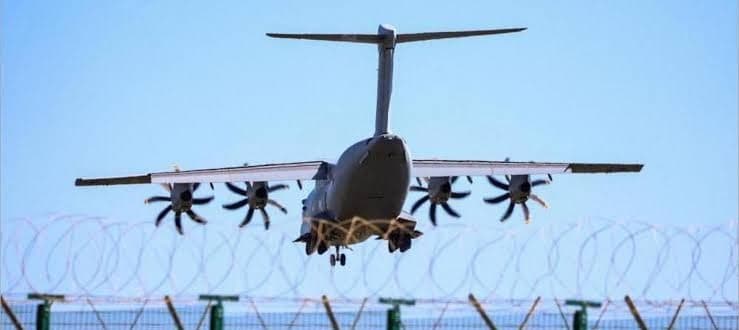
Sultanov is accused of conducting hostile surveillance on RAF Akrotiri, Britain's air base on the Mediterranean island. Police allege he then passed the information he gathered to Iran's Islamic Revolutionary Guard Corps.
The surveillance is said to have occurred between May 11 and June 22 last year, according to the Met. That window predates Sultanov's arrest by more than a year, a gap the police statement does not explain.
Helen Flanagan, head of counter-terrorism policing in London, framed the case as a test of new legal reach. "This case shows we are able to use the National Security Act overseas when British military bases are allegedly targeted by hostile state activity," she said.
That framing matters because the National Security Act was written with domestic enforcement in mind. Flanagan's statement signals that British authorities now intend to apply it beyond UK borders when military installations are involved. She did not elaborate on which other bases or jurisdictions might see similar investigations.
A Base Already Under Strain
Related News
- The UN's migration agency says trafficking networks have forced people from more than 80 countries into online scam compounds across Asia.
- More than 12,000 people have been arrested by US immigration authorities after tips from the Office of Refugee Resettlement.
- China's trade with Africa hit 1.41 trillion yuan in the first half of 2026.
Akrotiri was hit by a drone strike months before Sultanov's arrest. On March 2, an Iranian-type Shahed drone caused slight damage to facilities at the base. Neither the Met's statement nor available reporting has linked that strike directly to Sultanov's alleged surveillance activity, and no formal connection between the two incidents has been established in the material reviewed for this report.
Britain responded to the March strike with a policy shift. Soon after the drone hit, the UK announced that Akrotiri would not be part of its defensive agreement with the United States covering the use of British bases. The government's statement at the time did not specify a duration for that exclusion.
The same month, Iran was reported to have fired two ballistic missiles at a separate U.S.-UK base on Diego Garcia in the Indian Ocean. Both missiles missed their target. No British or American statement confirmed a direct causal link between the Diego Garcia incident and the Akrotiri drone strike, though both occurred within the same March timeframe and both involved alleged Iranian military action against joint Western installations.
A Base With History
Akrotiri is one of two military bases Britain retained in Cyprus after the island's independence in 1960. The base has served as a staging ground for past UK military operations in Iraq, Syria and Yemen, giving it strategic weight beyond its physical footprint on the island.
That history is part of why any surveillance operation against it draws scrutiny from counter-terrorism police rather than a lower-level security response. A base used to launch operations across the Middle East is, by definition, a target of interest to states with adversarial relationships with Britain and its allies.
What Remains Unknown
The Met's statement does not detail how Sultanov allegedly gathered information on the base, what specific material he is accused of passing to the IRGC, or how investigators first identified him as a suspect. It also does not say whether Cypriot authorities acted on a British request or opened their own parallel inquiry before coordinating with London.
Sultanov's legal representation has not been named in the material reviewed, and no defense statement has been issued in response to the allegations.
The extradition process now sits with Cypriot courts, though the Met's statement named neither a specific court nor a date by which a ruling might come. Until that process concludes, Sultanov remains in Cypriot custody, and the precise nature of what he is accused of sharing with the IRGC remains undisclosed in any document made public so far.
Add a Comment