


Dele Momodu Criticises Pat Utomi Over Comments on Peter Obi’s Vice Presidential Prospects
Posted by
Ezinwa
•Jan 3, 2026
Jan 3, 2026
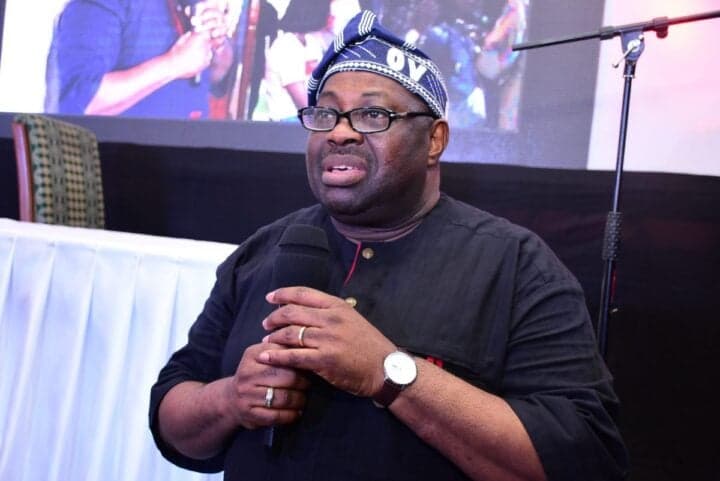
Prominent publisher and African Democratic Congress chieftain, Dele Momodu, has publicly rebuked political economist Prof. Pat Utomi over his decision to rule out former Labour Party presidential candidate Peter Obi from serving as a vice presidential contender in the emerging opposition coalition ahead of the 2027 general election.
Momodu’s criticism, expressed in a post on his verified X account on Friday, follows remarks made by Utomi after Obi’s recent defection to the ADC. According to Momodu, dismissing the possibility of Obi running as a vice presidential candidate reflects a narrow view of democratic participation and undermines the principle of voter choice at a time when Nigeria’s opposition is seeking unity.
The exchange has added another layer to the ongoing debate about leadership structure, strategy, and inclusiveness within the opposition bloc, particularly as political actors begin early positioning for the next election cycle.
Utomi’s warning sparks backlash
The controversy stems from an interview Utomi granted to Channels Television on Thursday, where he commented on Peter Obi’s political future within the opposition coalition. During the programme, Utomi stated that he would withdraw his support for Obi if the former Anambra State governor accepted a vice presidential slot rather than contesting at the top of the ticket.
According to Utomi, such a move would not align with his expectations for the coalition or Obi’s political trajectory. His remarks quickly gained traction across political circles and social media, drawing mixed reactions from supporters and critics alike.
The comments were also reported by several news platforms, including Trovnews, which noted that Utomi framed his position as a matter of principle rather than personal animosity, arguing that leadership choices must reflect the aspirations of Nigerians seeking meaningful change in 2027.
Momodu defends democratic choice
Reacting to Utomi’s position, Momodu said he was surprised by the attempt to preemptively limit Obi’s options within a democratic process. In his post, he argued that ruling out Obi as a potential running mate contradicts the very ideals the opposition claims to uphold.
“Anyone insisting that Obi cannot run behind anyone is definitely not a Democrat who wishes to rescue Nigeria from a one man dictatorship,” Momodu wrote.
He added that democracy thrives on choice and negotiation, especially within coalitions where compromise is often required to achieve broader electoral success. According to Momodu, insisting on rigid conditions at this stage risks weakening the opposition’s appeal and alienating potential supporters.
Background to the Obi factor
Peter Obi emerged as a major political force during the 2023 presidential election, galvanising a large base of young and urban voters under the Labour Party platform. Although he did not win the election, his campaign reshaped Nigeria’s political conversation, particularly around governance, accountability, and citizen engagement.
Since then, Obi’s political future has remained a subject of intense speculation. His decision to leave the Labour Party for the ADC has been interpreted by analysts as an attempt to align with a broader coalition capable of mounting a stronger challenge in 2027.
According to political observers, Obi’s popularity makes him a valuable asset to any coalition, whether as a presidential candidate or a running mate. That reality, they say, explains why debates over his role have become so heated.
The public disagreement between Momodu and Utomi highlights deeper tensions within Nigeria’s opposition movement. As efforts intensify to build a united front against the ruling party, questions about leadership hierarchy, power sharing, and strategy are becoming unavoidable.
Analysts note that premature ultimatums, such as ruling out specific roles for key figures, could complicate coalition talks and slow momentum. According to Abuja based political analyst Ayo Ogunlana, the opposition’s greatest challenge may not be ideology but managing egos and expectations.
Speaking to this reporter, Ogunlana said successful coalitions often allow flexibility until consensus emerges. He warned that drawing red lines too early could fracture alliances before they fully form.
Reactions within the ADC and beyond
Within the ADC, reactions to the exchange have been cautious. Some party insiders privately acknowledge that Obi’s entry has reshaped internal calculations, while others argue that debates like this are a sign of healthy internal democracy.
Outside the party, civil society voices have also weighed in. According to a governance advocate with the Centre for Democratic Development, the focus should remain on policy clarity rather than personal positioning.
She noted that Nigerians are more concerned about solutions to economic hardship, insecurity, and institutional reform than about who occupies which slot on a future ticket.
As the 2027 election approaches, observers say attention should be paid to how opposition leaders manage internal disagreements and communicate them to the public. The ability to project unity, even amid debate, will likely influence voter confidence.
Another key issue will be whether Peter Obi himself addresses the controversy directly. So far, he has not publicly responded to Utomi’s comments or Momodu’s criticism, choosing instead to maintain focus on broader national issues.
Coalition negotiations are also expected to intensify in the coming months, potentially clarifying whether Obi will seek the presidential ticket, accept a vice presidential role, or play a different strategic part altogether.
The clash between Dele Momodu and Pat Utomi over Peter Obi’s vice presidential prospects underscores the complexity of opposition politics in Nigeria. While both men frame their positions as principled, the episode reveals the delicate balance between conviction and compromise required to build a viable alternative ahead of 2027.
Ultimately, how these debates are resolved may shape not just the opposition’s internal dynamics, but also its credibility with voters seeking a genuine democratic alternative.
Add a Comment