


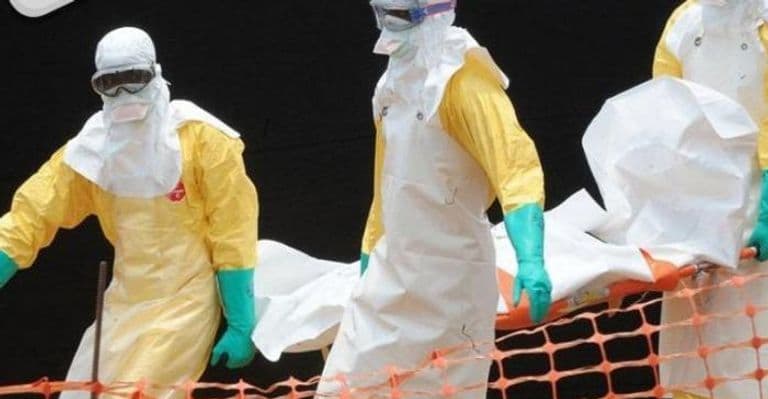
The World Health Organization declared an international emergency on Sunday. The decision followed a rapidly expanding Ebola outbreak linked to the Bundibugyo strain in the eastern Democratic Republic of Congo and neighboring Uganda, with health officials warning that the virus is spreading across borders without any approved vaccine or targeted treatment currently available.
According to the WHO’s emergency briefing, Congo’s Ituri province had recorded 246 suspected infections, 80 suspected deaths, and eight laboratory-confirmed cases as of Saturday. The agency said epidemiological data pointed to sustained community transmission and rising positivity rates among tested samples.
The declaration places the outbreak under intensified international monitoring because the Bundibugyo variant differs materially from the more extensively studied Ebola-Zaire strain. Existing licensed Ebola vaccines were primarily developed against Ebola-Zaire, which drove the 2014 to 2016 West African epidemic that killed more than 11,000 people across Guinea, Liberia, and Sierra Leone.
WHO officials described the current situation as “extraordinary” partly because no approved vaccine or antiviral treatment exists specifically for Bundibugyo Ebola.
That gap changes response options.
The outbreak’s center in Ituri province creates additional complications. Eastern Congo has experienced years of armed conflict, population displacement, and weak health infrastructure, conditions that have repeatedly undermined outbreak containment efforts. Humanitarian agencies operating in the region have previously documented attacks on clinics, mistrust of health workers, and disrupted surveillance systems during infectious disease responses.
Uganda’s western frontier shares extensive informal trade and migration routes with eastern Congo. WHO officials confirmed that travel-linked cases connected to the outbreak had already been documented, prompting warnings to neighboring governments to activate emergency operations centers and strengthen border screening systems.
But the agency also cautioned governments against imposing blanket travel or trade restrictions.
Related News
WHO officials said hard border closures could force travelers onto unregulated crossing routes, reducing disease surveillance and making contact tracing substantially harder. That concern is grounded in previous Ebola outbreaks in Central and West Africa, where informal crossings often continued despite official shutdowns.
Public health agencies have seen this before.
During the West African Ebola crisis, several governments imposed aviation and border restrictions despite WHO recommendations against broad travel bans. Later reviews by the United Nations and independent health researchers concluded that some restrictions disrupted medical supply chains and delayed humanitarian deployments without fully halting population movement.
The current outbreak also raises operational questions about laboratory capacity and case confirmation rates. WHO figures released Sunday listed only eight confirmed infections against 246 suspected cases. That disparity reflects the logistical difficulties of testing samples in conflict-affected regions where transportation networks and diagnostic access remain limited.
Delayed confirmation complicates containment.
Our analysis of WHO outbreak bulletins from previous Congo Ebola responses found that suspected case totals frequently fluctuated sharply during the first weeks of surveillance because testing backlogs, duplicate reporting, and inaccessible communities distorted real-time data collection. In the 2018 North Kivu outbreak, confirmed and suspected figures shifted repeatedly before transmission patterns became clearer.
The Bundibugyo strain itself remains comparatively less understood than Ebola-Zaire. Scientists first identified it in Uganda in 2007 during an outbreak that killed at least 39 people. Case fatality rates associated with Bundibugyo Ebola have historically been lower than some Ebola-Zaire outbreaks, according to WHO and peer-reviewed infectious disease studies.
But lower fatality rates do not reduce transmission risks.
Health authorities remain concerned because Ebola spreads through direct contact with infected bodily fluids, contaminated surfaces, and infected remains during burial practices. In areas with weak clinical isolation systems, hospitals themselves can become transmission sites if protective equipment or trained personnel are limited.
Eastern Congo has faced those conditions repeatedly.
This marks Congo’s 17th recorded Ebola outbreak since the virus was first identified near the Ebola River in 1976. The frequency of outbreaks has turned the country into one of the world’s most experienced Ebola response environments. Yet repeated emergencies have also exposed chronic weaknesses in healthcare funding, infrastructure stability, and long-term surveillance capacity.
WHO officials acknowledged those constraints indirectly.
The agency called on neighboring states to increase screening, surveillance, laboratory readiness, and community engagement efforts immediately. It also urged governments to avoid panic-driven policies that could undermine cooperation with public health authorities.
That balancing act rarely holds smoothly.
In previous Ebola outbreaks, local resistance to quarantine orders, burial restrictions, and isolation procedures often intensified after governments deployed security forces to enforce compliance. Public health specialists working in eastern Congo have repeatedly argued that community trust determines whether infected individuals report symptoms early or avoid contact with authorities.
The current outbreak arrives while several African health systems remain financially strained after the COVID-19 pandemic. International donors that previously financed emergency outbreak responses have also reduced portions of pandemic-era health spending commitments over the past two years, according to World Bank and WHO financing reports.
WHO emergency declarations can accelerate donor funding and international logistical support, but response operations still depend heavily on local healthcare workers, transport networks, laboratory access, and political coordination between neighboring governments.
No funding target was announced Sunday.
The agency also avoided predicting how large the outbreak could become. Officials instead pointed to rising suspected infections and positivity rates among tested samples as indicators that transmission may already exceed confirmed case counts.
That uncertainty shapes every response decision.
WHO declared an international emergency after Congo reported 246 suspected Ebola cases and 80 suspected deaths linked to the Bundibugyo strain.
The outbreak involves a virus variant with no approved vaccine or targeted treatment currently available.
Health officials confirmed that cross-border travel-linked infections tied to Uganda have already been identified.
WHO warned neighboring governments that aggressive border closures could drive travelers into unmonitored crossing routes.
Why is the Bundibugyo strain causing concern?
Because there is no approved vaccine specifically designed for it. Existing Ebola vaccines mainly target the Ebola-Zaire strain, which behaves differently in outbreaks.
Is this the same Ebola strain from West Africa in 2014?
No. The 2014 epidemic was dominated by Ebola-Zaire. This outbreak involves Bundibugyo Ebola, first identified in Uganda in 2007.
Why is WHO discouraging travel bans?
Because people often keep crossing anyway. If crossings move underground, health officials lose visibility, and contact tracing becomes harder.
The next unresolved question is operational and financial. WHO has declared the emergency, but no multinational funding figure or deployment timetable has yet been announced for containment operations in Ituri province. Any escalation involving quarantine authority, border controls, or emergency procurement contracts could eventually face legal review in Congo’s administrative courts if local governments challenge federal health directives or spending allocations.
Add a Comment