


Suspected Boko Haram Bomber Says How He was Paid to Target Maiduguri Worshippers
Posted by
Azuka
•about 3 hours ago
about 3 hours ago
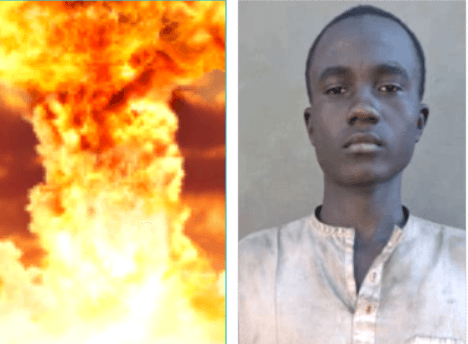
A suspected Boko Haram suicide bomber arrested in northeastern Nigeria has offered a rare and disturbing account of how the extremist group recruits, pays, and deploys operatives to attack civilian targets, including places of worship. The suspect, Ibrahim Mohammed, told interrogators that he was paid as much as N100,000 to participate in suicide bombing operations, revealing how financial inducement remains a critical tool in sustaining the insurgency despite years of military pressure.
According to security sources, Ibrahim was captured by troops of Operation HADIN KAI working alongside local hunters in Yobe State. During interrogation, he confessed to taking part in the December 24 bombing at the Gamboru Market Mosque in Maiduguri, Borno State, an attack that killed five worshippers and injured at least 32 others during the festive period.
The confession, first reported by Zagazola, sheds light not only on the mechanics of the attack but also on the wider operational structure linking Boko Haram commanders across Adamawa State and the Mandara Mountains. Analysts say the account underscores the persistent threat posed by fragmented but financially motivated cells operating across state borders in the northeast.
How the Gamboru Market Mosque Attack Was Carried Out
Recounting the events leading up to the bombing, Ibrahim identified himself as a native of Michika in Adamawa State. He said he and an accomplice were dispatched to Maiduguri with explicit instructions to target mosques associated with the Izala Islamic movement.
“My name is Ibrahim from Michika in Adamawa. We came to Maiduguri to plant bombs in Izala Mosque. We were sent by our leaders, Adamu and Abubakar, who gave us two IEDs to plant in the mosque,” he said during interrogation, according to Zagazola.
Ibrahim explained that the attackers deliberately chose periods when mosques were largely empty to avoid detection while planting the devices. According to him, they entered the mosque shortly after Zuhur and Asr prayers, posing as worshippers.
“We came after Zuhur and Asr prayers when the mosque was empty. We entered pretending to pray. My colleague was digging to plant the IED in the middle of the mosque while I was digging by the side,” he said.
The devices, he added, were coupled and timed to detonate during Maghrib prayers, when attendance would be at its peak. He claimed the explosives were set with a five minute timer.
“As Muslim faithful gathered to pray Maghrib, after the first raka’at, we detonated the bomb. We set the timing for five minutes. Shortly after, I ran to the market area,” Ibrahim told investigators.
The explosion triggered panic across Gamboru Market, a densely populated commercial hub in Maiduguri, as emergency responders and residents scrambled to evacuate the wounded.
Suicide Bombing as a Paid Assignment
One of the most striking elements of Ibrahim’s confession is his claim that suicide bombing has become a monetized task within Boko Haram’s operational playbook. According to him, operatives are paid fixed sums depending on the nature of the mission.
“I was paid money ranging from N70,000 to N100,000 per mission,” he said.
Security analysts say this disclosure aligns with previous intelligence suggesting that Boko Haram, weakened by military offensives and leadership losses, increasingly relies on cash incentives to recruit young men from impoverished border communities.
A counterterrorism researcher familiar with insurgent financing in the Lake Chad region said the amounts mentioned are significant in rural areas of Adamawa and Borno, where unemployment and displacement remain widespread.
“When you consider the economic conditions in many of these communities, N100,000 can represent several months of income. That makes cash-based recruitment extremely effective, especially among youths who see few alternatives,” the analyst said.
Background: Boko Haram’s Shifting Tactics
Boko Haram’s insurgency, which began in 2009, has claimed tens of thousands of lives and displaced millions across northeastern Nigeria and neighboring countries. While sustained military operations have degraded the group’s territorial control, attacks on soft targets such as markets, mosques, and internally displaced persons camps have continued.
In recent years, the group has splintered into factions, including the Islamic State West Africa Province, with varying strategies and command structures. However, attacks on civilian religious gatherings remain a common tactic, aimed at sowing fear and undermining public confidence in security efforts.
The Gamboru Market Mosque bombing came at a sensitive time, just days before Christmas, when security agencies were on heightened alert due to the festive season. The attack reinforced concerns that insurgent cells retain the capacity to strike symbolic and crowded locations despite ongoing military campaigns.
Why This Confession Matters Now
Security officials say Ibrahim’s testimony provides actionable insights into how operatives move across state lines, select targets, and exploit routine religious practices. His account of timing attacks around prayer schedules highlights vulnerabilities that security planners may need to address in collaboration with religious leaders.
Moreover, the admission that suicide missions are financially compensated challenges the perception that such attacks are driven solely by ideological indoctrination. Experts argue that understanding the economic dimension of recruitment is crucial for designing effective counter-radicalization and rehabilitation programs.
A former military intelligence officer noted that confessions like Ibrahim’s can help authorities map command chains and funding flows. “Names, locations, and payment structures are not just details. They are entry points for disrupting networks,” he said.
Implications and What to Watch Next
Authorities have not disclosed whether Ibrahim’s alleged accomplice has been arrested, nor have they confirmed if operations are underway to track the commanders he named. However, security sources say investigations are ongoing across parts of Adamawa, Yobe, and Borno states.
Observers will be watching to see whether the confession leads to further arrests or intelligence breakthroughs, particularly regarding the use of local collaborators and hunters in counterinsurgency efforts. The role of community actors in Ibrahim’s capture has already drawn attention to the importance of civilian cooperation in securing volatile areas.
There are also renewed calls for targeted economic interventions in insurgency-prone regions. Analysts argue that reducing the financial appeal of extremist recruitment requires sustained investment in jobs, education, and trauma recovery for displaced populations.
Conclusion
Ibrahim Mohammed’s confession offers a grim window into the operational and financial realities of Boko Haram’s continued campaign of violence. By detailing how attacks are planned, funded, and executed, his account reinforces the complexity of Nigeria’s security challenge in the northeast. While military pressure remains critical, experts say the revelations underline the need for broader strategies that address the economic and social drivers exploited by extremist groups.
Add a Comment