

Login to view saved posts

Login to view saved posts
TrovNews
•Dec 21, 2025
Dec 21, 2025
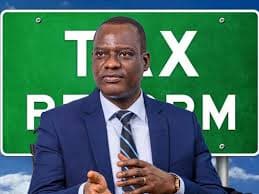
With Nigeria’s tax reforms set to take effect on January 1, 2026, growing public anxiety has centered on fears of higher taxes and possible restrictions on bank accounts. However, the Federal Government has moved to calm those concerns, stressing that the reforms are not intended to punish citizens or impose arbitrary revenue targets.
Chairman of the Presidential Committee on Fiscal Policy and Tax Reforms, Taiwo Oyedele, said the new tax framework is designed to rebuild trust between Nigerians and the state, not to burden households or businesses.
Speaking at the 2025 Nigeria Media Merit Award ceremony in Lagos, Oyedele explained that tax reform goes far beyond rates and collections. According to him, it is fundamentally about restoring confidence in how government raises and spends public funds.
“Tax reform is not just about rates or revenue,” Oyedele said. “At its core, it is about the social contract between citizens and the state. People want to know why they should pay tax, how their money is used, and whether the system is fair or selective.”
He added that these concerns cannot be resolved by government alone, noting that tax policy is especially vulnerable to misinformation because of its direct impact on livelihoods. According to him, informed and independent media engagement is essential to public understanding and accountability.
“A credible tax system rests on fair laws, transparent administration, voluntary compliance, and constant public scrutiny of government spending,” Oyedele said. “We remain committed to reforms that are fair, inclusive, and worthy of public trust.”
As part of that effort, the committee has released detailed clarifications on the Nigeria Tax Act 2025, which becomes operational in 2026, addressing some of the most common questions raised by Nigerians.
The law covers all individuals earning income in Nigeria, including salaried workers, traders, freelancers, content creators, influencers, and remote workers. Nigerians earning income abroad are also liable if they qualify as tax residents in Nigeria.
Students with no income remain exempt, while pensioners will continue to enjoy tax-free pensions and approved retirement benefits.
Contrary to widespread fears, transfers, deposits, withdrawals, and POS transactions will not be taxed. Simply holding money in a bank account does not attract tax under the new law. Only income such as salaries, business profits, interest, or investment gains is taxable.
Tax authorities will, however, have improved tools to monitor compliance. This does not mean bank balances will be taxed, only income and profits.
Oyedele also addressed concerns about Tax Identification Numbers. Nigerians without a TIN will not lose access to existing bank accounts from January 1, 2026. Account holders may be asked to provide a TIN over time, but accounts will not be blocked. However, opening a new bank account without a TIN may no longer be allowed.
Loans from banks or digital lenders such as Fairmoney are not taxable, since loans are not considered income. Interest earned by lenders remains taxable.
One-man businesses registered as enterprises will pay Personal Income Tax, while limited liability companies will pay Company Income Tax.
Profits from selling shares are exempt if the value of shares sold does not exceed N150 million and the gains are not above N10 million. Any amount beyond those thresholds becomes taxable.
Crypto assets, NFTs, and other digital assets are now fully taxable when profits are made.
Individuals earning the national minimum wage or less, or below N800,000 annually, are exempt from Personal Income Tax. Military salaries are also exempt, as are disability pensions for injured members of the armed forces.
Government bonds issued by federal or state authorities remain tax-free. Agricultural companies involved in crop production, livestock, forestry, dairy, or cocoa processing will enjoy a five-year tax holiday from the start of operations.
Dividends, rent, interest, and royalties earned abroad are exempt from Nigerian tax if repatriated through approved banking channels.
From 2026, individuals can also claim rent relief equal to 20 percent of annual rent, capped at N500,000, subject to declaration and verification.
Under the progressive tax structure starting in 2026, the first N800,000 of income will be taxed at zero percent. Income up to N50 million will be taxed at graduated rates ranging from 15 to 23 percent, while income above N50 million will attract a 25 percent rate.
Severance pay of up to N50 million remains tax-free. Any excess will be taxed using the new bands.
The committee said the reforms will reduce the tax burden for many workers. For example, someone earning N6 million annually will see tax payable fall from N896,000 to N780,000, resulting in savings of N116,000 and higher take-home pay.
Small companies with annual turnover below N50 million will remain exempt from Company Income Tax.
Remote workers in Nigeria earning income from international organisations will pay tax if that income is exempt in the organisation’s home country. Foreigners earning salaries in Nigeria may be exempt if their employer operates in the tech or creative sectors and the income is already taxed in their country of residence.
Oyedele said the reforms are structured to protect low-income earners, expand fairness, and encourage voluntary compliance, while supporting economic growth and accountability.
According to him, the goal is not enforcement through fear, but a tax system Nigerians can trust and willingly participate in.
Loading related news...
Add a Comment