


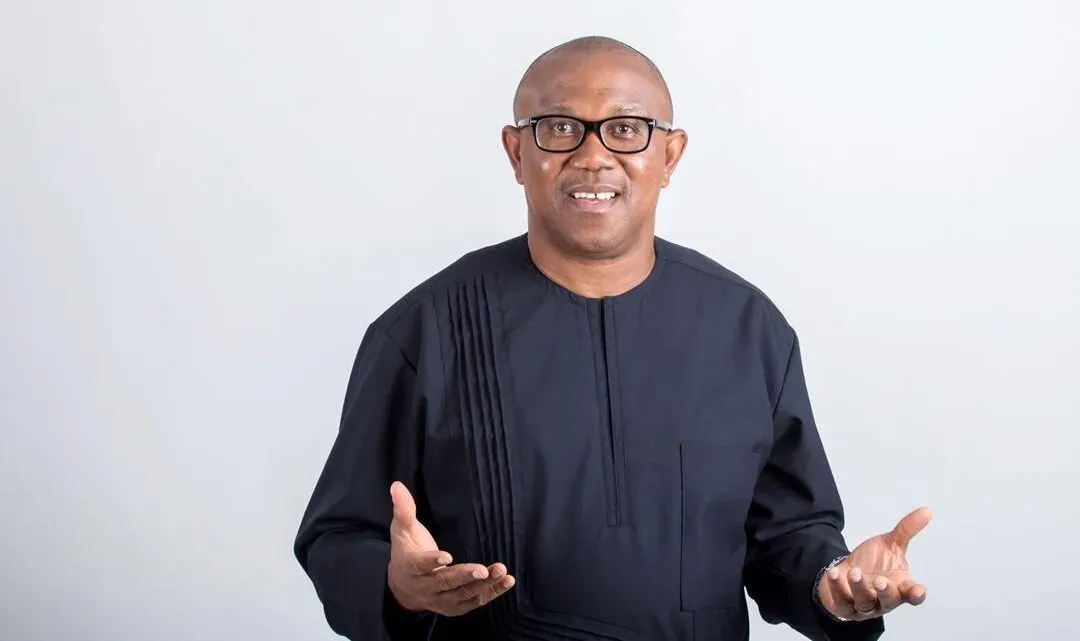
Peter Obi, the 2023 Labour Party presidential candidate who won 6.1 million votes according to the Independent National Electoral Commission's final results sheet, has publicly admitted he has no assurance of securing the African Democratic Congress presidential ticket ahead of the 2027 general elections.
The admission came in a video message shared with supporters, the contents of which were reported by Naija News. The message is notable less for what Obi confirmed than for what he could not. He is building a political project inside a party he does not control, around alliances he cannot verify will hold, toward a ticket he cannot promise himself or his followers.
He said so himself.
What the ADC Actually Controls
The African Democratic Congress is a registered political party under Nigeria's Electoral Act 2022 (as amended), regulated by INEC under the provisions of Section 221 through 229 of the Constitution of the Federal Republic of Nigeria 1999 (as amended). Its presidential ticket is determined by a primary election governed by the party's own constitution and delegate structures, not by the preferences of any individual aspirant, however prominent.
Peter Obi does not chair the ADC. He is not listed as its national chairman or any registered officer in INEC's most recently published party leadership roster. The party's internal delegate arithmetic, the number of registered delegates who would vote in a presidential primary, and the identity of any competing aspirants within the ADC are not addressed in the source material reviewed for this report.
That is a significant information gap.
Obi's 2023 presidential run under Labour Party succeeded, in part, because Labour's primary process was structured to produce his candidacy, and because a broad coalition of civil society groups, youth networks, and diaspora fundraising operations coalesced around the "Obidient" movement before the primary was held. Whether any equivalent structural alignment exists within the ADC ahead of 2027 is not established in any source available to this desk.
The Loyalty Question He Raised Himself
The most operationally significant statement in the video message is not about the ticket. It is about the people around him.
Related News
"How can we be certain that the people we're working with right now won't leave us behind tomorrow? I wish we could be sure, but we can't," Obi said, per the Naija News report.
That is a sitting political aspirant publicly disclosing that he does not trust his own coalition to hold. He did not name the individuals whose loyalty he questions. He did not specify whether he was referring to party officials, financial backers, elected allies, or civil society partners. The statement is precise in its anxiety and vague in its targets.
Nigerian political history since the return to civilian rule in 1999 supplies the context his statement does not. The 2023 election cycle saw at least three major cross-party defections among governorship and senatorial candidates within the final 90 days before polls opened, according to INEC's candidate withdrawal and substitution notices published between November 2022 and January 2023. The pattern Obi is describing is documented behavior, not theoretical risk.
Yet he is still building within it.
What the 2023 Numbers Actually Mean for 2027
Our analysis of INEC's February 25, 2023 presidential election collation data shows Obi's 6,101,533 votes were concentrated in specific geopolitical zones. The South-East returned him a majority in all five states. Lagos, a Labour Party stronghold in 2023, gave him 582,454 votes. Rivers State delivered 175,071.
Those numbers belong to no party. They are personal votes, driven by a movement that operated largely outside traditional party machinery. Whether that movement transfers to a new party platform, the ADC, which has a significantly smaller existing structure than Labour Party had in 2023, is a question Obi's video message does not answer and the source material does not address.
He commended supporters for their "sacrifice," acknowledged that "it's not easy to be in the opposition in Nigeria," and said he remains committed "to a cause." None of those statements constitute electoral strategy. All of them are the language of a politician managing a coalition he is uncertain he can hold.
That gap between language and logistics is the story.
The Threat Element
Obi referenced "reported threats" facing him and his supporters, per the Naija News brief. The nature of those threats, whether they are physical, legal, financial, or political, is not specified in the source. No security agency, court filing, or official complaint is referenced. This desk cannot characterize the threats without that specification and carries the reference only to reflect that Obi raised it publicly.
In Nigerian opposition politics, threat references can mean anything from physical intimidation to inducements offered to allied politicians to switch parties. Without a named source or documented incident, the claim sits unverifiable.
FAQ
Has Obi formally defected from Labour Party to ADC? Based on publicly reported statements and the source material reviewed, Obi is now operating within the ADC. Whether a formal card-carrying defection has been processed through INEC's party membership transfer system, as required under Section 68 of the 1999 Constitution for sitting legislators, is not applicable to him as a non-sitting officeholder. The move appears political rather than constitutionally regulated.
Can the ADC deny him the ticket even if he campaigns for it? Yes, straightforwardly. A party's national convention delegates vote in presidential primaries under rules set by the party constitution. The ADC's delegate structure has not been publicly detailed in any source reviewed here. Obi has no veto.
Did the Obidient movement officially move with him to the ADC? No formal organizational transfer has been reported in any source reviewed. The movement was never a registered entity under Nigerian law. Individual supporters may follow him; the infrastructure does not automatically migrate.
The most concrete unresolved question sitting beneath Obi's video message is financial and structural: whether the ADC's upcoming presidential primary, the date of which has not been publicly set by the party as of this report, will be conducted under delegate rules that are open to challenge before the Federal High Court under Section 87 of the Electoral Act 2022, the same provision under which at least 14 intra-party primary disputes were litigated in the 2023 cycle according to the National Judicial Council's published court cause lists. If Obi loses the ADC primary and alleges irregularities, that court is where his 2027 ambitions will either be resurrected or formally closed.
Add a Comment