


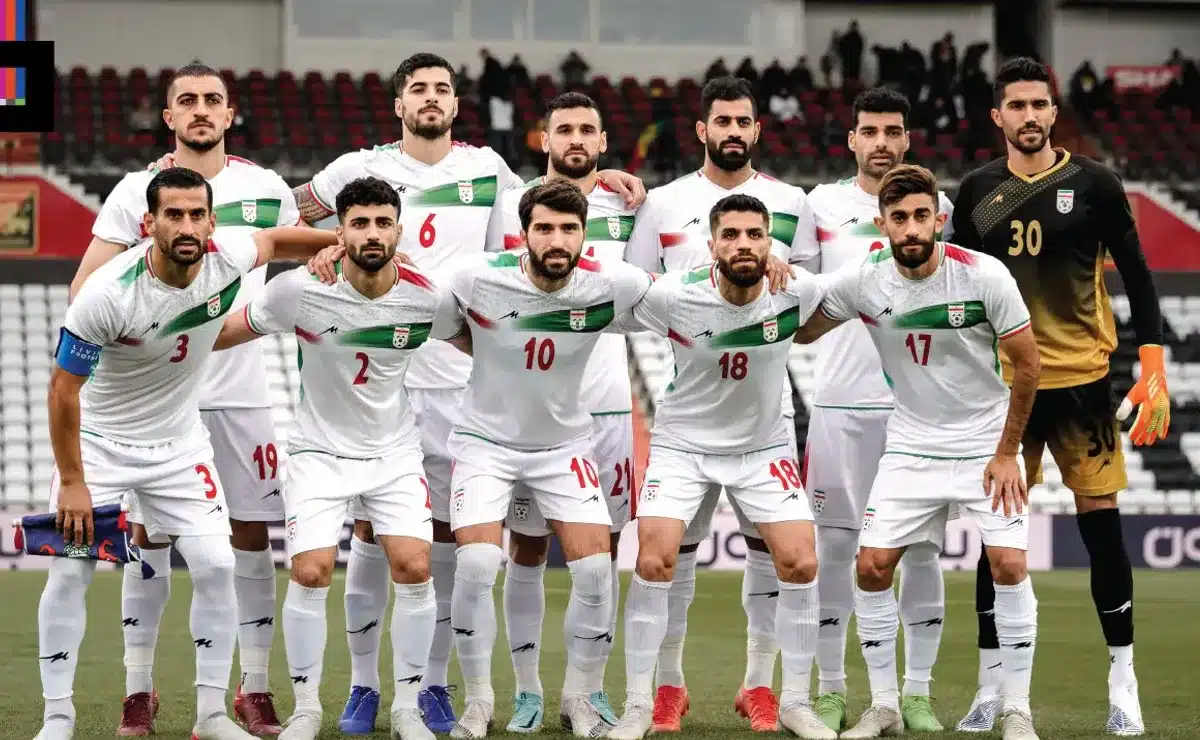
The Iranian football federation president is negotiating with FIFA to move three scheduled matches, including two in Los Angeles, after the sitting US president publicly questioned whether Iran should attend for their own safety.
Eleven words from US President Donald Trump have produced a formal diplomatic request to world football's governing body. Trump, in public remarks, said Iran is "welcome to the World Cup" but added he does not think "it is appropriate" for them to attend "for their own life and safety." Iranian Football Federation President Mehdi Taj cited those remarks directly as the basis for requesting that FIFA relocate Iran's group-stage fixtures away from American venues. The request, confirmed by Taj in a public statement, is now before FIFA.
That is not a protest. That is a negotiation.
Iran's scheduled fixtures under the draw announced by FIFA on December 6, 2025, place the national team in Los Angeles for matches against New Zealand and Belgium, and in Seattle for a group-stage encounter with Egypt. The 2026 World Cup runs from June 11 to July 19 across the co-host nations of the United States, Canada, and Mexico. Taj stated explicitly: "We are negotiating with FIFA to hold Iran's World Cup matches in Mexico."
FIFA's public response, as relayed by a spokesperson to the BBC, offered no concession and no commitment to review the schedule. The spokesperson confirmed only that FIFA "is in regular contact with all participating member associations, including Iran," and said the body "is looking forward to all participating teams competing as per the match schedule announced on 6 December 2025." The statement did not address Trump's remarks directly.
Two parties are publicly on record. One wants a schedule change. The other has not moved.
The background against which Taj is making this request is not manufactured. Ongoing hostilities involving Iran, Israel, and US-aligned states in the Gulf have included documented military strikes and counter-strikes in the months preceding the tournament. Iran's national team Telegram account, in a message addressing the situation, argued that FIFA, not any host nation government, holds responsibility for guaranteeing security for all participating teams. That framing is deliberate. It shifts the legal and operational burden to Zurich.
FIFA's own statutes and host country agreements do not typically permit unilateral fixture relocation on the basis of a member association's security concerns alone. The governing body's Host City Agreement structure for 2026, negotiated across three sovereign nations, assigns security coordination to local authorities under a framework FIFA oversees. Whether that framework includes a mechanism for voluntary relocation at a participating nation's request, short of a formal security threat determination by FIFA itself, has not been publicly addressed.
Related News
Iran has qualified for a fourth consecutive World Cup. They have not withdrawn.
Our review of the available statements from all three principals, Taj, FIFA's spokesperson, and Trump's public remarks, shows that no party has cited a specific legal mechanism, FIFA statute number, or host agreement clause governing this situation. That gap matters because the relocation request, if FIFA declines it, leaves Iran with a binary choice that neither side has yet named publicly.
Sports Minister Ahmad Donyamali's statement that conditions do not provide "the right environment" for participation is the closest any Iranian official has come to describing a withdrawal threshold. He did not cross it.
FAQ
Has Iran actually pulled out of the World Cup? No. As of March 17, 2026, Iran has not withdrawn. Taj is negotiating a venue change, not an exit. The national team's own Telegram account specifically argued Iran should compete, just under FIFA's guaranteed security, not the US government's.
Can FIFA actually move the games to Mexico? Technically, yes. FIFA controls the fixture schedule. But the December 6, 2025 draw is a formal document, venue changes require host city coordination, and FIFA has publicly indicated no willingness to revisit it. There is no precedent for a voluntary relocation of this kind at a World Cup.
What happens if FIFA says no and Iran still refuses to play in the US? Under FIFA disciplinary regulations, a team that withdraws or forfeits without FIFA's approval faces sanctions including potential suspension of the member association. The specific penalty framework would be determined by the FIFA Disciplinary Code. Neither FIFA nor Iran has publicly invoked that process yet.
The next formal moment of consequence in this dispute belongs to FIFA's administration in Zurich, which has not set a public deadline for responding to Iran's relocation request. Iran's opening group fixtures in Los Angeles are scheduled for mid-June 2026, leaving roughly 12 weeks for a resolution. What remains unresolved is whether FIFA's Host Country Agreement with the United States contains any clause requiring the host nation's government to provide specific security guarantees to all participating national teams, and whether Trump's public remarks, made as sitting head of state, constitute a breach of any such obligation. If they do, the legal exposure sits not with Iran, but with the agreement's signatories.
Add a Comment