


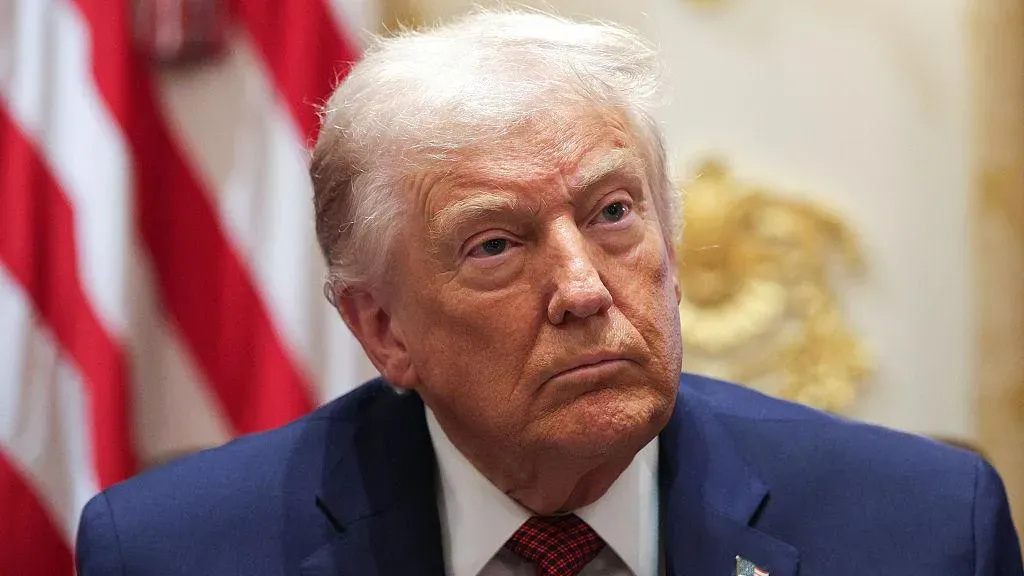
Oil prices rose five percent in a single trading session after US President Donald Trump threatened, in a social media post, to "massively blow up the entirety of the South Pars Gas Field" if Iran does not stop striking Qatar's energy infrastructure.
The threat is directed at a gas field that Iran shares with Qatar beneath the Persian Gulf, one that the US Energy Information Administration identifies as the world's largest single natural gas reservoir, holding an estimated 1,800 trillion cubic feet of recoverable gas across both countries' portions. Trump issued the ultimatum while simultaneously denying US prior knowledge of the Israeli strike on South Pars that triggered the Iranian retaliation in the first place. He said Washington "knew nothing" about the attack.
That claim is doing significant work.
The Gas Field at the Center of the Ultimatum
South Pars is not a symbolic target. The Iranian portion of the field supplies roughly 75 percent of Iran's total natural gas production, according to the National Iranian Oil Company's publicly available field development data. Qatar's adjacent North Field is the single largest source of the country's LNG export revenue, which the Qatar Financial Centre Authority reported at approximately $55 billion in 2022. Any physical destruction of surface infrastructure, processing platforms, or pipeline manifolds at the field would not extinguish the reservoir, but it would halt production at scale for months to years depending on the damage.
Trump's post called for an immediate halt. He also declared, in capital letters per the source brief's quotation, that "NO MORE ATTACKS WILL BE MADE BY ISRAEL" on South Pars if Tehran stands down.
That is the US President promising restraint on behalf of a foreign military.
Iran struck Ras Laffan after Israel struck South Pars. The Qatari government confirmed fires broke out at Ras Laffan and were contained by emergency responders. No damage assessment, repair cost estimate, or production interruption figure was released by QatarEnergy as of the source brief's publication. Ras Laffan supplies LNG under long-term contracts to buyers in Europe and Asia, several of which, including contracts with Shell and TotalEnergies, run through the late 2040s and carry force majeure clauses governed by English law arbitration.
No force majeure has been declared. That absence is its own statement on the damage severity.
Related News
- The UN's migration agency says trafficking networks have forced people from more than 80 countries into online scam compounds across Asia.
- More than 12,000 people have been arrested by US immigration authorities after tips from the Office of Refugee Resettlement.
- China's trade with Africa hit 1.41 trillion yuan in the first half of 2026.
Five Countries, One Week
The geographic spread of active hostilities documented in the source brief covers Israel, Iran, Lebanon, Iraq, Qatar, and Saudi Arabia, six distinct theaters operating simultaneously.
In Israel, an Iranian missile barrage killed one Thai foreign worker, bringing the confirmed Israeli death toll to 15, according to Israeli medics and Thailand's Foreign Ministry. Three Palestinian women were killed in the occupied West Bank when missile debris struck their location, confirmed by the Palestine Red Crescent Society. In Lebanon, Israeli forces launched multiple airstrikes on central Beirut after Hezbollah intensified rocket attacks against northern Israel. Thousands of residents fled toward the southern coast, with vehicle lines extending to Sidon.
Nidal Ahmad Chokr, 55, described the impact in his village: "Bakers died while making bread in the village square and municipal workers were martyred while using bulldozers."
In Saudi Arabia, the kingdom's air defense systems intercepted drones targeting energy facilities in the eastern region, and ballistic missile debris landed near a refinery south of Riyadh. Saudi authorities stated they reserve "the right to take military actions" in response, without naming a target or timeline. No named Saudi official was attributed to that statement in the source material reviewed.
The eastern region houses Saudi Aramco's Abqaiq processing facility, which processes roughly 7 percent of the world's daily crude oil supply according to Aramco's 2023 Annual Report. The source brief does not specify whether Abqaiq was a targeted site.
That distinction matters enormously.
Iran's Decapitated Command Structure
Since February 28, the conflict has killed two of Iran's most senior named security officials. Ali Larijani, described in the source as a senior security figure, died first. Esmail Khatib, Iran's intelligence chief, died after him. Iranian President Masoud Pezeshkian, in a public statement, condemned Khatib's killing as a "cowardly assassination." Iran's new Supreme Leader, Mojtaba Khamenei, who took power after his father Ali Khamenei died in the conflict's opening phase, issued a written statement: "Every drop of spilt blood comes at a price."
He has not appeared in public since taking power.
The source brief states that "thousands of people have reportedly been killed in Iran." That figure is carried without attribution to a named agency, UN body, or hospital network. We are not in a position to verify it and include it here only to reflect the source's scope claim, not to confirm it.
Fifteen confirmed dead in Israel, attributed to named authorities. Thousands reportedly dead in Iran, attributed to no one.
The Conditional Ceasefire in Baghdad
Kataeb Hezbollah, the pro-Iranian armed group operating in Iraq, announced a five-day suspension of attacks on the US Embassy in Baghdad. The group set two conditions: Israel must halt strikes on Beirut's southern suburbs, and attacks on residential areas in Iraq must stop. AFP confirmed no drone or rocket fire targeted the US Embassy from Wednesday night through Thursday morning.
Five days. Two conditions. No named guarantor.
French President Emmanuel Macron said he held telephone calls with Trump and the Emir of Qatar urging a halt to attacks on civilian infrastructure. France's Foreign Minister Jean-Noel Barrot was scheduled to visit Lebanon. No joint communiqué, draft ceasefire text, or UN Security Council emergency session was referenced in the available source material.
FAQ
Is Trump actually authorized to threaten to destroy a foreign country's gas field without Congressional approval? Under the War Powers Resolution of 1973 (50 U.S.C. 1541-1548), the President must notify Congress within 48 hours of committing US forces to hostilities. A social media threat is not a military commitment, but if strikes follow, the clock starts. No notification to Congress had been reported as of filing.
Why would Iran strike Qatar if Qatar also benefits from South Pars? Qatar's North Field is geologically connected to South Pars but politically separate. Tehran's strike on Ras Laffan was framed as retaliation for the Israeli attack on Iranian infrastructure. Whether Qatar was a deliberate target or collateral pressure is not established in any source reviewed.
How long would South Pars take to rebuild if the US actually struck it? After the 2019 Abqaiq attack, Saudi Aramco restored full capacity within weeks because the damage was partial and targeted. A US military strike designed to destroy "the entirety" of South Pars surface infrastructure would require months to years of reconstruction, based on comparable offshore gas facility damage assessments from the Gulf of Mexico after Hurricane Katrina in 2005.
The most consequential unresolved financial question now sits with QatarEnergy's long-term LNG supply contracts, structured under English law arbitration clauses, several of which contain force majeure trigger thresholds tied to production capacity interruption. No arbitration has been filed. No production shortfall has been officially declared. But if a second Iranian strike reaches Ras Laffan's liquefaction trains before repairs are complete, buyers in Europe and Asia holding contracts valued in the tens of billions of dollars annually will face a decision about whether to invoke those clauses, and the arbitration tribunals in London and Paris that govern those contracts will become the next venue where this conflict is fought.
Add a Comment